
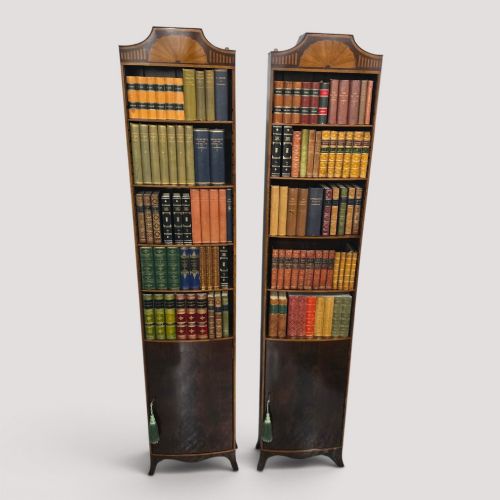
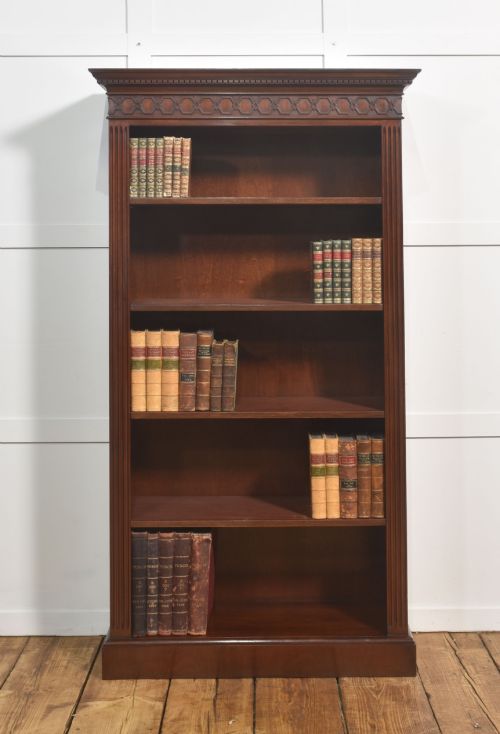
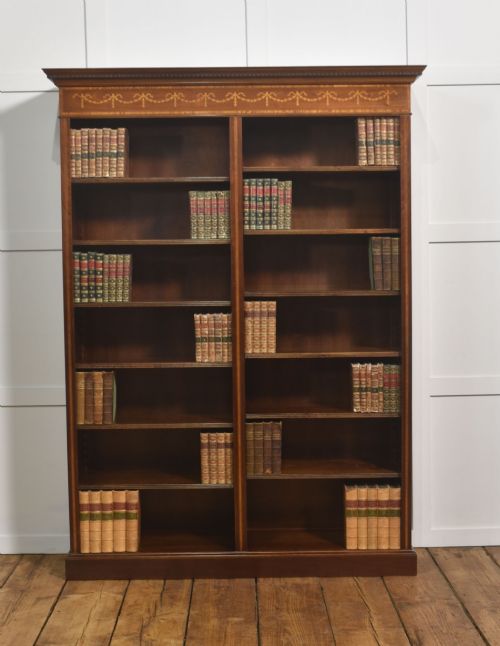
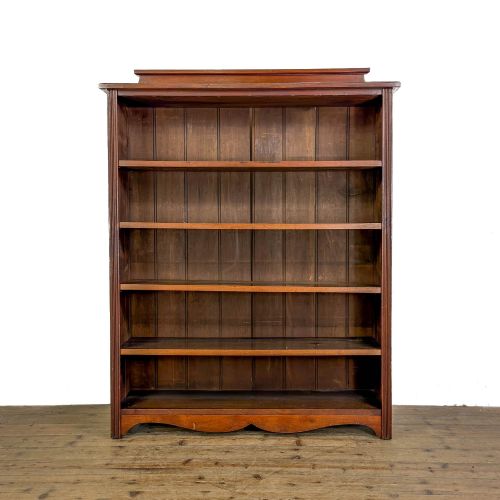



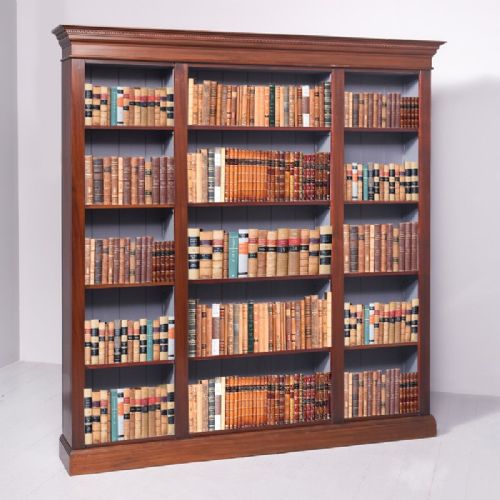

Tall Mahogany Bookshelf
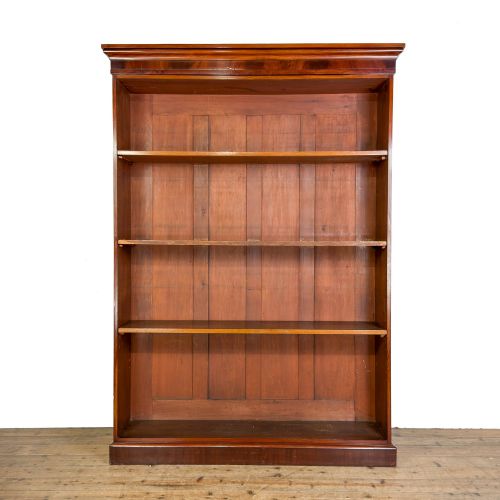
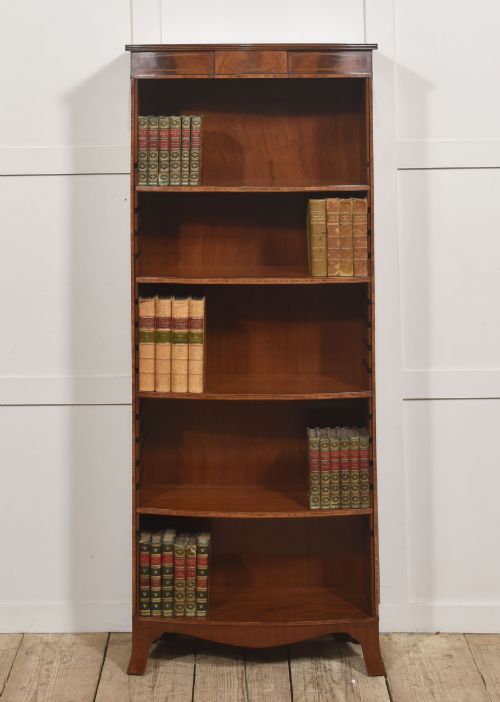
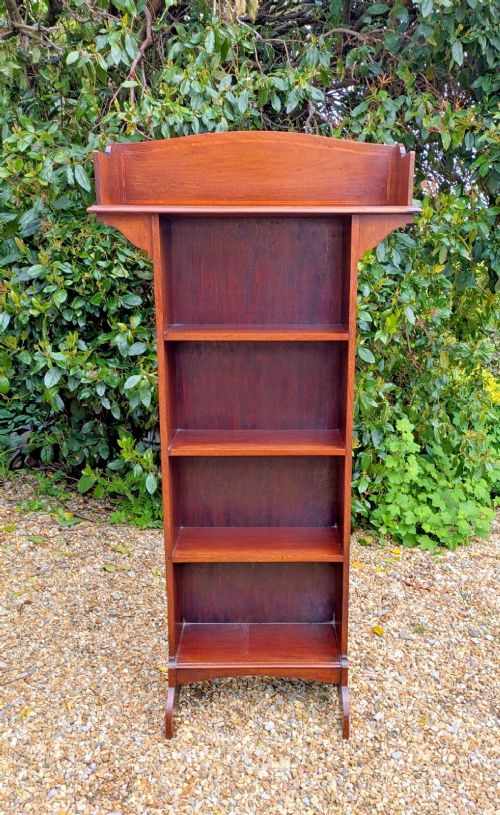
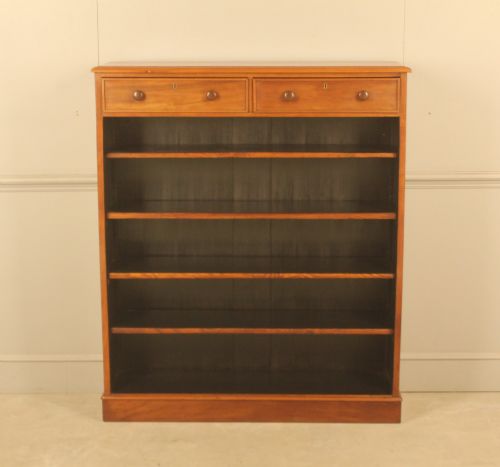
A tall mahogany bookshelf brings architectural presence and rich grain to a room while holding a serious library.
Tall Mahogany Bookshelf
A tall mahogany bookshelf is a substantial timber storage piece designed to hold large volumes while anchoring a library or study. When searching for a tall mahogany bookshelf, buyers encounter open upright formats, glazed cabinet combinations, and tiered display structures spanning the nineteenth and early twentieth centuries.
The pieces appearing on this page encompass open library shelving, cupboard bases, and multi-tiered whatnots originating across Victorian, Edwardian, and Regency revivals. These forms share an upright emphasis, utilising sturdy timber frames to support heavy rows of books across adjustable or fixed shelves.
Victorian and Edwardian iterations dominate the selection, offering generous height alongside restrained decoration. Makers of these periods often combined tall uprights with inlaid boxwood or satinwood stringing, creating formal storage solutions suited to domestic interiors.
How they were made
Cabinet makers constructed these pieces using solid mahogany and pine carcasses, often applying figured mahogany veneers to principal surfaces. Timber selection governed the visual weight, with dense grains providing durable structure for tall upright sides.
Secondary timbers such as oak and pine commonly appear in internal shelving and drawer linings. Joinery techniques relied on dovetailed joints for drawers and precise housing joints for fixed or adjustable shelves, ensuring stability under heavy book loads.
Decorative elements included boxwood and satinwood inlay, brass hardware, and occasionally ormolu mounts on empire-style examples. French polishing finished the timber, sealing the grain and developing a deep lustre over time.
Several pieces include adjustable shelf pegs that have rattled against timber sides since the reign of Queen Victoria.
What varies in quality
Quality in these pieces rests upon timber selection and the crispness of secondary detailing such as inlay and mouldings. Finer examples display carefully matched flame or plum pudding mahogany veneers across the primary facade rather than plain stock.
Structural refinement distinguishes standard production from superior cabinet work, visible in the thickness of the upright sides and the smooth operation of adjustable shelf brackets. Original backboards, well-fitted cornices, and intact brass fittings elevate the standing of a piece.
The Tall Mahogany Bookshelf Glossary
- Mahogany
- A durable tropical hardwood prized for its deep reddish-brown colour and stable grain. It served as the primary material for formal case furniture throughout the nineteenth century.
- Inlay
- A decorative technique where contrasting woods like boxwood or satinwood are fitted into recesses in the primary timber surface. This method creates geometric borders and floral motifs on Edwardian and revival pieces.
- Etagere
- A set of open shelves supported by columns or pillars, used for displaying books and decorative objects. These tall tiered structures offer lighter vertical storage than solid cabinet bookcases.
- Wellington base
- A robust cabinet foundation featuring a locking mechanism secured by a hinged side stile. This sturdy base configuration supports heavy library shelving above.
- Adjustable shelves
- Shelving supported on movable pegs or ratchets allowing variable vertical spacing. This mechanism accommodates books of differing heights within the tall upright frame.
Tall Mahogany Bookshelf: Frequently Asked Questions
How do I secure a tall bookcase to the wall?
Tall furniture requires discreet brackets attached to wall studs behind the upper cornice to prevent tipping under weight.
Positioning the piece on a level floor before anchoring ensures the vertical frame remains plumb and stable.
Are the shelves usually adjustable?
Many nineteenth and twentieth-century examples feature adjustable wooden pegs or traditional rack-and-pinion strips.
Fixed shelves do appear in certain cabinet formats, so checking internal configuration details matters for specific storage needs.
How do I distinguish Victorian from Edwardian pieces?
Victorian examples generally feature heavier proportions, deeper mahogany tones, and restrained architectural cornices.
Edwardian pieces often display lighter scale, brighter timber figures, and delicate satinwood or boxwood inlay work.
Can these bookcases support heavy modern books?
Solid timber construction and sturdy housing joints provide the structural strength required for dense volumes.
Checking the thickness of individual shelves helps ensure they will not bow under prolonged heavy loads.