
Mahogany Bookshelf Unit
Mahogany bookshelf unit pieces bring rich timber warmth and practical tiered storage to a room.
What They Are
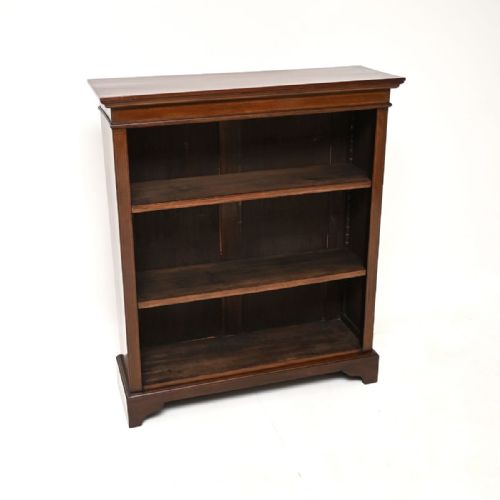
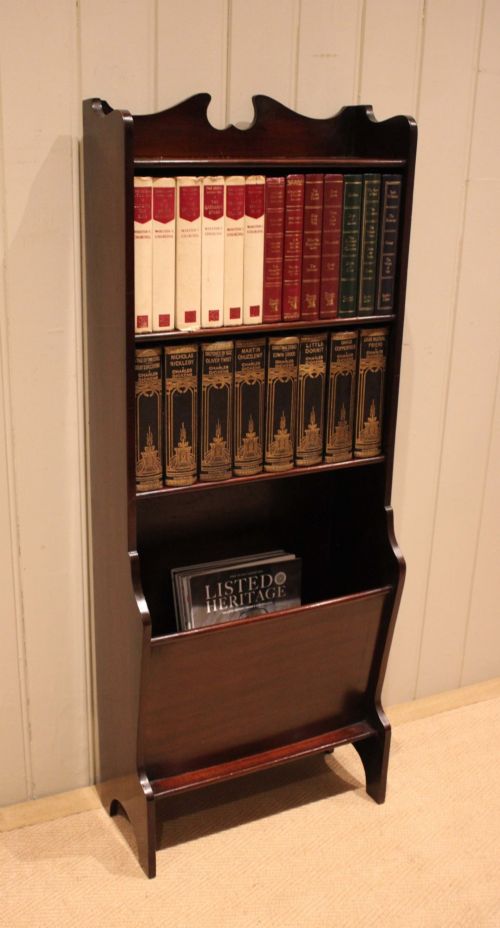
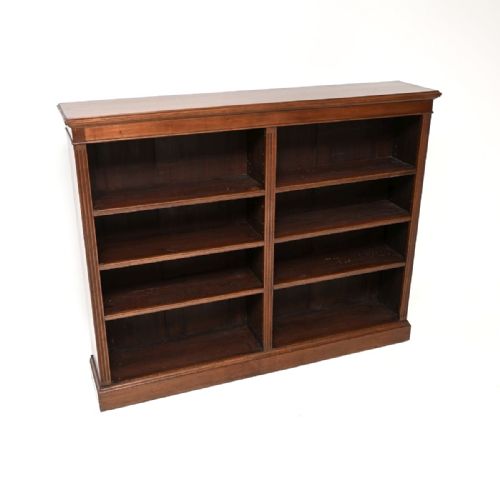
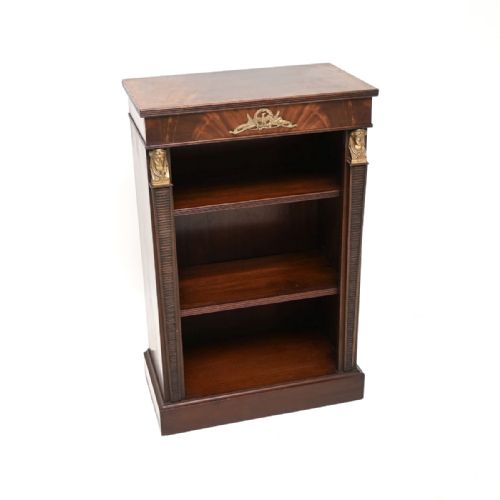
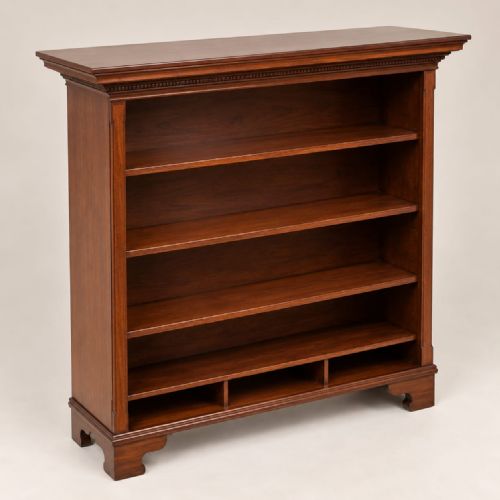
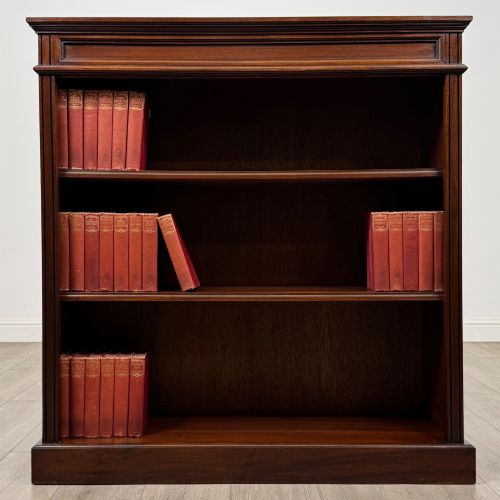
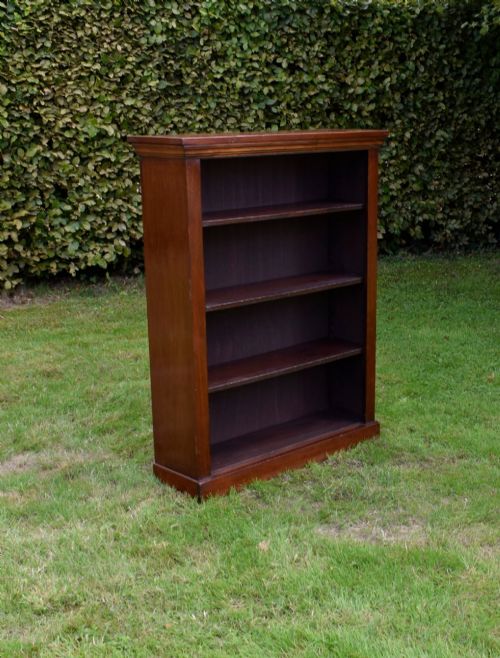
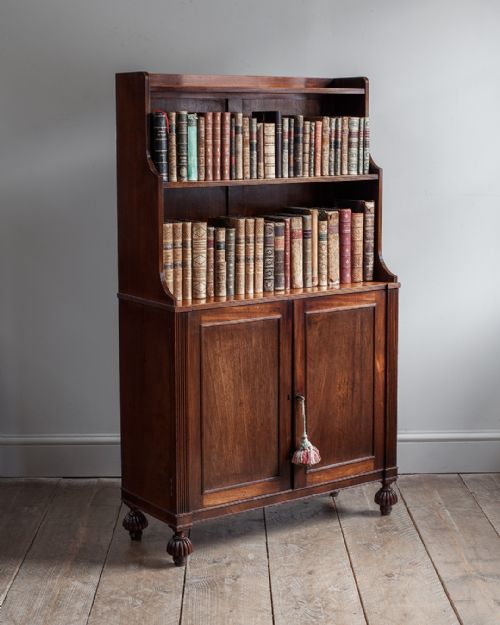
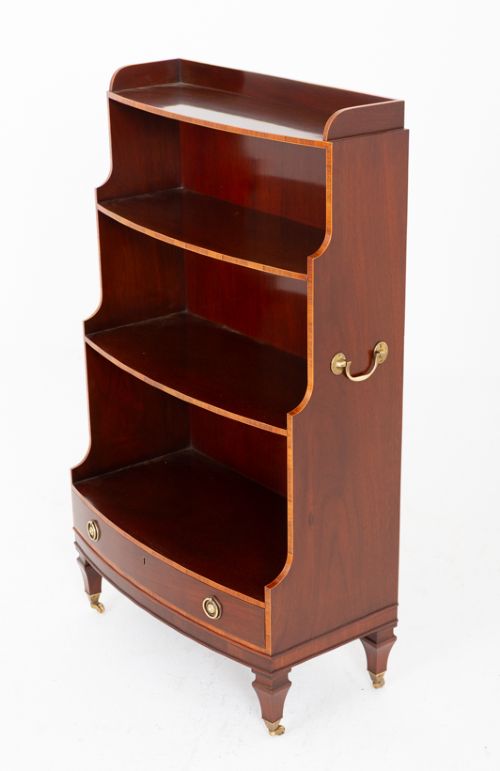
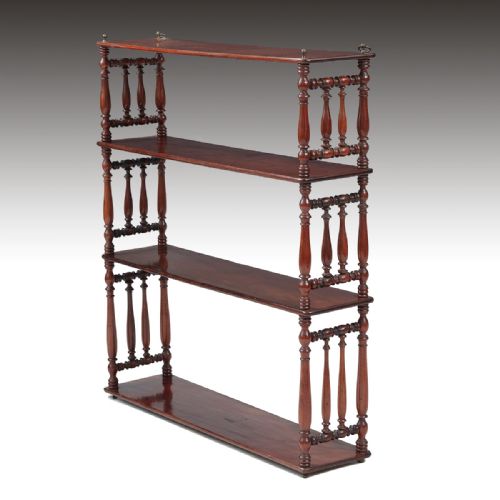
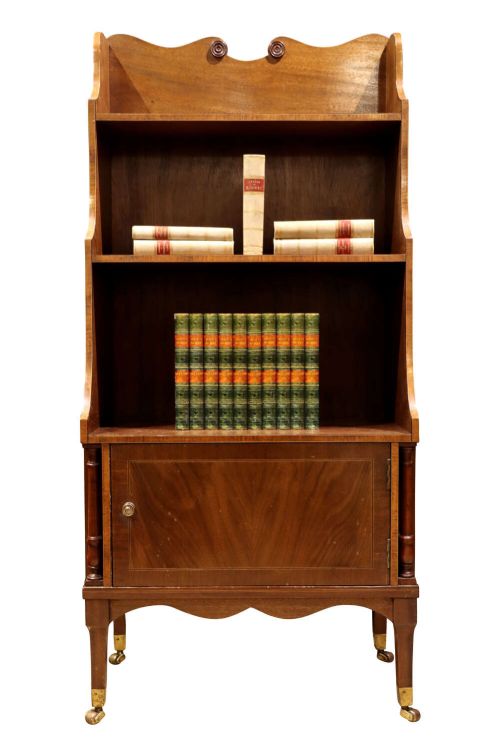
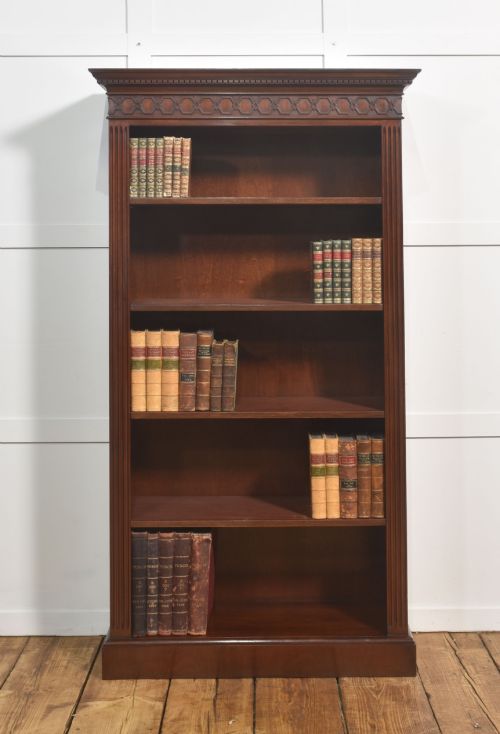
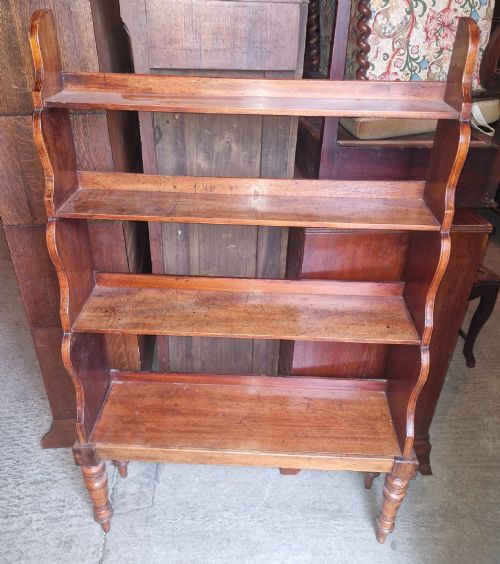
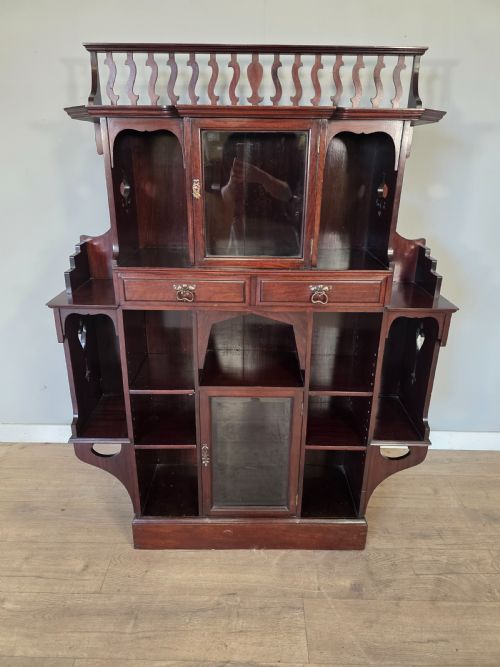
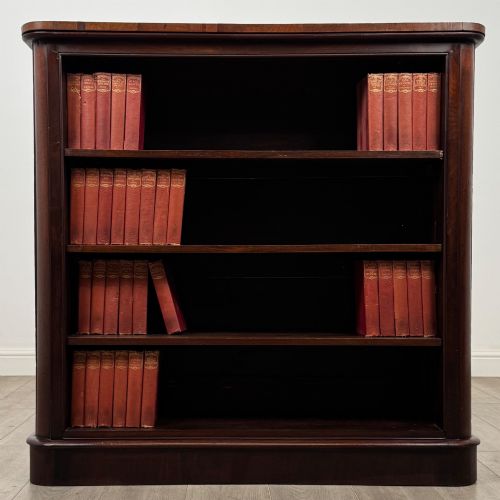
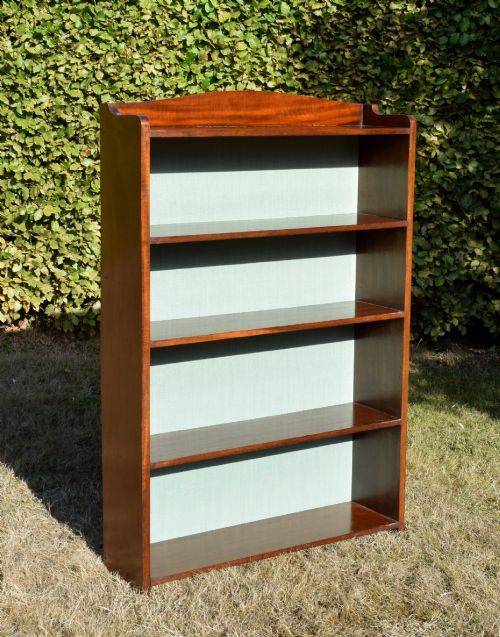
A mahogany bookshelf unit provides open shelving for volumes and display, anchored by the rich dark tones of the timber. These pieces typically present as tall open bookcases, grand 19th Century adjustable designs, or multi-tiered waterfall configurations.
The options span the Victorian era, the year 1850, the later Victorian period around 1890, and the Sheraton Revival style of 1910. Buyers encounter upright formats designed to maximise wall space while keeping collections accessible.
Originating primarily within British cabinet-making traditions, these open bookcases serve both traditional libraries and contemporary living spaces. The form relies on sturdy uprights and graduated or adjustable horizontal tiers to support substantial book collections.
How They Were Made
Makers utilised solid mahogany and supporting timbers such as pine to construct the main carcasses and internal shelving units. Timber selection focused on grain pattern and structural durability to bear the weight of heavy volumes.
Decorative detailing in certain pieces incorporates satinwood inlay work, adding contrasting light tones to the darker mahogany background. Construction techniques also include open galleries and adjustable shelf mechanisms to allow bespoke arrangement of books.
Retail Price Guide 2026
Typical UK retail prices for mahogany bookshelf unit, calculated from the Sellingantiques database of over a million retail prices indexed since 2003. This retail price guide relies exclusively on Sellingantiques data; no external sources or auction records are used, so the figures do not describe the wider market.
What Varies in Quality
Distinction across the range lies in the fineness of the timber preparation and the sophistication of the decorative elements. Simpler utility pieces contrast with examples featuring Sheraton Revival inlay and sophisticated adjustable shelving engineering.
Proportion and scale also dictate standing, with larger configurations and open gallery waterfall tiers demanding greater joinery skill. The integration of contrasting satinwood alongside primary mahogany indicates a higher grade of workshop production.
The Mahogany Bookshelf Unit Glossary
- Mahogany
- A durable tropical hardwood prized for its reddish-brown colour and stable grain. It serves as the primary structural and visual material across these pieces.
- Sheraton Revival
- A late 19th and early 20th century design movement. It revives the lighter, neoclassical furniture forms associated with designer Thomas Sheraton.
- Waterfall Bookcase
- A tiered shelving unit where each successive shelf steps back from the one below. This creates a cascading silhouette reminiscent of a waterfall.
- Inlay
- A decorative technique where contrasting woods like satinwood are inserted into recesses in the mahogany surface. This creates flat patterns and visual borders.
Frequently Asked Questions
How do adjustable shelves work?
Adjustable shelves rest on movable supports within the bookcase interior. This allows owners to alter shelf heights to accommodate different book sizes.
Such mechanisms reflect nineteenth-century innovations in practical library furniture design.
What is Sheraton Revival style?
Sheraton Revival furniture draws inspiration from the neoclassical designs of the late eighteenth century. Pieces from this later period often feature refined proportions and delicate inlay work.
Mahogany remains a dominant timber choice in this revival aesthetic.
Where should I place a tall bookcase?
Tall open bookcases suit studies, living rooms, and libraries with adequate wall space and stable vertical clearance. Positioning them away from direct sunlight protects the mahogany finish.
Securing tall units to the wall ensures stability when loaded with heavy volumes.