


Regency Wellington Chest
A regency wellington chest is a tall, narrow drawer unit offering exceptional storage for tight spaces.
Regency Wellington Chest
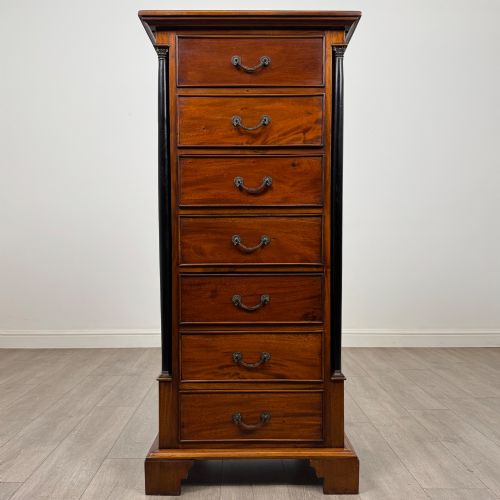
A regency wellington chest stands tall and narrow, designed with a single locking side flap that secures all its drawers at once. These pieces originate predominantly from the nineteenth century, encompassing the regency, george iv, and edwardian periods, alongside revival styles.
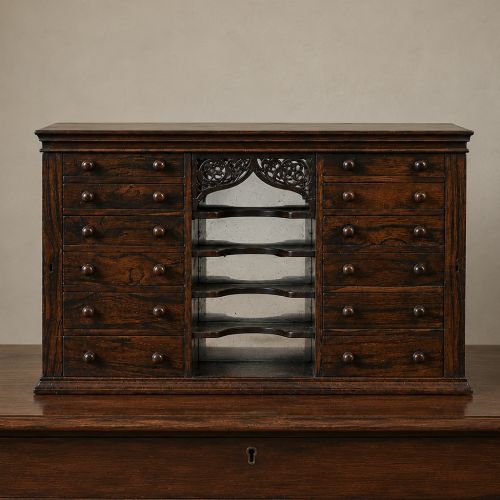
The form appears in various iterations across the listings, functioning as chests of drawers, writing cabinets, collectors cabinets, bookcases, and bedside cabinets. Mahogany, flame mahogany veneer, and rosewood form the core of the items encountered here.
Makers adapted the classic tall format to incorporate secretaire drawers and mirrored elements, offering diverse configurations. Buyers most frequently meet mahogany and rosewood examples from the early nineteenth century on this page.
How They Were Made
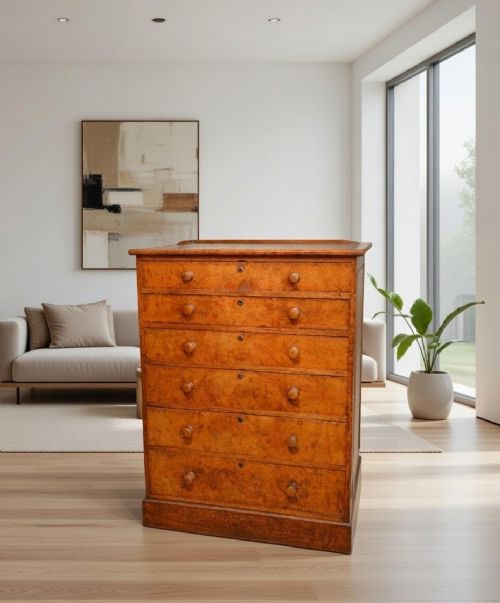
Cabinetmakers utilised dense timbers like mahogany and rosewood, often applying flame mahogany or burr walnut veneers to create striking grain patterns on the drawer fronts. Ebonised wood and pollard oak also appear, showing the range of decorative woods selected for these compact cabinets.
Brass hardware provides structural and visual contrast against the dark polished timber surfaces, while leather inserts feature within writing compartments. Specialised variants integrate mirror glass panels and open library bookcases into the upper sections.
A hinged wooden flap guards the secret stack like a loyal sentinel.
What Varies in Quality
The choice of timber veneer dictates the visual impact, with figured flame mahogany and richly grained rosewood marking out superior examples. Cabinetmaking skill shows in the seamless operation of the locking side flap and the precise fitting of the numerous narrow drawers.
The Regency Wellington Chest Glossary
- Wellington chest
- A tall, narrow chest of drawers secured by a hinged locking stile on one side. This locking bar fastens over the drawer edges to secure the entire stack.
- Secretaire
- A piece of furniture incorporating a writing drawer with a drop-front. Inside, smaller drawers and pigeonholes provide fitted desk space.
- Flame mahogany veneer
- Timber sliced to reveal a flickering, flame-like grain pattern applied to a stable wood base. This decorative surface defines many upper-tier nineteenth-century cabinets.
- Collector's cabinet
- A specialised storage unit fitted with multiple shallow drawers for specimens or coins. These items frequently utilise secure locking mechanisms.
Regency Wellington Chest: Frequently Asked Questions
Why do they have a side locking bar?
The locking stile pivots to cover the ends of every drawer simultaneously, securing the entire cabinet with a single key. This design protected valuable papers or collections in compact nineteenth-century rooms.
Cabinetmakers integrated this mechanism into the narrow frame so the tall stack remained secure without needing individual locks on each shallow drawer.
How many drawers do they usually have?
Most examples feature seven stacked drawers within their narrow, vertical frames. This specific count supports the traditional proportions associated with the form.
Variations exist where cabinetmakers reduced the drawer count to accommodate secretaire drop-fronts or integrated bookcase sections above.
What is a secretaire wellington chest?
A secretaire variant includes a pull-down drawer front that conceals a fitted writing interior with small compartments. It combines the tall footprint of the chest with a compact desk.
This dual-purpose form allowed owners to write letters without taking up additional floor space in smaller bedchambers or libraries.
Where should I place one at home?
Their narrow footprint makes them well-suited for tight alcoves, hallways, or beside a bed where wide furniture cannot fit. The vertical storage maximises capacity without dominating floor area.
Keep them away from direct heat sources to protect the polished mahogany, rosewood, or walnut veneers from drying out.