
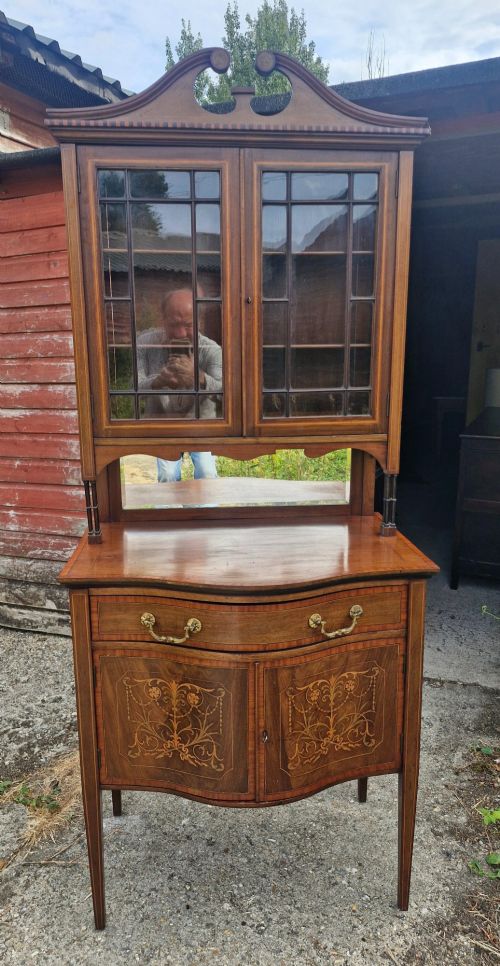
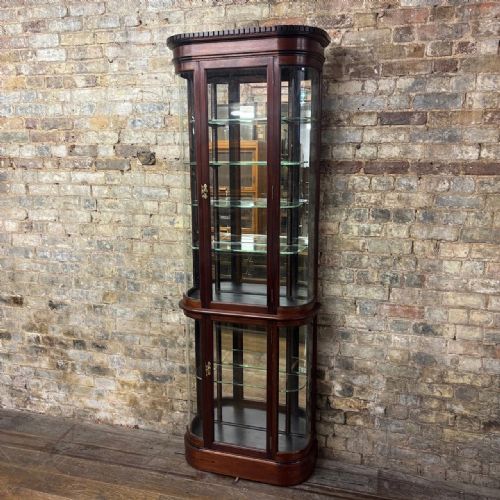
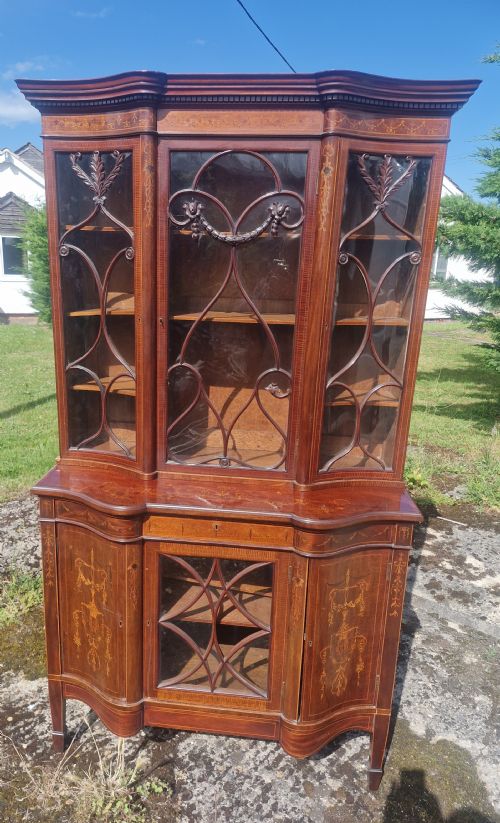


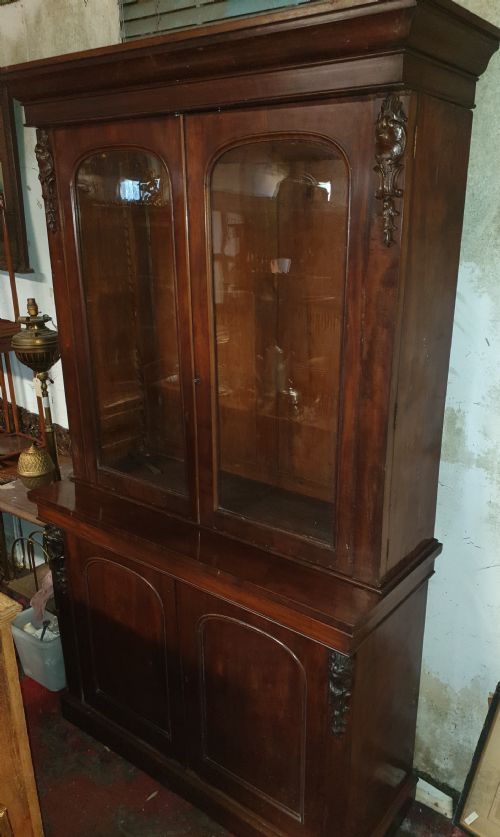
Two Part Mahogany Bookcase
A two part mahogany bookcase offers substantial storage split for transport, bringing classic timber warmth to a serious library.
Two Part Mahogany Bookcase
A two part mahogany bookcase is a large piece of furniture constructed in two separate vertical sections to ease movement and placement. When you search for this phrase, you encounter forms ranging from Georgian bureau bookcases to Victorian open library shelving and Edwardian glazed display cabinets.
The pieces on this page span several distinct periods including Georgian, Regency, Victorian, and Edwardian eras. Most examples rely on mahogany timber, often featuring glazed doors or open shelves designed to house substantial collections of books.
The modular nature of these items defines their construction, typically separating a heavier base cabinet or chest from an upper shelving unit. This division allowed cabinetmakers to construct towering pieces that could still navigate domestic stairwells and doorways.
How they were made
Makers utilised solid mahogany and Spanish mahogany, frequently pairing the dense tropical timber with secondary softwoods like pine for internal carcase work and drawer linings. Glass panels are integrated into upper doors to protect volumes while maintaining visibility.
Brass hardware such as handles, hinges, and locking escutcheons secure the doors and drawers across the two sections. Decorative elements occasionally include satinwood inlay banding, particularly on later Edwardian and Georgian examples.
Some bureau bookcases hide tiny secret drawers behind pigeonholes, designed for letters of utmost discretion.
What varies in quality
Quality rests heavily on the selection of the mahogany timber and the crispness of any inlaid decoration. Pieces fashioned from figured Spanish mahogany with well-matched grain patterns sit at the upper end of the range.
Proportion and architectural detail separate standard utility furniture from finer examples. Subtle differences in the joinery of the cornice, the alignment of the two stacked sections, and the retention of original brasswork dictate the standing of each piece.
The Two Part Mahogany Bookcase Glossary
- Two-part
- A cabinet constructed as separate upper and lower vertical modules that stack together. This configuration was essential for moving heavy furniture through domestic spaces.
- Bureau bookcase
- A combination form featuring a sloping fall-front writing desk in the lower section beneath an upper shelving enclosure. These pieces provide both workspace and volume storage.
- Spanish mahogany
- A dense, highly figured variant of mahogany prized for rich grain patterns and deep colour. Cabinetmakers reserved this material for prominent exterior surfaces.
- Glazed top
- An upper cabinet section fitted with glass-paned doors. This design protects books from dust while allowing titles to remain visible.
- Open bookcase
- A shelving unit without doors to the front compartments. These formats provide immediate access to large collections of volumes.
Two Part Mahogany Bookcase: Frequently Asked Questions
How do the two sections join together?
The upper section simply rests upon the flat top of the lower base cabinet, often secured by gravity or internal alignment pins rather than complex mechanical locks.
This loose-stacked design enabled historical owners to transport massive libraries room by room without damaging the structural framework.
What is the difference between a bureau bookcase and a standard bookcase?
A bureau bookcase incorporates a hinged writing flap that opens to reveal internal small drawers and pigeonholes. A standard bookcase focuses entirely on vertical shelf storage or display.
Both utilise the characteristic two-part division to ease transport and placement within a room.
Are the shelves adjustable?
Many examples include adjustable shelving systems supported by rack-and-pinion mechanisms or traditional wooden fillets. This allowed owners to alter shelf heights to accommodate folio volumes and smaller books alike.
Fixed shelving remains more common in earlier Georgian iterations.
How do I care for mahogany timber?
Mahogany benefits from stable indoor humidity away from direct sunlight and heat sources, which can cause the timber to dry and split. Regular dusting with a dry, soft cloth preserves the polished surface.
Avoid silicone-based sprays, opting instead for traditional wax applications when the wood appears dry.