



Tall French Nightstands
Tall french nightstands bring elegant vertical storage beside the bed, combining antique cabinet-making with distinct continental style.
Tall French Nightstands
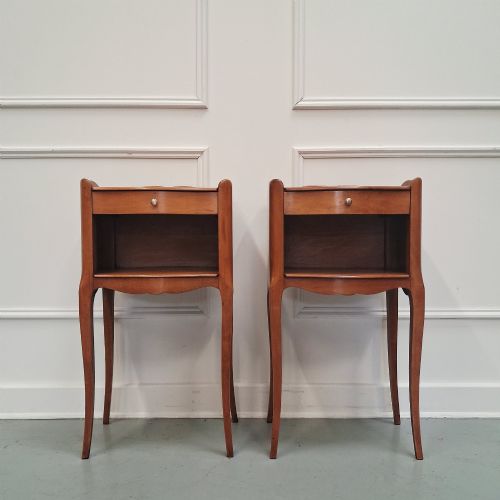
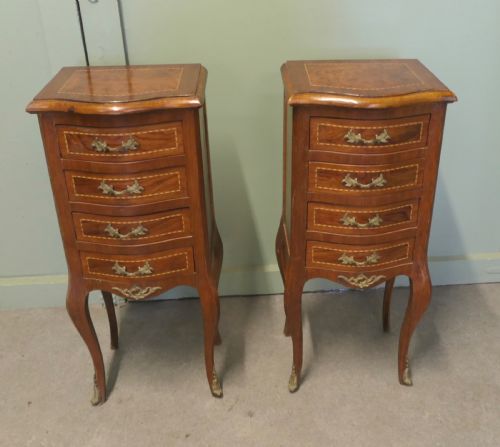
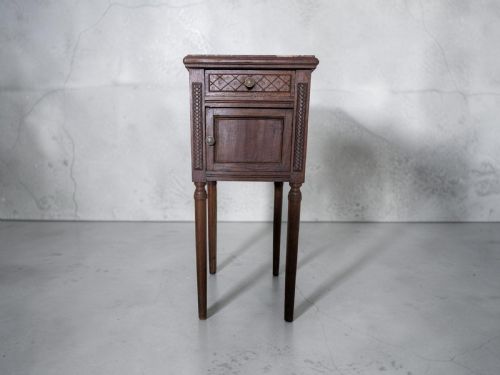
When you search for tall french nightstands, you encounter a selection of bedside cabinets, tables, and side lockers spanning the nineteenth and twentieth centuries. These pieces typically offer elevated proportions, often featuring four drawers or enclosed cupboards designed to sit comfortably beside higher bed frames.
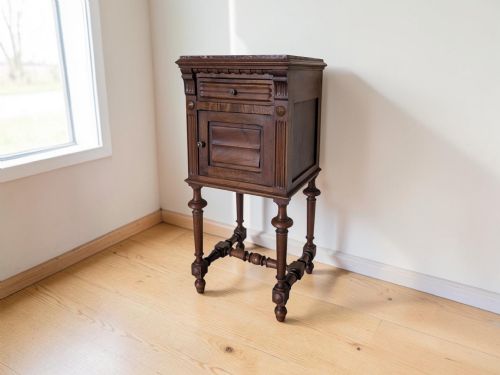
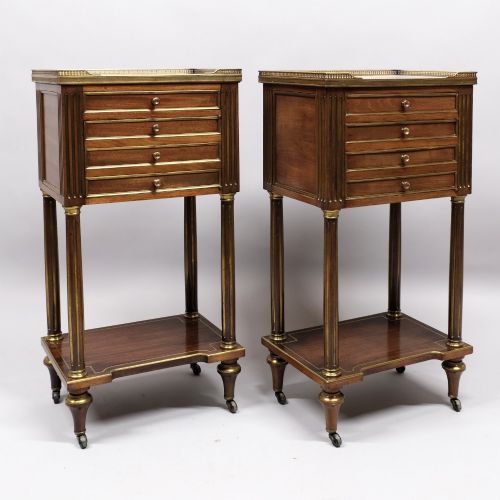
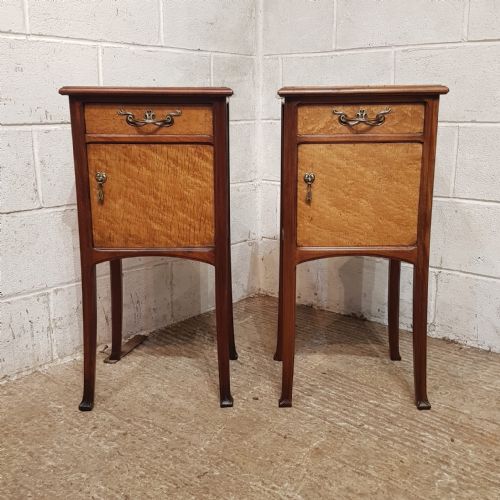
The inventory on this page showcases diverse stylistic influences, ranging from French Provincial and Louis XV to Empire and Art Deco designs. Cabinet-makers constructed these items in various forms, including bedside chests of drawers, tambour front stands, and pairs of end tables.
Materials and Construction
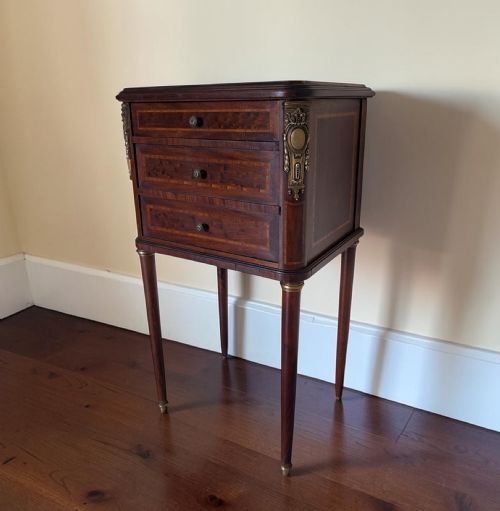
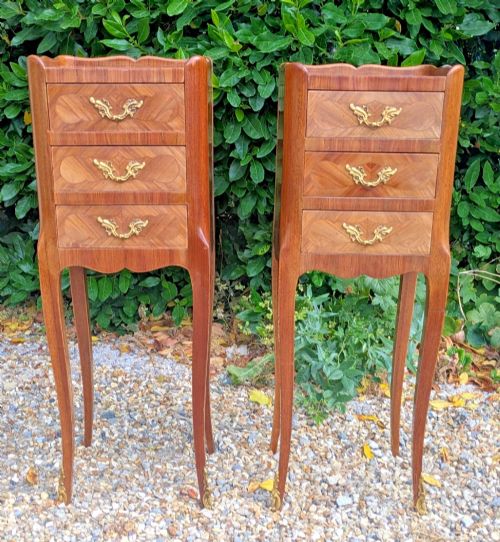
Cabinet-makers utilised a rich palette of timbers, pairing structural woods like mahogany and walnut with decorative veneers such as kingwood, rosewood, and burr walnut. Many pieces incorporate intricate floral marquetry and parquetry veneer work to create geometric and pictorial surface patterns.
Fine metal mounts in brass and ormolu often accent the corners, handles, and locks, while polished marble tops provide a durable and luxurious upper surface. Tambour fronts and panelled doors demonstrate sophisticated joinery techniques tailored to compact bedside storage.
Listings feature walnut, mahogany, kingwood, and rosewood timbers paired with marble tops and brass details across various periods.
Assessing Quality and Craftsmanship
Superior examples distinguish themselves through the precision of their veneer matching and the crispness of their floral marquetry details. Finer pieces display careful selection of timber grains, particularly in burr walnut and kingwood surfaces.
The integration of heavy brass or ormolu mounts and the smooth operation of drawers, side lockers, and tambour doors indicate higher standards of original construction. Proportion and balance remain crucial, separating standard utility pieces from refined decorative statements.
The Tall French Nightstands Glossary
- Marquetry
- Decorative veneer work arranged in pictorial designs or patterns. Craftsmen inlaid thin slices of varied wood timbers into a foundational panel.
- Ormolu
- Gilded bronze ornamentation applied to furniture mounts and details. This technique added metallic lustre and decorative relief to cabinet corners and handles.
- Tambour
- A flexible sliding shutter formed from narrow vertical strips of wood glued to a canvas backing. This mechanism allowed smooth closure on curved cabinet fronts.
- Parquetry
- Geometric mosaic woodwork formed by small veneer pieces laid in repeating patterns. It creates striking visual textures across tabletop and drawer surfaces.
- Kingwood
- A dense, richly figured tropical timber prized in fine cabinet-making. Its distinctive dark striping enhanced elite French furniture.
Tall French Nightstands: Frequently Asked Questions
How do I date tall french nightstands?
Dating relies on combining stylistic markers, construction methods, and material choices evident in the piece. Pieces showing Empire or Henri II characteristics typically point towards the nineteenth century, while cleaner lines often suggest nineteen-twenties or thirties production.
Examining internal drawer construction, timber types like kingwood or rosewood, and decorative elements such as parquetry further helps narrow the period of manufacture.
What styles are common in french nightstands?
French nightstands incorporate various regional and historical design movements, including Provincial, Chateau, and Revival aesthetics. Louis XV and Louis XVI styles introduce characteristic cabriole legs and refined symmetry.
Art Deco and later twentieth-century iterations favor geometric simplicity and parquetry veneer patterns, broadening the decorative range available for modern bedrooms.
How were these cabinets originally used?
These pieces served as bedside storage for personal items, night-time lighting, and chamber accessories within traditional bedrooms. Their elevated stature accommodated taller bed frames common in European homes.
Enclosed cupboards, tambour doors, and multiple drawers kept private possessions tidy while offering a stable surface for table lamps and decorative objects.
Are matching pairs common?
Matched pairs appear frequently among antique French bedside cabinets and tables. Cabinet-makers often produced nightstands in matching sets to flank a central bed symmetrically.
Finding a balanced pair preserves the intended decorative harmony of a period bedroom scheme, particularly with items featuring symmetrical marquetry or Ormolu mounts.
How do I care for marble and wood surfaces?
Maintenance involves gentle cleaning using soft cloths and appropriate woodwaxes or neutral stone cleaners. Avoiding excessive moisture protects delicate veneers like rosewood and kingwood.
Protecting marble tops from acidic spills prevents staining, ensuring the polished stone and timber retain their original appearance over time.