





Tabletop Display Showcase
A tabletop display showcase holds small treasures safely while keeping them in plain sight.
Tabletop Display Showcase
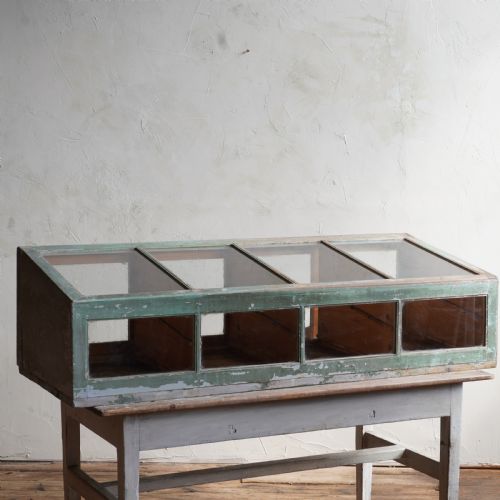
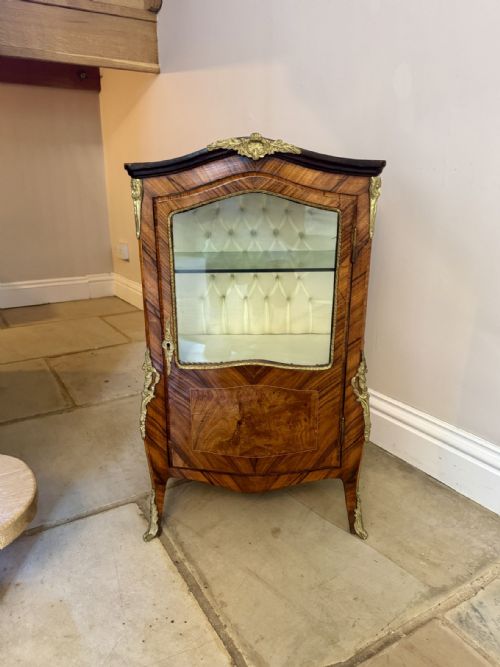
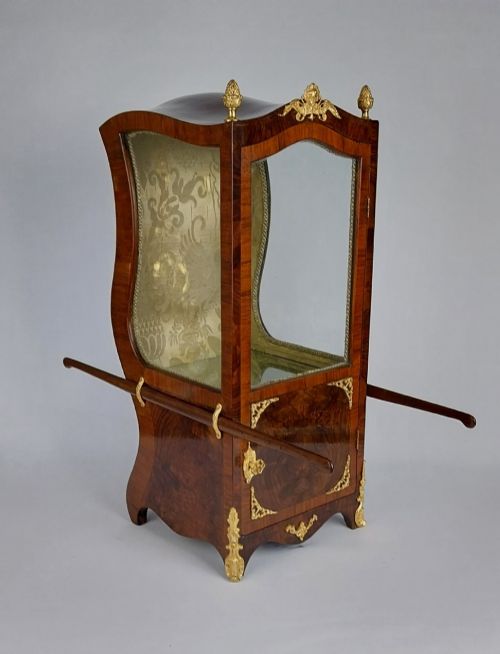
A tabletop display showcase brings miniature cabinets, vitrines and display cases together for desktop or counter use. These compact pieces serve to protect delicate objects while offering clear glass viewing from multiple angles.
The selection ranges from Victorian and Edwardian shop counters to 1920s commercial cases and refined French walnut or mahogany miniatures. Buyers encounter everything from rustic industrial timber boxes to grander brass and ormolu-mounted vitrines.
Most items designed for this tabletop display showcase category date from the nineteenth and early twentieth centuries. They reflect domestic collecting habits as well as period retail trades.
How they were made
Timbers such as mahogany, oak, walnut and kingwood form the primary structural frames for these cabinets. Joinery is paired with glazed panels to enclose the display space securely.
Brass, ormolu and ebonised details provide structural reinforcement and decorative contrast on doors and corners. Fabric linings, including velvet, frequently cover the internal base to cushion displayed items.
Tabletop Display Showcase Retail Price Guide 2026
Typical asking prices for tabletop display showcase among the pieces listed under this phrase on Sellingantiques today, from the lower quarter to the upper quarter. They describe what is for sale here now, not the wider market.
Sweet shop counters once relied on these glass cases to tempt customers with chocolate.
What varies in quality
Surface treatments and decorative additions set individual examples apart. Figured wood veneers, gilt highlights and specialised hardware elevate the execution of a tabletop display showcase.
Cadbury·Frys Chocolate
The Tabletop Display Showcase Glossary
- Vitrine
- A glass-sided cabinet designed for displaying fine objects or curiosities. These pieces often feature glazed doors and delicate framing.
- Ormolu
- Gilded bronze ornamentation applied to furniture and decorative objects. This technique adds metallic lustre to timber cabinets.
- Kingwood
- A dense, richly grained exotic timber utilised in cabinetmaking. It provides decorative banding and contrasting veneers.
- Ebonised
- Wood treated with a dark stain or finish to imitate ebony. This process creates a uniform black surface.
- Countertop display cabinet
- A glazed case built to sit upon shop counters or desks for commercial merchandise. These units give customers close inspection of small goods.
Tabletop Display Showcase: Frequently Asked Questions
What is a tabletop display showcase used for?
These miniature cabinets and glass cases were originally built for retail shops or domestic collector rooms. They held small valuable goods, jewellery, or curiosities.
Today, owners utilise them on sideboards or desks to exhibit collections of medals, ceramics, or pocket watches safely.
How do I date a tabletop display showcase?
Dating relies on observing timber choices, construction methods, and architectural styles across the piece. Victorian examples often display heavier mahogany or walnut framing.
Later Edwardian and 1920s commercial pieces shift towards specific oak framing or ebonised finishes designed for shop counters.
Are these cases suitable for delicate jewellery?
Many examples feature internal fabric linings such as velvet or original padded bases. These surfaces protect fragile items from scratches during handling.
Brass and glazed enclosures keep dust away while permitting clear visibility from outside the case.
What woods are common in these cabinets?
Mahogany and oak form the backbone of most commercial and domestic examples in this category. Walnut and kingwood appear on finer French and Victorian pieces.
Secondary woods and ebonised finishes also occur depending on the specific period of production.