



Tabletop Candelabra
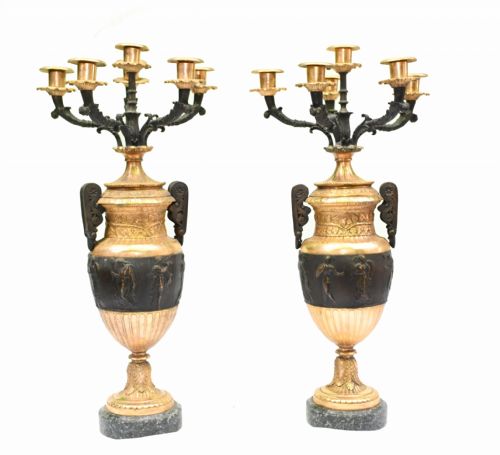
These tabletop antique candelabra bring genuine period light to a room, cast in bronze, brass, silver plate and marble.
Tabletop Candelabra
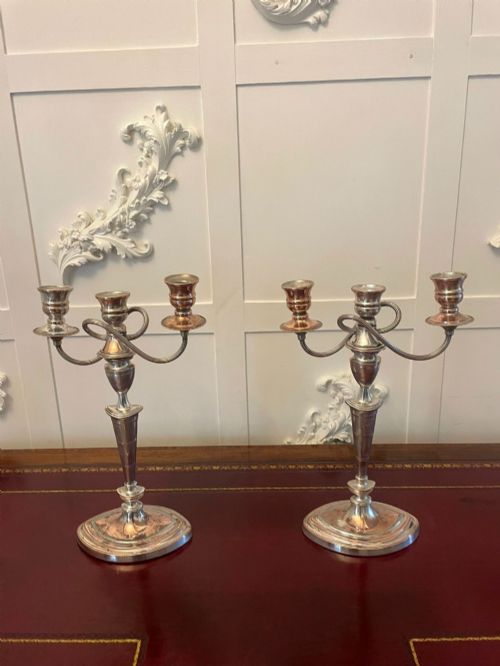
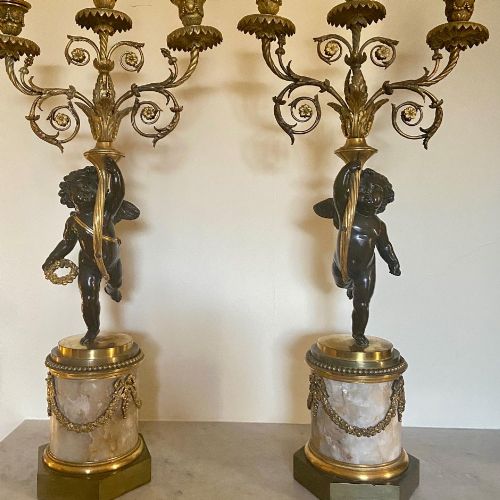
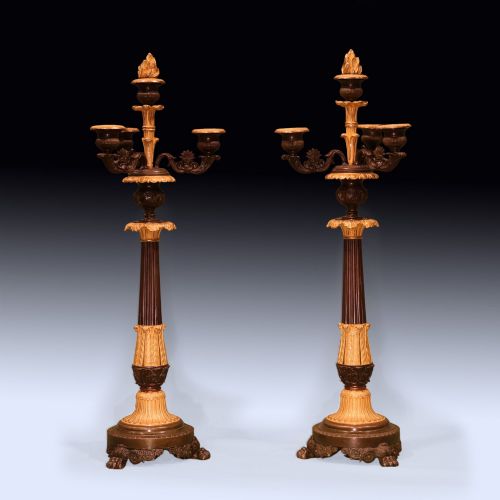
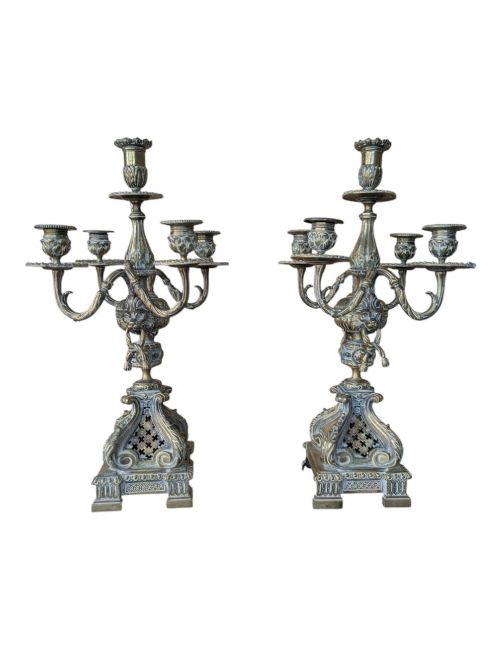
The selection ranges from robust four-arm Regency ormolu examples and French patinated bronze putti figures to silver-plated low two-branch designs and brass Arts and Crafts models. These pieces serve as functional lighting and decorative garnitures, frequently incorporating figural elements such as cherubs, putti or classical figures.
Origins stretch across the eighteenth, nineteenth and early twentieth centuries, capturing shifts in design from Louis XVI and Gothic revivals through to mid-century silver forms. They sit comfortably upon mantelpieces, sideboards and dining tables, bringing substantial presence and warm illumination to an interior.
What varies in quality
Quality rests in the crispness of the metal chasing and the depth of the casting, where finely rendered details on figures like putti and cherubs separate superior works from simpler production. The choice and execution of materials also dictate standing, with genuine ormolu, heavy patinated bronze and solid marble bases showing greater weight and refinement than lighter gilt metal or basic brass.
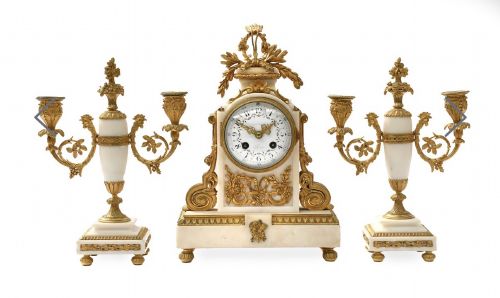
Cohesion of design defines the better pieces, whether through the balanced proportions of a four-light Regency arrangement or the architectural harmony of a mantel clock garniture set. The integration of specialised components, such as carved fluorspar or high-grade silver plating, points directly to the ambition of the original workshop.
The documented styles range from classical French Empire and Louis XVI to Gothic, Arts and Crafts and Art Deco.
Francois Redmond·Thomas Hope·Sitzendorf
The Tabletop Candelabra Glossary
- Ormolu
- Finely ground high-carat gold applied to a bronze base using a mercury amalgamation process, or simply a golden brass alloy used for decorative mounts. This finish provides a bright, warm lustre that resists tarnishing over decades.
- Patinated bronze
- Bronze treated with chemical solutions to produce a darkened, weathered surface colour ranging from deep brown to green. This treatment accentuates the sculptural modelling of figures and foliage.
- Garniture
- A set of matching decorative objects, typically comprising a central mantel clock flanked by a pair of candelabra or vases. These sets were designed to create a symmetrical display on a fireplace mantel.
- Putti
- Depictions of chubby male infants, often winged, derived from classical art and frequently seen supporting candle branches or standing upon marble bases in French designs.
- Old Sheffield Plate
- An early composite material made by fusing a thin sheet of silver to a thicker copper ingot before rolling and shaping. It represents a precursor to standard electroplating.
Tabletop Candelabra: Frequently Asked Questions
Were these designed for dining tables?
Many examples, particularly lower two-branch silver-plated or multi-light forms, were created specifically to provide illumination down the centre of a dining table during evening meals. Their height was kept moderate to allow guests to converse across the surface without obstruction.
Larger four and five-light models were generally intended for sideboards, pier tables or mantelpieces where their substantial weight and visual presence would anchor a room's decor.
What is a garniture set?
A garniture set consists of a central decorative object, most commonly a mantel clock, accompanied by a matching pair of side pieces such as candelabra or urns. These matched groupings were created to be displayed together on a mantelpiece.
When placed as a trio, they create a balanced, symmetrical focal point that reflects the interior design tastes of the nineteenth century.
How do I distinguish bronze from brass?
Bronze is an alloy of copper and tin, typically yielding a heavier weight and a darker, richer reddish-brown or golden-brown natural tone when unpainted. It takes fine detail well and is frequently patinated or gilded.
Brass is an alloy of copper and zinc, generally presenting a brighter, yellower metallic sheen. It tends to be slightly lighter than bronze and is commonly found in nineteenth-century utilitarian and Arts and Crafts pieces.