


Swiveling Dressing Glass
A swiveling dressing glass provides a tilting mirror surface mounted on a frame, offering a practical addition to period tables and dressing stations.
Swiveling Dressing Glass
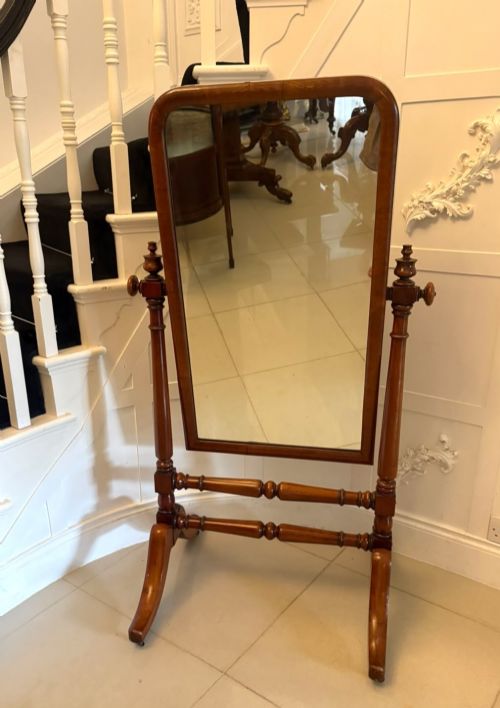
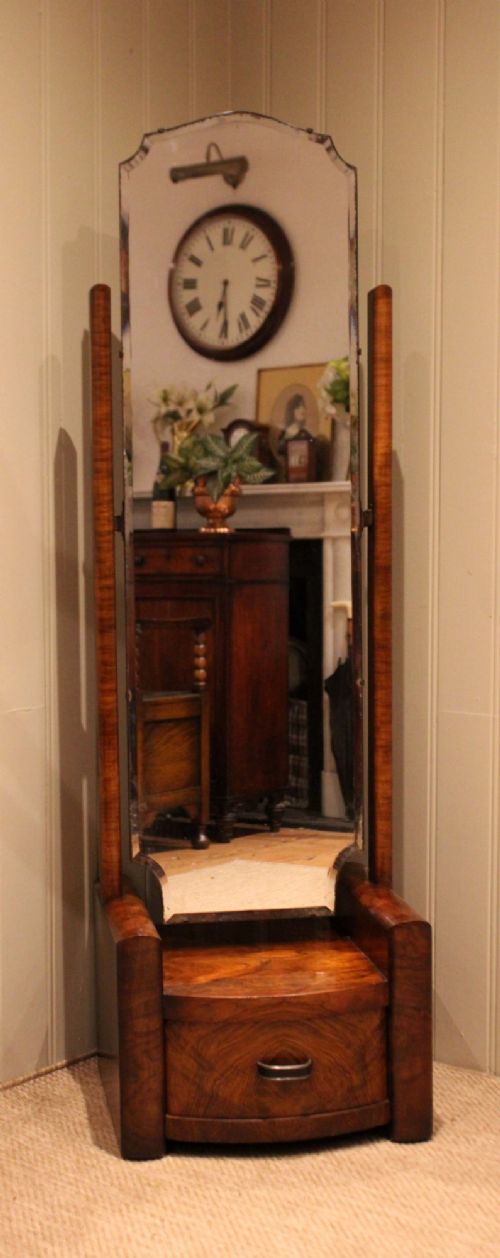
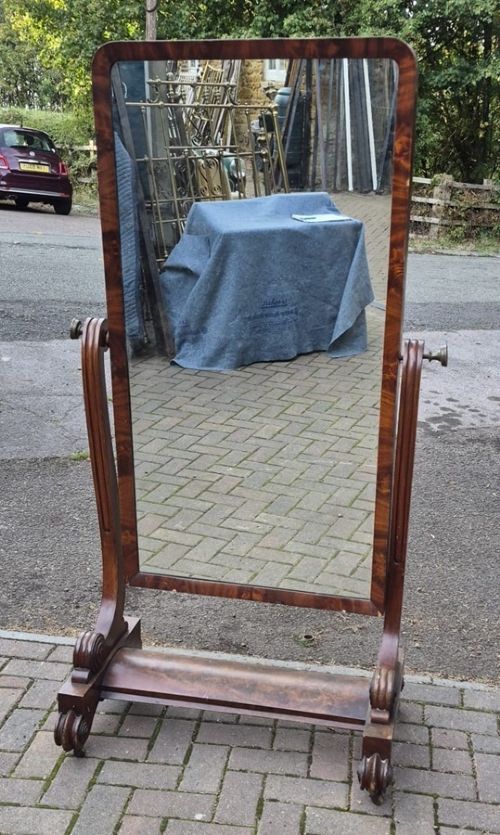
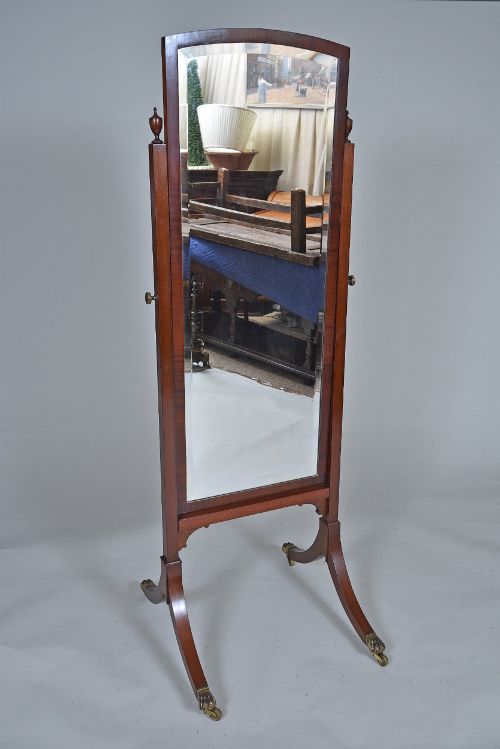
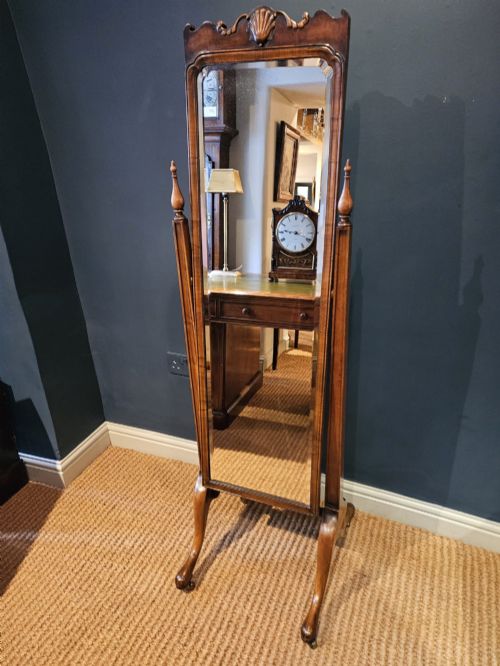
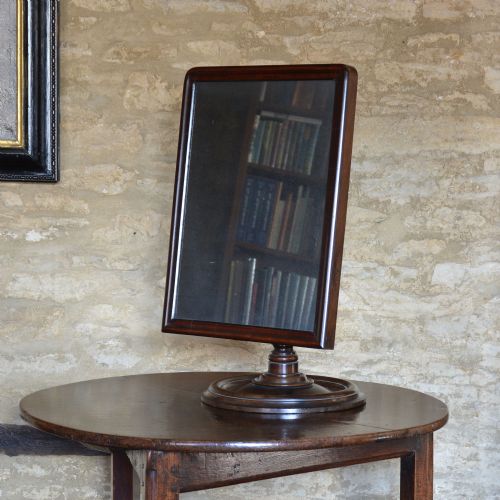
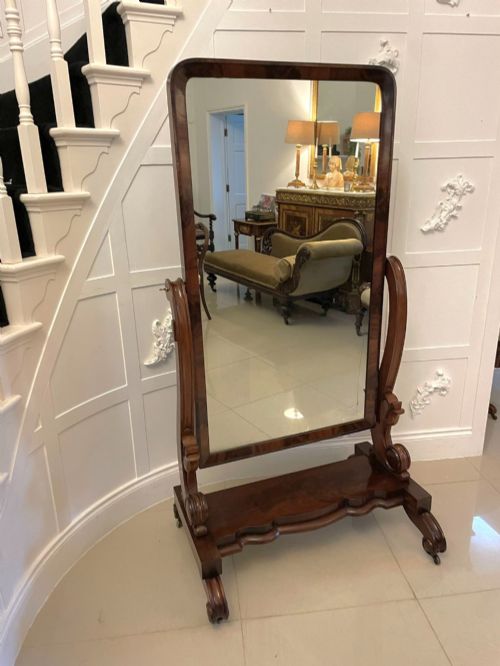
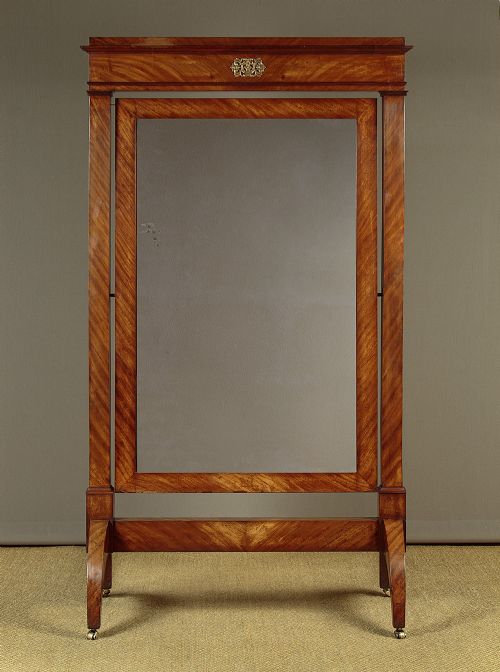
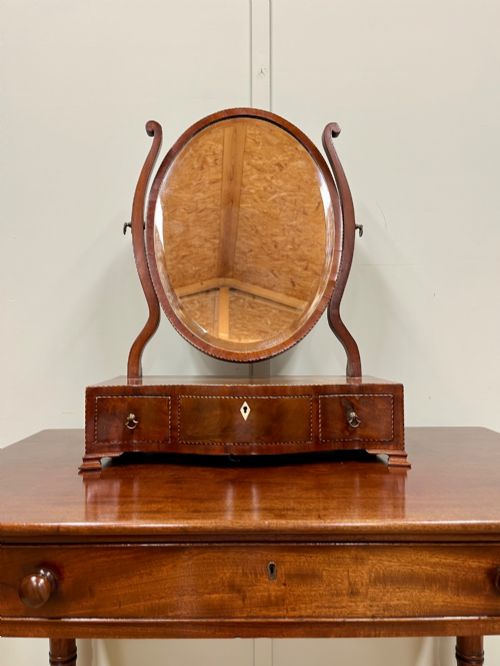
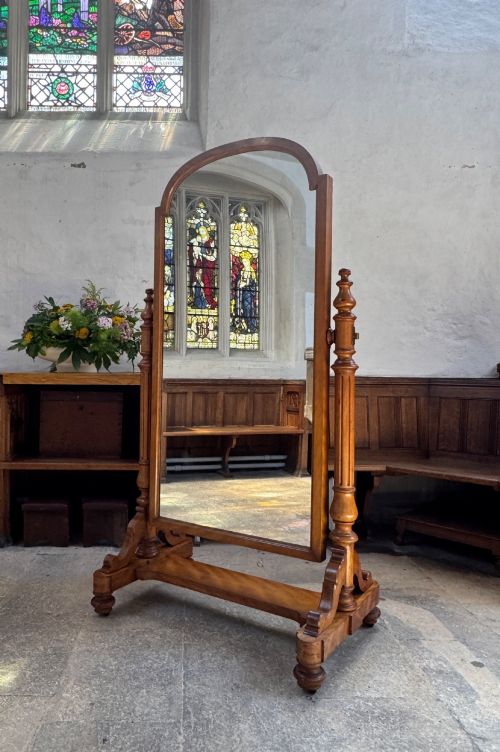
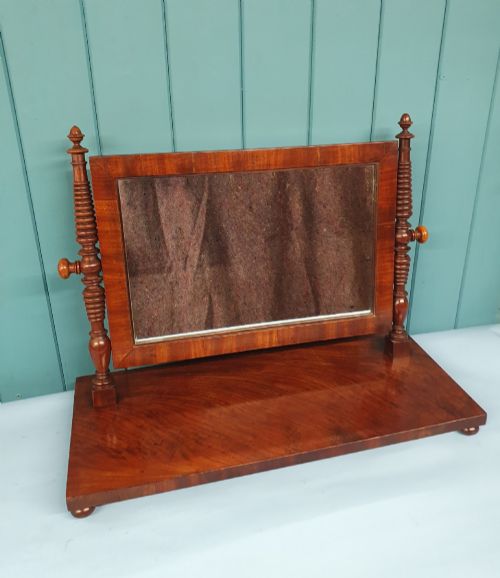
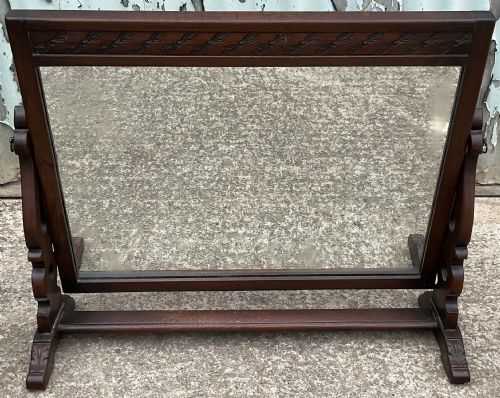
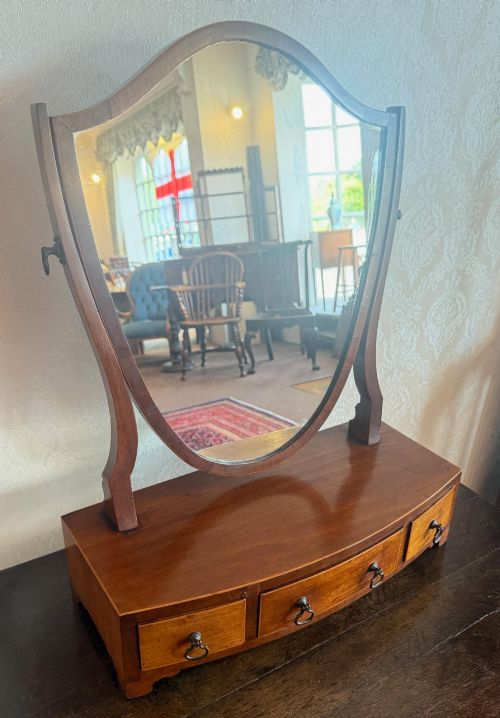
A swiveling dressing glass sits upon tables or stands independently as a floor-standing cheval version, designed to tilt for personal grooming. These pieces span Georgian, Regency, Victorian and Edwardian periods, appearing in various scales from small tabletop toilet mirrors to tall floor-standing designs.
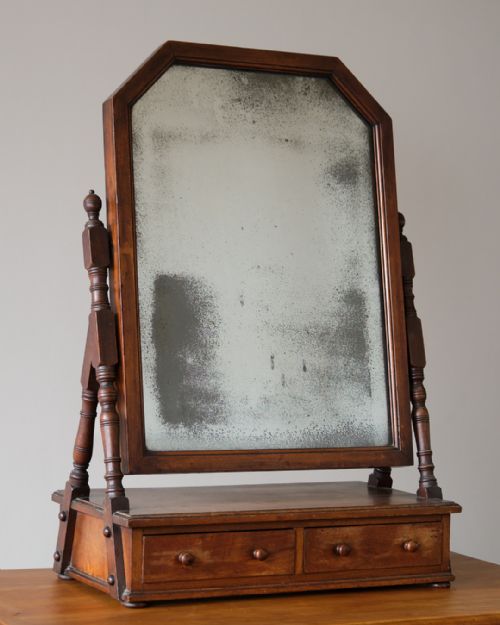
Mahogany forms the dominant wood choice across these centuries, supplemented by walnut, oak, satin birch and giltwood frames. Tabletop models frequently incorporate small drawer bases, whilst floor-standing cheval mirrors rely on sturdy side supports.
The glass pivots on brass or bronze pins set into upright arms, allowing the user to adjust the angle of reflection. This mechanical action defines the form, uniting smaller shaving glasses and larger vanity mirrors under one functional heading.
How they were made
Cabinetmakers constructed the frames using solid hardwoods like mahogany, walnut and oak, often applying veneers and boxwood stringing for decorative contrast. Joints relied on traditional mortise and tenon construction to withstand the daily movement of the pivoting glass plate.
Metal components such as brass brackets, pivots and cast bronze mounts secured the mirror plates within their surrounding frames. Early examples used mirror glass set into rebated wooden frames, backed with protective panels secured by small pins.
Swiveling Dressing Glass Retail Price Guide 2026
Typical asking prices for swiveling dressing glass among the pieces listed under this phrase on Sellingantiques today, from the lower quarter to the upper quarter. They describe what is for sale here now, not the wider market.
Listings feature mahogany, walnut, oak and satin birch, spanning Georgian, Victorian and Edwardian periods.
What varies in quality
The standard of timber selection and cabinetmaking distinguishes finer examples from simpler utilitarian pieces. Superior items feature well-figured mahogany grain, precise dovetailing in base drawers and robust brass pivot hardware that holds the glass firmly at any angle without slipping.
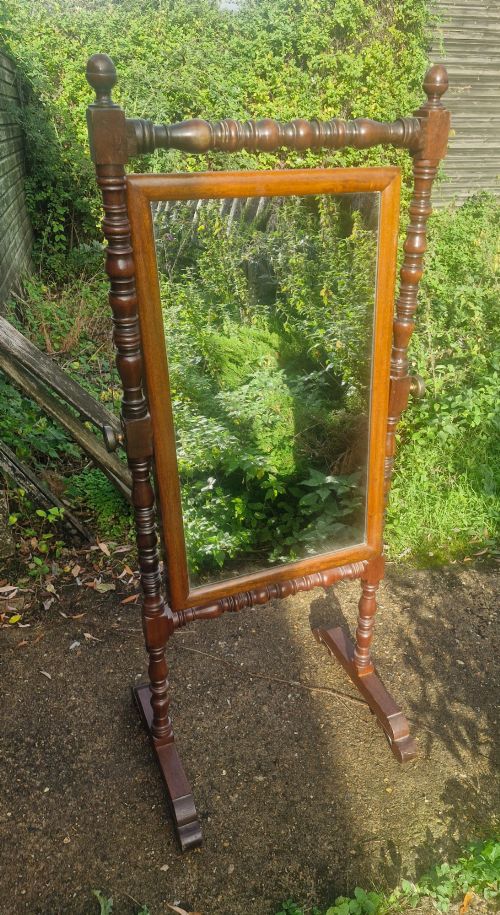
Proportion and decorative detail separate standard production from high-grade workshop output. Finer mirrors display careful carving, balanced turnings such as barley twist supports, and intact original mirror plates showing subtle signs of age rather than modern replacement glass.
Heal & Sons
The Swiveling Dressing Glass Glossary
- Cheval mirror
- A large floor-standing dressing mirror supported by four legs or a heavy frame, allowing the full figure to be seen.
- Toilet mirror
- A smaller dressing glass designed to sit atop a chest of drawers or a dedicated dressing table.
- Swing mirror
- An alternative term for a dressing glass where the mirror plate swings between two vertical upright posts.
- Boxwood stringing
- A narrow line of light-coloured boxwood inlaid into darker wood veneers to create decorative borders.
- Parcel-gilt
- Woodwork decorated with partial gilding, highlighting specific carved details or mouldings against a dark wood ground.
Swiveling Dressing Glass: Frequently Asked Questions
How do I date a swiveling dressing glass?
Dating relies on timber choice, construction methods, and the style of the support frame. Georgian examples often feature slender proportions and bracket feet, whilst Victorian pieces display heavier frames and occasionally turned barley twist supports.
Secondary woods inside drawers and the type of fixings used for the mirror plate further help narrow the period of manufacture, moving from eighteenth-century dovetailing techniques to later nineteenth-century production methods.
What is the difference between a cheval mirror and a dressing mirror?
A cheval mirror stands directly on the floor as a full-length glass, supported by a heavy frame with four feet or floor trestles. It allows a person to view their entire outfit.
By contrast, a dressing mirror or toilet mirror is smaller and intended to rest on top of a table, chest, or dresser, typically focusing on upper body and facial reflection.
How were dressing glasses used historically?
These mirrors served as essential items for morning grooming, shaving, and hairstyling in bedrooms and dressing rooms. Placing them on tables near windows maximised the available natural light.
Small drawers built into the bases of tabletop versions provided secure storage for personal items, small trinkets, and cosmetics used during daily routines.
How do I care for an antique dressing glass?
Keep the wooden frame clean by dusting with a dry cloth and occasionally feeding the timber with appropriate wax to prevent the wood from drying out. Avoid placing the mirror in direct sunlight or near heat sources to protect the polish and veneer.
Take care when adjusting the tilt mechanism, ensuring the brass pivots remain correctly seated in their brackets to prevent undue strain on the surrounding frame.