
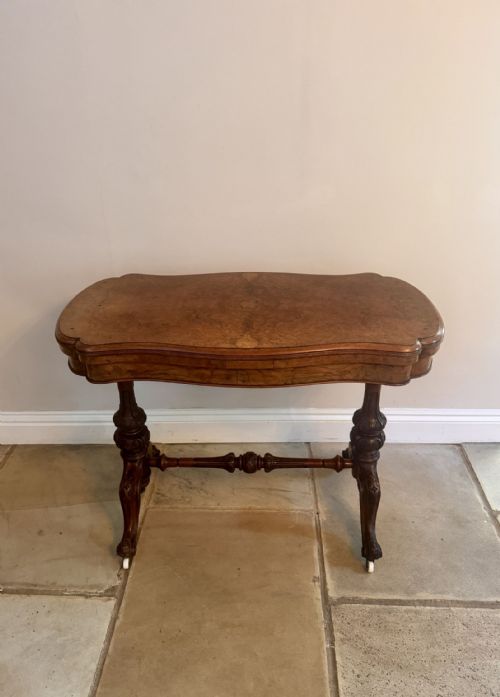
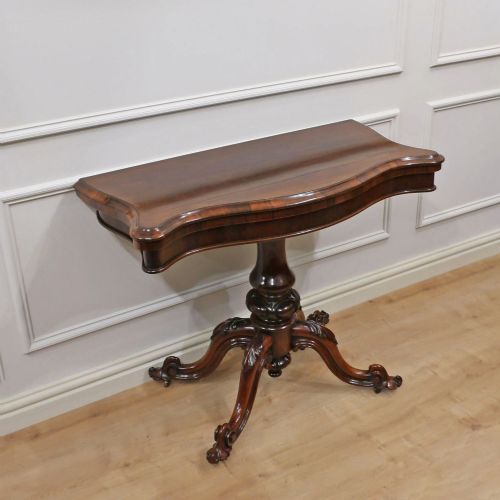
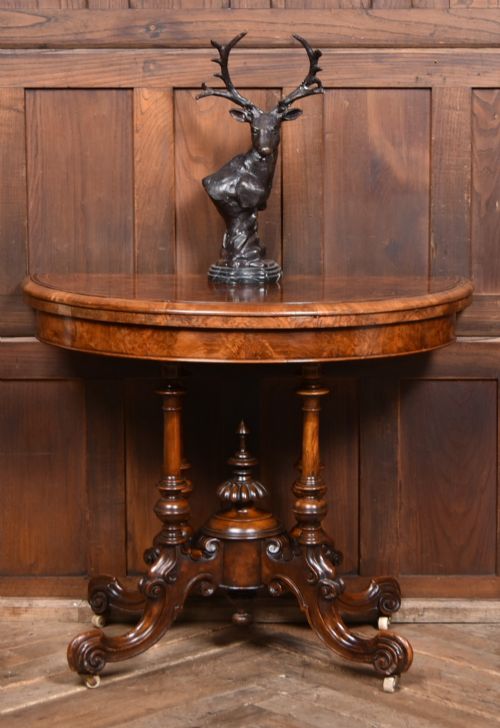
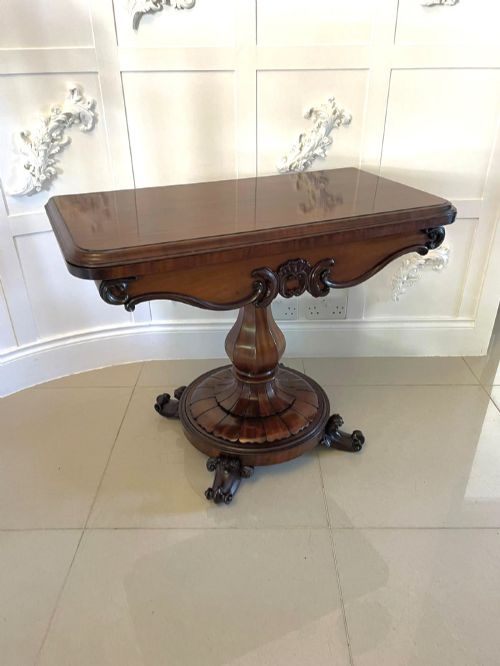

Swivel Top Games Table
A swivel top games table turns on its pivot to reveal a concealed playing surface or storage well, combining daily elegance with purposeful design.
Swivel Top Games Table
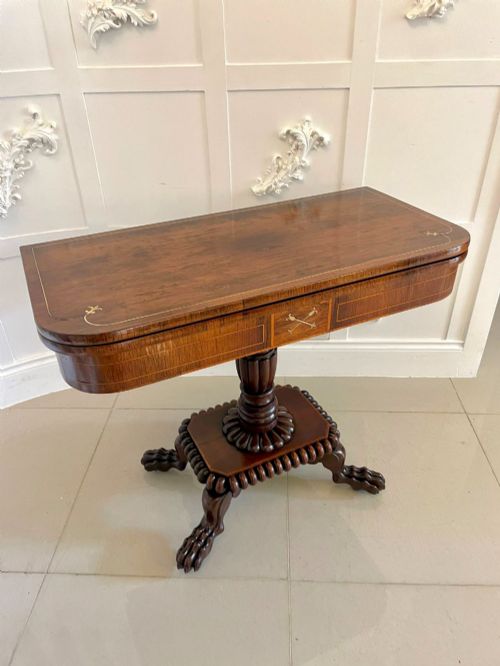
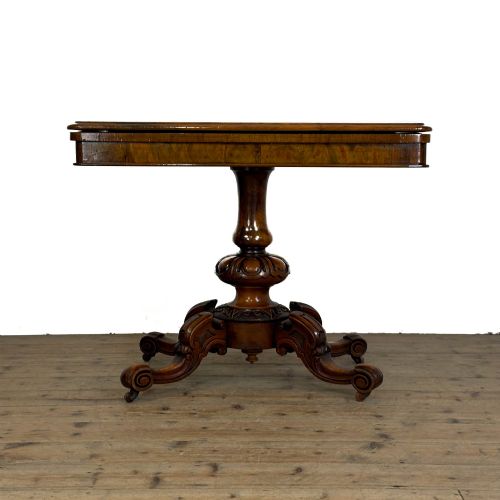
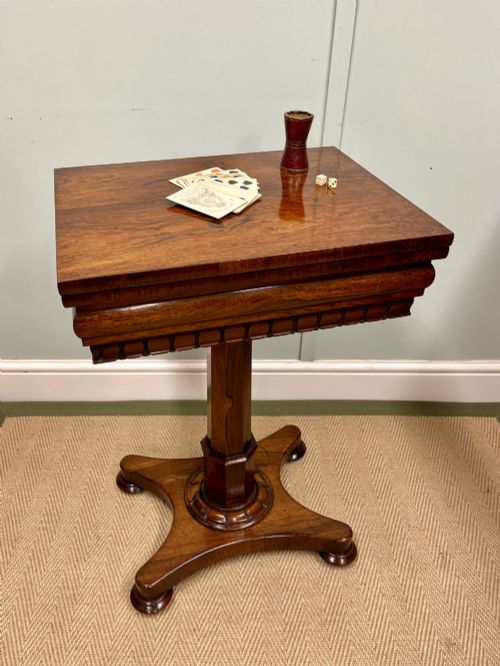
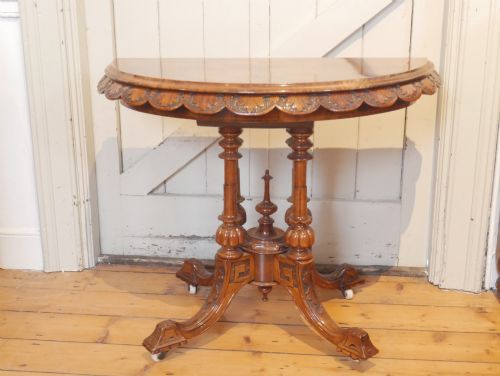
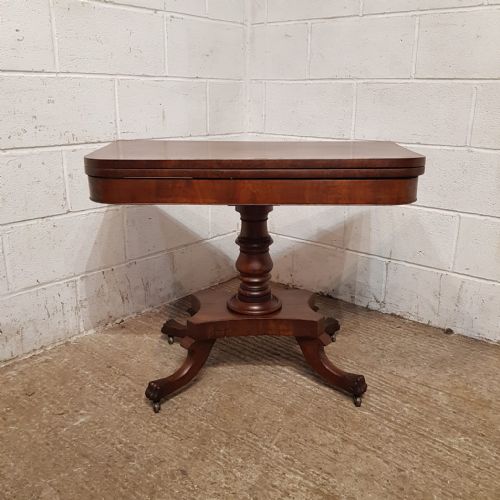
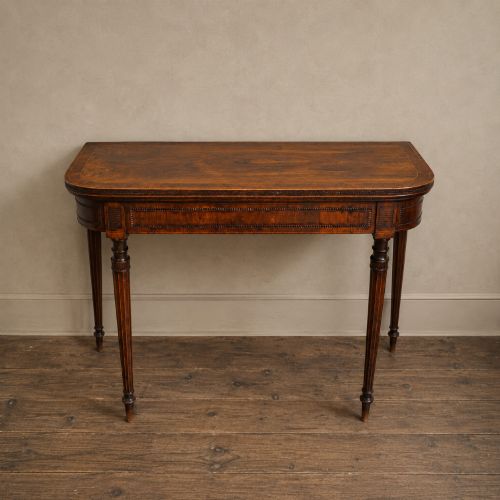
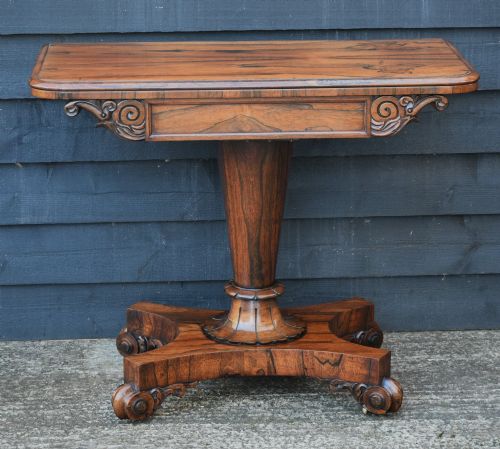
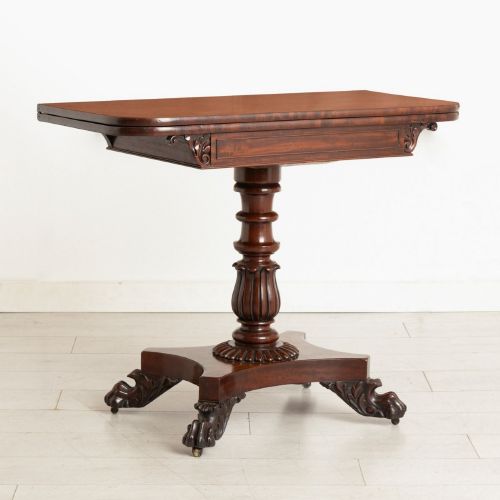
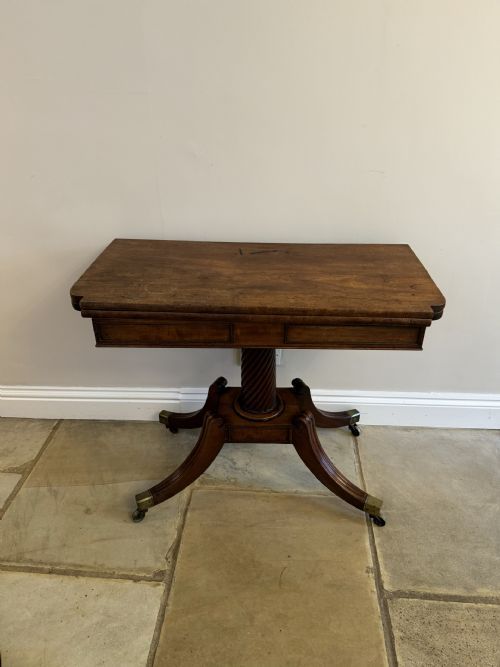
A swivel top games table is a dual-purpose piece designed to function as a side, tea, or console table before pivoting open for card and board playing. The versions most commonly met on this page span the Regency, William IV, and Victorian periods, taking forms such as fold-over card tables and turn-over gaming surfaces.
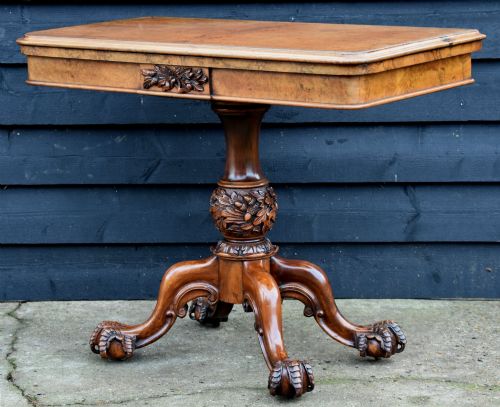
Cabinetmakers constructed these tables in mahogany, rosewood, walnut, and burr walnut, often featuring crossbanding in burr yew or boxwood and brass inlay. They appear in styles ranging from Late Georgian and Grand Regency to Early Victorian and Arts and Crafts, reflecting shifting interior fashions across the nineteenth century.
The mechanism typically involves a hinged top that rotates ninety degrees on a pivot to rest securely over a frame or pedestal base. This design supports the extended leaves during play and returns the piece to a compact console format when not in use.
How They Were Made
Craftsmen built these tables using solid timber frames veneered with figured woods such as rosewood, mahogany, and burr walnut to create rich surface patterns. Decorative contrast was achieved through boxwood and ebony stringing, brass inlay, and burr yew crossbanding along the edges.
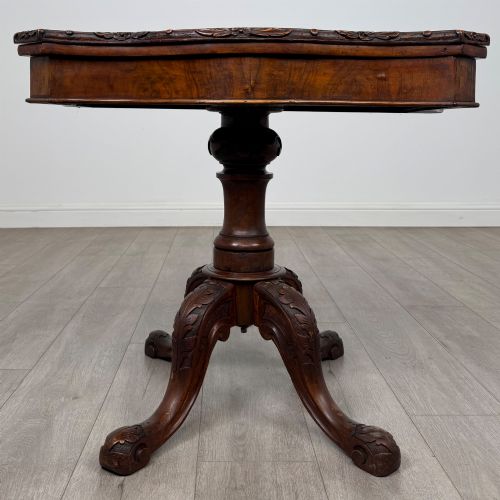
The pivoting mechanism relied on sturdy internal wooden pivots or brass rotational hinges fixed securely to the frieze or pedestal column. Pedestal bases frequently featured carved scrollwork, pillars, and platform feet weighted to balance the weight of the folding top.
Listings feature rosewood, mahogany, walnut, and burr walnut across Regency, Victorian, and Edwardian periods.
What Varies in Quality
Quality shows in the choice of timber figure, from plain mahogany boards to heavily figured burr walnut and book-matched veneers. The precision of inlay work, such as fine brass stringing and boxwood borders, marks the distinction between standard workshop production and high-end cabinetmaking.
Structural integrity depends on the smoothness of the swivel action and the rigidity of the pivot mechanism when fully extended. Superior examples maintain a tight joint when closed and a stable, level surface when opened for play.
Edwards & Roberts·William Trotter·H.OGDEN
The Swivel Top Games Table Glossary
- Crossbanding
- A strip of veneer applied perpendicularly to the grain of the main surface around the border. This technique frames the top and protects vulnerable end grain.
- Frieze
- The horizontal band of wood directly beneath the tabletop. In these tables, the frieze often contains a concealed well or supports the pivoting mechanism.
- Demi-lune
- A half-moon shape used for table tops and consoles. These tables sit flat against a wall when closed and open into a full circle or oval.
- Veneer
- A thin layer of figured timber applied over a secondary wood base. This method displays expensive grain patterns without the structural instability of solid boards.
Swivel Top Games Table: Frequently Asked Questions
How do I operate the swivel top?
To open the table, lift the top slightly to clear any locking peg and rotate it ninety degrees on its central pivot. Once aligned over the frame, fold the hinged leaf down to form a stable surface.
Ensure the supporting gate leg or pivot bracket is fully extended beneath the leaf before placing any weight on the playing area.
Where were these tables placed?
These pieces traditionally stood against the wall of a drawing room or parlour as a side or console table when closed. They moved into the centre of the room only when required for evening card games or tea.
Their dual function allowed households to save floor space while maintaining a formal appearance during the day.
What is stored inside the frame?
Many examples feature a shallow compartment concealed beneath the pivoting top for storing playing cards, counters, and dice. The depth of this well varies depending on the thickness of the frieze and the specific design of the pedestal or leg assembly.
This hidden space kept gaming accessories close at hand without cluttering the surface of the room.
How do I tell Regency from Victorian tables?
Regency tables often display clean classical lines, brass inlay, and rosewood veneers with pedestal bases or sabre legs influenced by ancient forms. Victorian examples tend to feature heavier proportions, burr walnut veneers, carved scrollwork, and serpentine edges.
Examining the secondary woods and construction methods provides further clues to the manufacturing decade.