



Swivel Piano Stool
A swivel piano stool turns on its base to let a player shift weight while reaching the keyboard.

Swivel Piano Stool
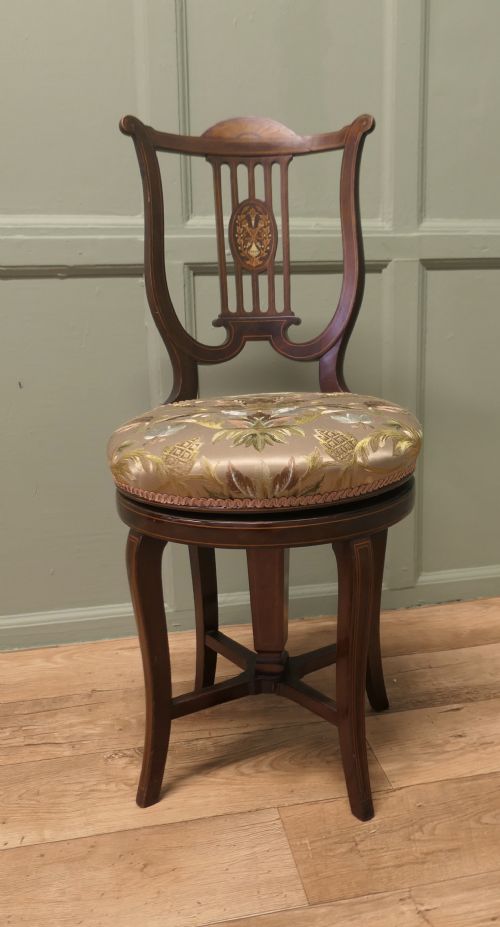
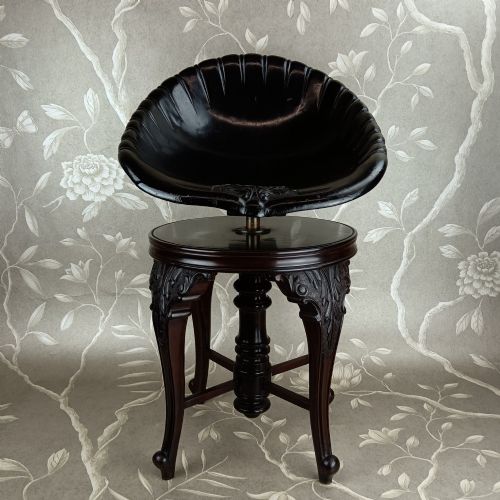
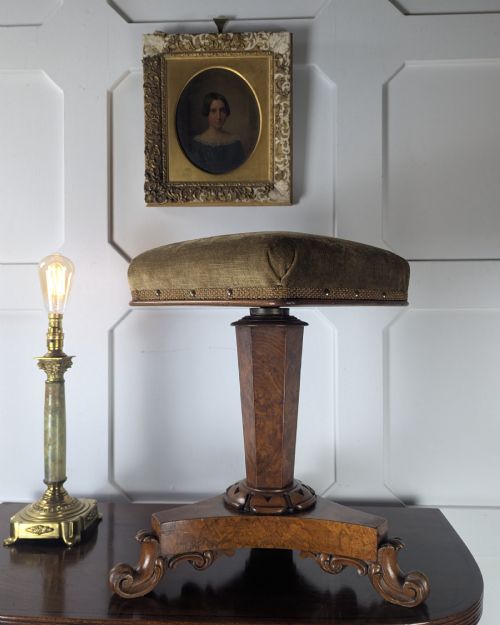
A swivel piano stool is a seating form designed for musicians, revolving on a central mechanism to allow easy movement at the keyboard. When you search for a swivel piano stool, you encounter pieces spanning the nineteenth century, including Victorian, Regency, and William IV periods.
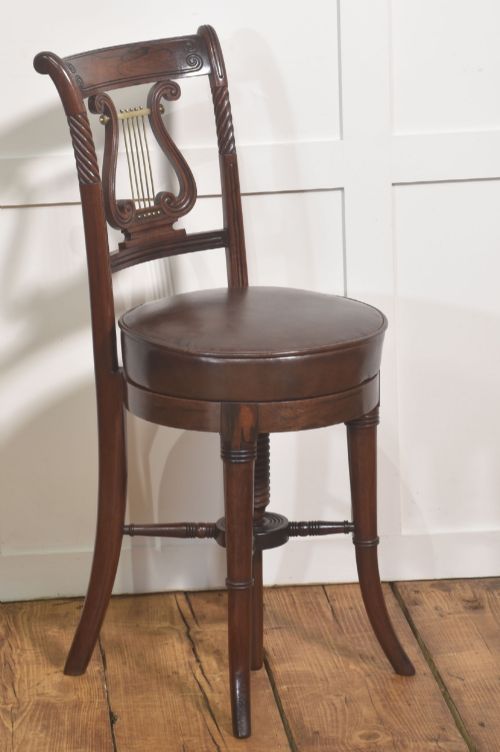
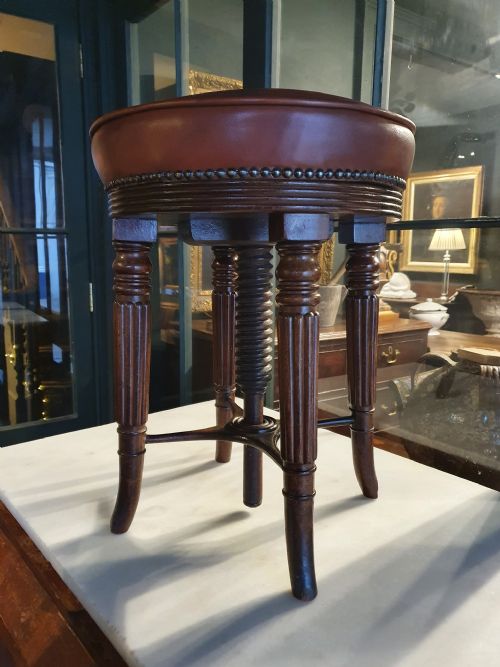
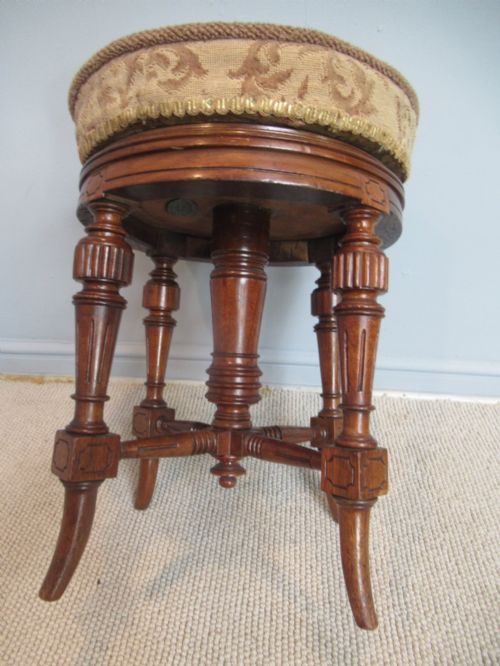
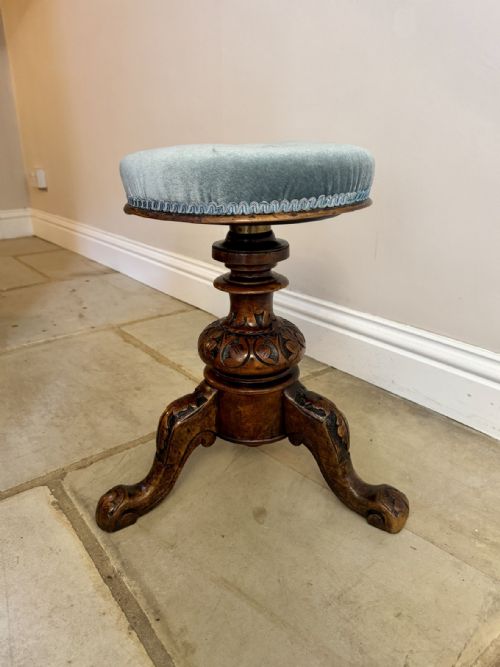
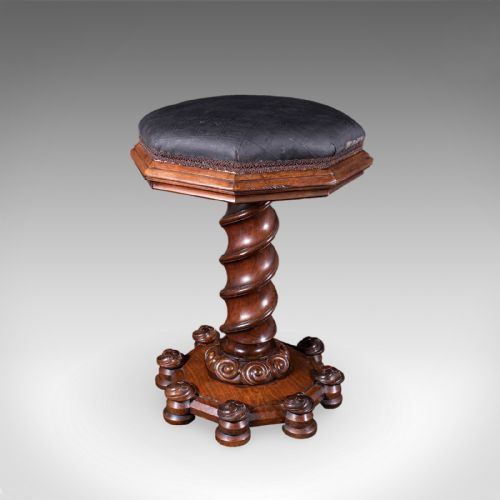
The most common examples on this page are circular walnut or mahogany stools featuring adjustable revolving tops and tripod or four-legged bases. Makers also produced variations for harpists and cellists, alongside music chairs with backs and dressing table stools.

How they were made
Cabinet makers utilised dense hardwoods such as mahogany, walnut, rosewood, and occasional ebonised or painted finishes to build the frames. Brass mechanisms provided the swivel and rise-and-fall screw adjustments.
Seats were upholstered in fabric, leather, or velvet, often mounted over papier-mâché, bentwood, or carved wooden structures.
Swivel Piano Stool Retail Price Guide 2026
Typical asking prices for swivel piano stool among the pieces listed under this phrase on Sellingantiques today, from the lower quarter to the upper quarter. They describe what is for sale here now, not the wider market.
Listings feature nineteen-century timber varieties including rosewood, mahogany, walnut, and padouk, alongside cast iron and brass hardware.
What varies in quality
The grade of timber and the depth of carving separate standard examples from finer workshops. Heavier rosewood and figured walnut command attention, alongside crisp execution on tripod legs and brass inlay.
The precision of the revolving mechanism also dictates standard: smooth rotation without lateral wobble marks superior construction.
Jennens & Bettridge·Gillows·James Shoolbred·Thonet·Howe
The Swivel Piano Stool Glossary
- Revolving
- Turning through a full circle on a central pivot. This motion allows the seated musician to turn slightly towards sheet music or adjust posture.
- Rise and fall
- An adjustable height mechanism operated by turning the seat top on a threaded wooden screw or metal spindle. This lets players set the exact seating level for comfort.
- Tripod base
- A three-legged support structure beneath the central column. These legs often feature carved cabriole shapes or scroll details.
- Papier-mâché
- A composite material made from paper pulp mixed with glue and resin, pressed in moulds and lacquered. Jennens and Bettridge utilised this technique for decorative music stool components.
- Music chair
- A seating form fitted with a backrest, sometimes designed with an open lyre shape to accommodate harpists or cellists.
Swivel Piano Stool: Frequently Asked Questions
How do I adjust the height?
You rotate the circular wooden seat top clockwise or anti-clockwise to raise or lower the platform along a central threaded screw. Some examples use a metal rise-and-fall mechanism hidden beneath the frame.
Ensure the mechanism is clean and lubricated if stiff, avoiding forced turns that might strain the internal wooden threads.
Were these only used for pianos?
While designed primarily for keyboard players, nineteenth-century makers built variations specifically for harpists, cellists, and organists. Many double as dressing table chairs or general music room seating.
The absence of arms on standard swivel models allowed musicians maximum freedom of movement for their arms.
How do I date a Victorian piece?
Victorian examples often display specific stylistic clues like heavy walnut carving from the 1880s or papier-mâché framing from earlier decades. Registration marks or maker stamps underneath provide more precise dating.
Turned legs, timber choices, and brass components also help narrow down the decade of manufacture.
Are replacement fabrics acceptable?
Many surviving examples feature modern upholstery because original nineteenth-century textiles wore down through heavy daily use. Traditional horsehair stuffing and period-appropriate velvet or leather maintain historical character.
Inspect the wooden seat base beneath the fabric to verify original construction and check for alterations.