
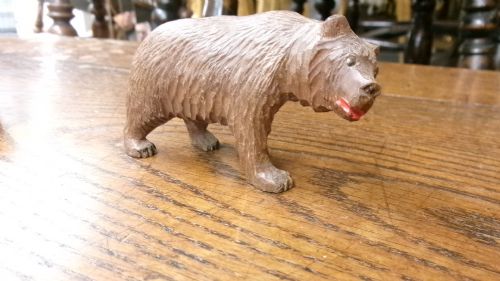


Swiss Folk Art Carving
These swiss folk art carving pieces bring alpine wildlife and folklore into a room with direct, unpretentious hand-carved character.
Swiss Folk Art Carving
Swiss folk art carving encompasses functional objects and figurative sculptures shaped from regional timbers during the nineteenth and early twentieth centuries. Collectors encounter animal figures, domestic furniture, and small decorative vessels that capture the rural traditions of the Alpine landscape.
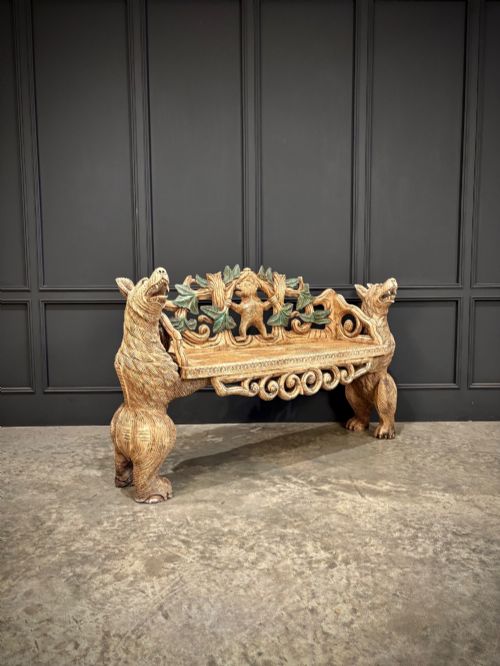
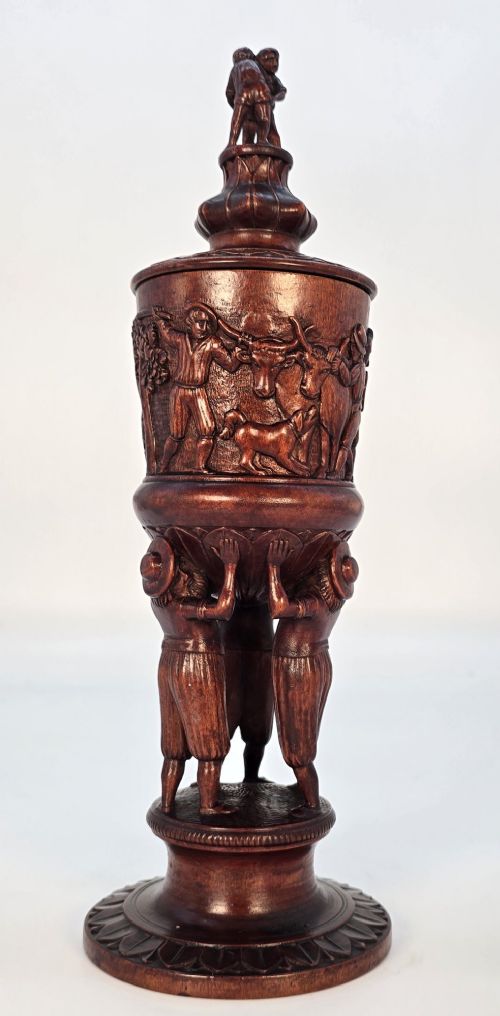
Bears, cattle, and mountain figures dominate the selection, frequently appearing as freestanding sculptures, nutcrackers, or structural elements on chairs and hall stands. These pieces reflect a distinct regional aesthetic that bridges domestic utility and detailed wildlife portraiture.
The selection ranges from domestic seating like escabelle chairs to diminutive animal carvings and signed figural works. Pieces often bear regional stylistic links to Brienz workshops and broader Black Forest traditions.
Materials and methods
Carvers predominantly utilised local soft and hardwoods, selecting linden wood, limewood, walnut, oak, and yew wood for their predictable grain and receptive working qualities. These timbers allowed artisans to render fine fur textures, facial expressions, and architectural joints with hand gouges and knives.
Surfaces frequently remain in a natural waxed timber finish, though occasional pieces incorporate paint or stud eyes to define details. The construction methods combine solid wood carving for sculptural subjects with pegged or joined assembly for larger furniture and seating.
Current listings demonstrate a strong presence of linden wood and walnut, spanning periods from the mid-nineteenth century through the 1940s.
Assessing quality
Quality rests upon the confidence of the carving and the fidelity of the anatomical or architectural form. Superior examples display expressive vitality in animal subjects and clean, purposeful tool work that avoids excessive sanding.
Proportion and structural integrity distinguish exceptional items from routine domestic objects. Signed pieces or works tied to documented makers and specific exhibition periods carry additional distinction within the field.
The Swiss Folk Art Carving Glossary
- Linden wood
- A pale, fine-grained timber frequently utilised for intricate nineteenth-century Swiss and Black Forest animal carvings. Its soft consistency permits deep undercut details without splintering.
- Escabelle chair
- A traditional style of regional wooden chair featuring a pegged construction and plank seat. These chairs often incorporate carved motifs reflecting alpine folklore.
- Nutcracker
- A lever-operated or screw mechanism carved into a figurative wooden form such as an animal or human bust. They combine mechanical utility with decorative folk sculpture.
- Lovespoon
- A decorative wooden spoon carved from a single piece of timber, often featuring symbolic motifs like vine leaves. They were traditionally presented as tokens of affection.
- Brienz
- A Swiss centre of woodcarving excellence known for producing highly detailed figurative sculptures and animal studies. Carvers from this region supplied international markets with alpine souvenirs.
Swiss Folk Art Carving: Frequently Asked Questions
What woods were used for these carvings?
Artisans selected regional timbers such as linden wood, limewood, walnut, and fruitwood for their reliable grain structure. These woods responded well to hand tools while providing sufficient durability for functional items.
Lighter woods like limewood facilitated fine sculptural details, whereas walnut and oak provided structural strength for seating and larger furniture forms.
How do I care for antique carved wood?
Maintain stable indoor humidity levels and keep wooden pieces away from direct heat sources to prevent timber splitting. Gentle dusting with a dry, soft cloth preserves the original surface patina.
Avoid applying modern silicone polishes, as traditional beeswax feeds the dry wood and maintains the historical finish without creating artificial buildup.
Are these pieces signed by makers?
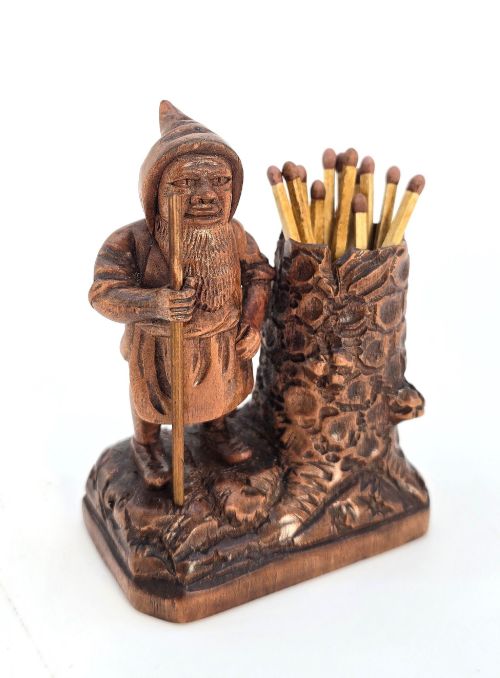
Some sculptures and functional objects carry artist signatures, initials, or workshop stamps carved into the base or hidden surfaces. Documentation such as maker plaques or dated inscriptions occasionally appears on clocks and match holders.
Many historic folk carvings remain unsigned because they originated from family workshops where individual attribution was secondary to domestic production.
How do I distinguish Swiss styles from other regions?
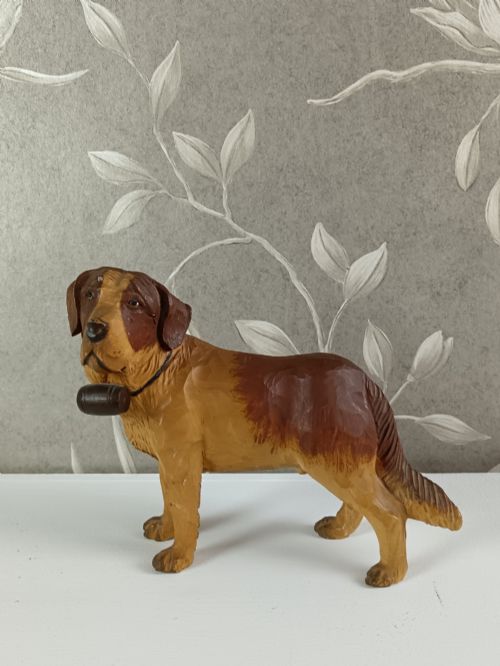
Swiss pieces frequently incorporate specific regional iconography, including local fauna like St Bernards and alpine cattle alongside figures such as William Tell. The stylistic overlap with Black Forest traditions reflects shared mountain carving techniques across European borders.
Examining the specific timber choice and regional chair construction helps differentiate Swiss workshop output from other continental folk traditions.