
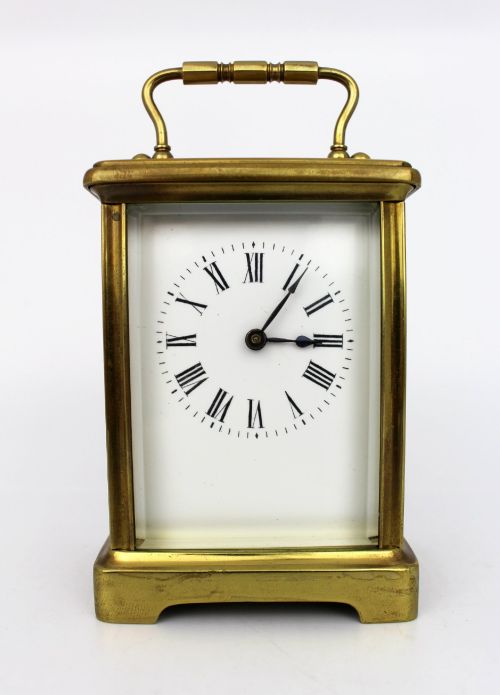


Swiss Desk Timepiece
A swiss desk timepiece brings mechanical precision and refined design to a workspace, offering reliable timekeeping housed in brass, glass, and enamel cases.
Swiss Desk Timepiece
A swiss desk timepiece encompasses compact clocks designed for tables, desks, and travel use, frequently featuring mechanical movements produced in Switzerland. Buyers searching for a swiss desk timepiece encounter diverse forms ranging from Edwardian enamel strut clocks to mid-century modern designs.
The selection includes carriage clocks, folding travel pieces, skeleton movements, and mantel clocks originating from periods spanning the nineteenth century through the mid-twentieth century. Notable aesthetic movements represented include Art Deco, Black Forest carving, and mid-century luxury styles.
How they were made
Constructed primarily using brass, gilt metal, chrome-plating, and glass, these timepieces combine robust metal casework with delicate internal mechanics. Enamel work, such as champlevé, and carved wood cases appear alongside rhodium-plated finishes.
Movements utilise jewelled bearings, such as eight-day and fifteen-jewel mechanisms, requiring skilled micro-engineering. Cases incorporate leather travel encasements, folding silver frames, and glass bell-jars to protect the delicate inner workings.
Listings span from the nineteenth century through the Edwardian era to mid-century modern design, utilising brass, glass, enamel, and carved wood.
What varies in quality
Quality differentiates by the complexity of the movement and the refinement of the exterior case materials. Pieces featuring high-jewel counts, specialised mechanisms like atmospheric winding, and luxury maker signatures sit at the upper end of the scale.
Material execution dictates the tactile appeal, from simple brass housings to intricate champlevé enamel decorations, hand-carved wooden structures, and heavy chrome or gilt platings. The integration of alarms, travel cases, and specialised dial designs further establishes gradation in the tier of manufacture.
Harrods of London·Imhof·Van Cleef and Arpels·Luxor·Asprey·Jaeger LeCoultre·Mappin and Webb
The Swiss Desk Timepiece Glossary
- Carriage clock
- A small, portable spring-driven clock originally designed for travelling by carriage. They typically feature glass panels allowing the movement to be viewed.
- Champlevé enamel
- A technique where troughs are carved into a metal surface and filled with vitreous enamel before firing. This decorative method creates rich patterns and coloured details on clock cases.
- Skeleton timepiece
- A clock designed with an openwork dial and movement plates to reveal the internal gear train and escapement. This construction showcases the mechanical operation of the gears.
- Atmospheric clock
- A timepiece powered by changes in temperature and atmospheric pressure, removing the need for manual winding. The most notable example uses a sealed bellows containing a gas-liquid mixture.
- Strut clock
- A portable timepiece fitted with a hinged prop or stand on the back, allowing it to rest at an angle on a desk or table.
Swiss Desk Timepiece: Frequently Asked Questions
How do I wind an eight day desk clock?
Eight day clocks require winding approximately once a week using a matching key or an integrated crown mechanism, depending on the specific design. Care must be taken not to overwind the mainspring.
Ensuring the key is inserted smoothly prevents damage to the internal ratchet system. Regular winding maintains steady tension for accurate timekeeping.
Where should I place a desk timepiece?
Position these clocks on stable flat surfaces away from direct sunlight, excessive moisture, and heavy vibrations. Desks, mantelpieces, and side tables provide ideal settings.
Keeping the timepiece away from drafty windows prevents temperature fluctuations that might affect mechanical components or delicate enamel finishes.
How do I identify an Art Deco clock?
Art Deco pieces display geometric forms, clean lines, and streamlined symmetry using materials like chrome-plating and polished metals. Numerals often feature stylized fonts.
These designs reject ornate Victorian flourishes in favour of industrial modernity, frequently presenting in skyscraper silhouettes or circular frames.
What is a travel clock?
Travel clocks are compact timepieces engineered for portability, often protected by folding leather cases, sliding metal shutters, or fitted travel boxes. They allow individuals to monitor time securely while away from home.
Many incorporate alarm functions and sturdy hinges designed to withstand movement without disrupting the internal escapement.