






Swiss Carved Wood Statues
Swiss carved wood statues bring the rustic wildlife and folklore of the Alps directly into interiors through detailed nineteenth and early twentieth century craftsmanship.
Swiss Carved Wood Statues
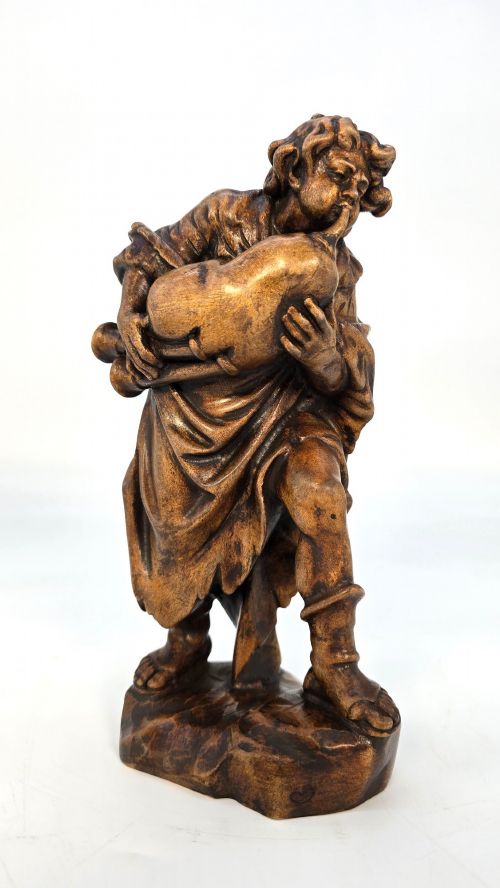
When buyers search for Swiss carved wood statues, they encounter sculptural pieces originating predominantly from the nineteenth and early twentieth centuries. These works frequently fall under the Black Forest or Alpine folk art styles, depicting animals, human figures, and mythological or literary subjects.
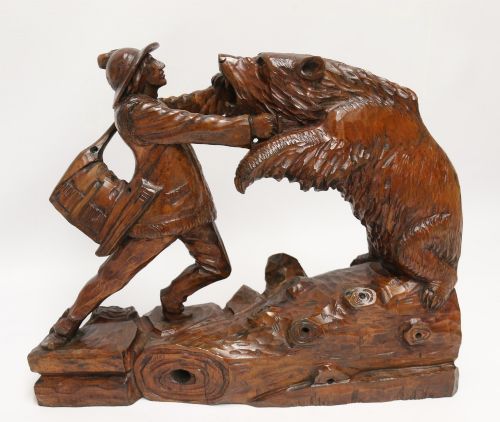
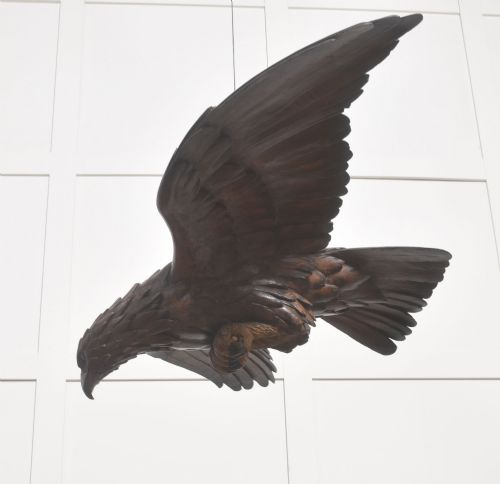
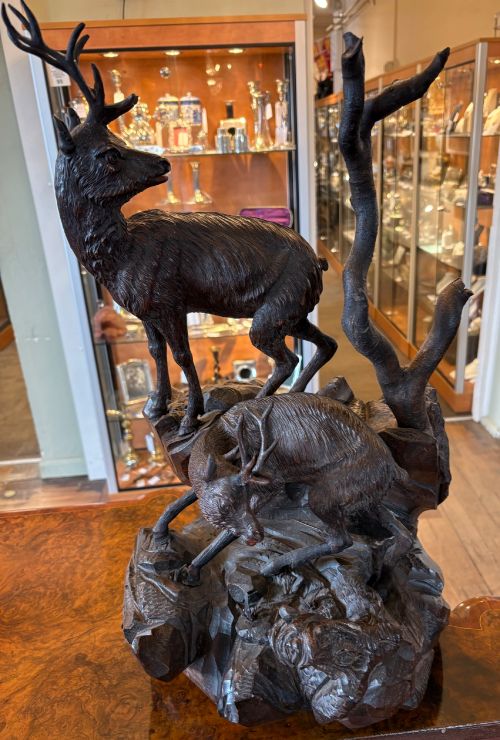
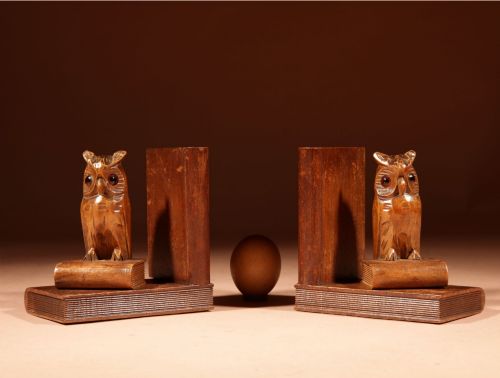
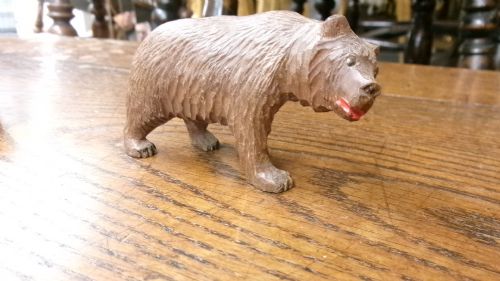
The most common representations on this page include bears, birds of prey such as eagles and hawks, deer, ibex, and cattle. Functional items such as bookends, match holders, and tobacco jars also appear alongside standalone animal and human figures.
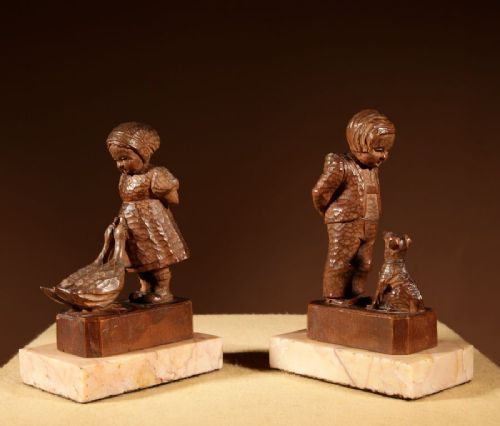
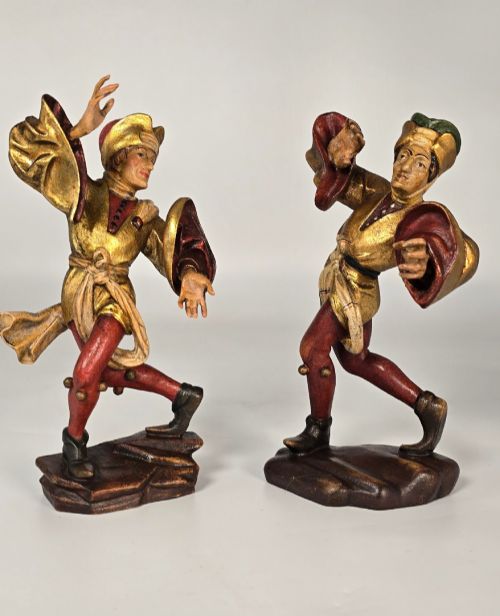
Originating largely from the Brienz region and surrounding Alpine areas, these carvings capture regional trades and wildlife. Buyers often find figures of peasants, medieval characters, and rescue dogs rendered with expressive detail.
Materials and methods
Carvers predominantly utilised local softwoods and hardwoods, relying specifically on linden wood, limewood, and walnut. These timbers provided the fine grain necessary for intricate tool work and deep undercut details.
Makers applied hand-carving techniques using specialised chisels and gouges to build texture, fur, and anatomical precision. Occasional additions such as glass eyes or painted surfaces brought realism to animal and human studies.
Fifteen miniature bears once marched out of the nineteenth century together as a tiny wooden troop.
Quality differences
Quality rests on the depth of the carving and the naturalism of the anatomy, separating hurried production pieces from works by skilled artisans. Superior examples display careful attention to muscular tension in animals and facial expression in human figures.
The choice of timber and the preservation of crisp tool marks without sanding away character dictate the standing of a piece. Signed works or stamped pieces demonstrate provenance that elevates them above anonymous workshop output.
J HUGGLER
The Swiss Carved Wood Statues Glossary
- Black Forest
- A style of wood carving originating from the mountainous regions of central Europe, known for realistic animal and rustic figures. It gained international popularity during the Victorian era.
- Limewood
- A pale timber with a fine, even grain favoured by carvers for its lack of prominent splinters and ease of shaping. It allows for sharp detail in miniature and large sculptures alike.
- Folk art
- Artistic work produced from an indigenous culture or peasant tradition, often reflecting local customs and rural life. These pieces prioritize expressive character over academic proportion.
- Figure group
- A composition featuring two or more carved figures interacting within a single scene. These often depict animals or human pairs in narrative poses.
Swiss Carved Wood Statues: Frequently Asked Questions
What animals appear most often?
Bears dominate the sculptural output, appearing as single figures, lamp bases, and smoking accessories. Deer, ibex, cattle, and birds of prey also feature regularly across nineteenth-century examples.
These animals reflect the native wildlife of the Alpine regions where the carvers lived and worked. Each species offered distinct textures for the artisan to display through varied chisel techniques.
How do I identify the period?
Pieces generally date from the nineteenth to the early twentieth century, aligning with the height of Alpine tourism and export trade. Stylistic cues and material choices help narrow down the decades.
Unsigned works rely on tool marks, wood selection, and subject matter to establish an approximate date. Later twentieth-century items often show modern finishing methods compared to Victorian carvings.
Were these pieces purely decorative?
Many carvings served practical functions in domestic settings while maintaining their artistic appeal. Makers incorporated compartments and supports into daily objects.
Bookends, match holders, tobacco jars, and lamp bases demonstrate how utility met craftsmanship in Alpine households. These items allowed owners to display rustic artistry while organising their studies and parlours.
What is the Brienz connection?
The Swiss village of Brienz became the primary centre for wood carving instruction and production in the nineteenth century. Carving schools trained generations of local artisans who exported their work globally.
Master carvers in this region perfected the depiction of local fauna and peasant life. Stamped signatures and specific regional styles often trace back to workshops based in this valley.