




Swept Gilded Picture Frame
A swept gilded picture frame offers deep moulded curves and historic splendour to elevate fine canvases and watercolours.
Swept Gilded Picture Frame
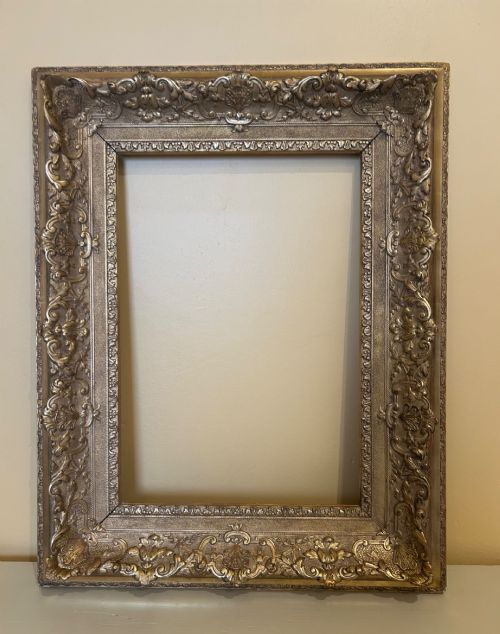
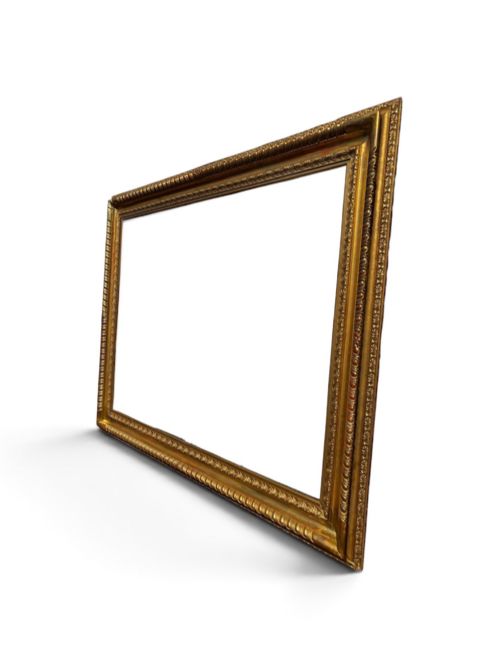
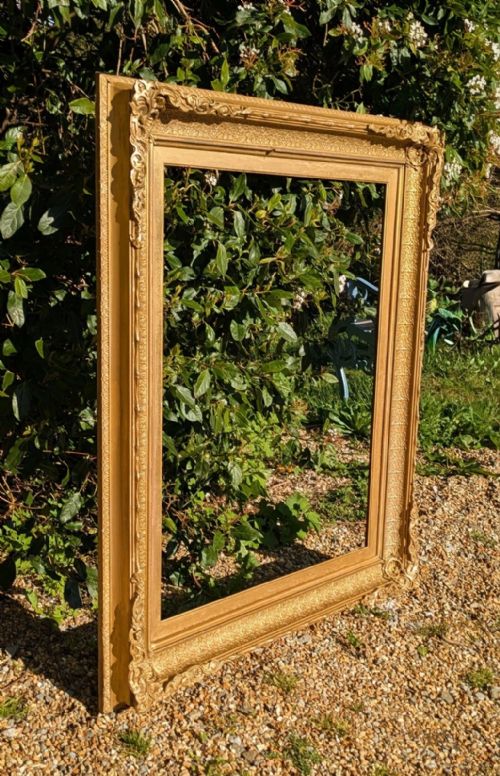
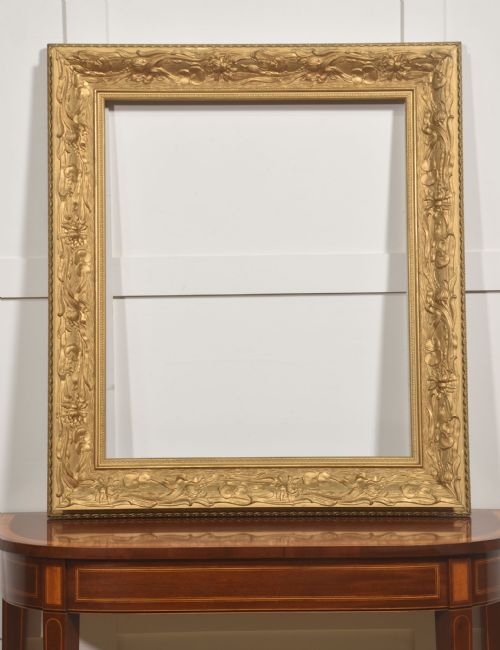
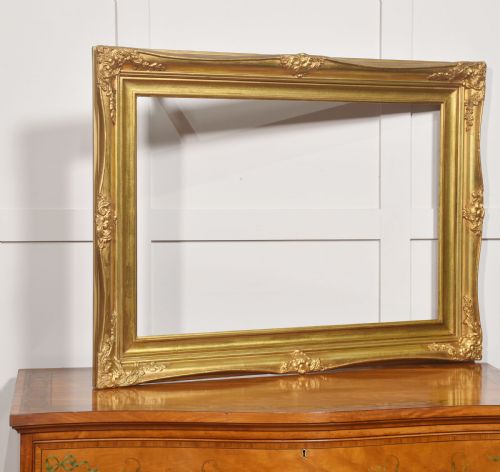
A swept gilded picture frame is a moulded wooden enclosure designed to house oils, watercolours, and prints with dramatic sculptural presence. When you search for this phrase, you encounter pieces originating primarily from the nineteenth and early twentieth centuries, spanning Victorian, Edwardian, and Art Nouveau periods.
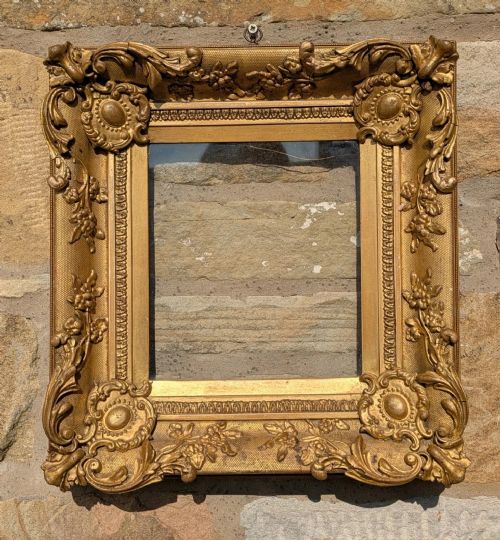
The most common form on this page is the large Victorian or nineteenth-century gilt gesso frame, often displaying exuberant Rococo revival curves. Some examples still contain their original contents, including Scottish school watercolours, floral still lifes, and modernist French canvases.
These enclosures range from small cabinet pieces to massive gallery-scale mouldings designed to command a wall. Their distinctive swept profiles curve outwards towards the corners, creating deep shadow lines that draw the eye inwards to the artwork.
How they were made
Makers constructed the foundational structure from timber, building up complex three-dimensional ornamentation using layers of gesso. This fine plaster mixture was applied to carved or moulded wooden bases and worked into intricate scrolls, leaves, and shell motifs.
Surfaces were then finished with gold leaf applied over a bole base, imparting a warm metallic lustre that catches ambient light. Artisans achieved the characteristic swept profile through a combination of joinery, applied composition ornament, and meticulous hand-gilding.
Swept Gilded Picture Frame Retail Price Guide 2026
Typical asking prices for swept gilded picture frame among the pieces listed under this phrase on Sellingantiques today, from the lower quarter to the upper quarter. They describe what is for sale here now, not the wider market.
Listings feature frames spanning the seventeenth century through to the Edwardian period, alongside Victorian oil paintings and watercolours.
What varies in quality
The distinction between ordinary and exceptional frames lies in the crispness of the gesso modelling and the depth of the rebate and sight edge. Finer mouldings retain sharp relief in their scrollwork and leaf details, whereas lesser examples show softened contours from repeated over-gilding or heavy cleaning.
Construction substance also dictates worth, as heavier timber foundations and intact corner mitres provide structural integrity for large paintings. The quality of the original gold leaf application determines how gracefully the metal ages, developing a soft, mellow tone rather than a flat, modern brassiness.
Robert Eadie RSW·Sir Herbert Hughes Stanton·William Miller Frazer RSA·Emily Selinger
The Swept Gilded Picture Frame Glossary
- Gesso
- A traditional chalk or plaster mixture applied to wood to create a smooth, mouldable surface for subsequent gilding. It allows craftsmen to carve intricate relief decoration.
- Giltwood
- Timber that has been coated with gold leaf or gold paint to simulate solid gold. This material defines the luxurious appearance of antique frames.
- Rococo
- An ornate artistic style characterised by asymmetrical scrolls, C-curves, and naturalistic plant motifs. It heavily influences the swept profile of many Victorian frames.
- Rebate
- The recessed channel at the back of a frame that holds the canvas, glass, and backing board securely in place. Its depth determines what thickness of artwork the frame can accommodate.
- Gilding
- The application of thin gold leaf or powder to a prepared surface. This skilled process gives frames their characteristic luminous metallic finish.
Swept Gilded Picture Frame: Frequently Asked Questions
How do I date a gilt frame?
Dating relies on examining the timber construction, the composition of the gesso underneath, and the specific decorative style.
Victorian and Edwardian examples often display heavier gesso ornament and distinct joining techniques visible from the reverse.
Can I put a modern canvas inside?
Yes, provided the internal dimensions and the depth of the rebate match the thickness of your canvas or panel.
Many collectors pair antique frames with contemporary artworks to create a striking contrast between old and new.
How should I clean giltwood?
Cleaning requires only very gentle dusting with a soft, dry brush to prevent disturbing the delicate gold leaf.
Water and chemical solvents should be avoided entirely, as they can quickly strip away the historic metallic surface and underlying gesso.