

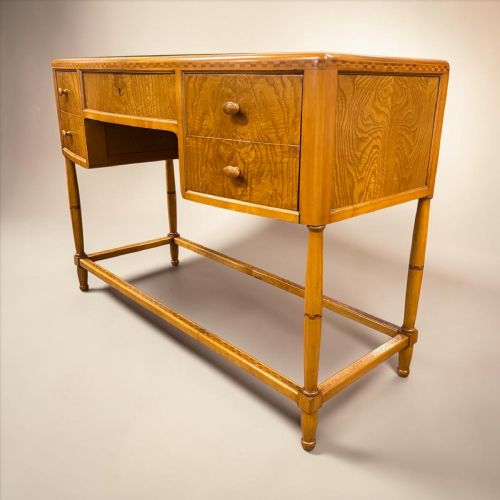


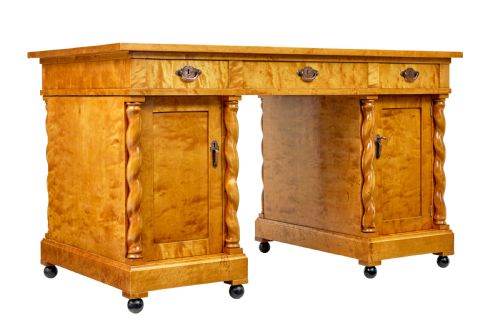


Swedish Writing Desk
A swedish writing desk brings functional Scandinavian craftsmanship and striking birch or painted surfaces into a room.
Swedish Writing Desk
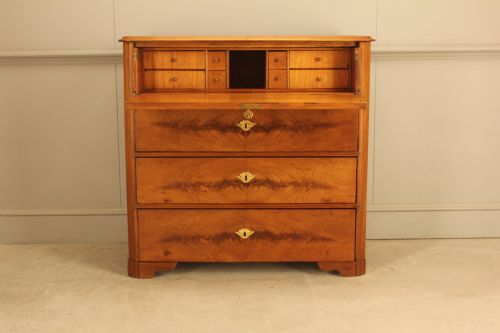
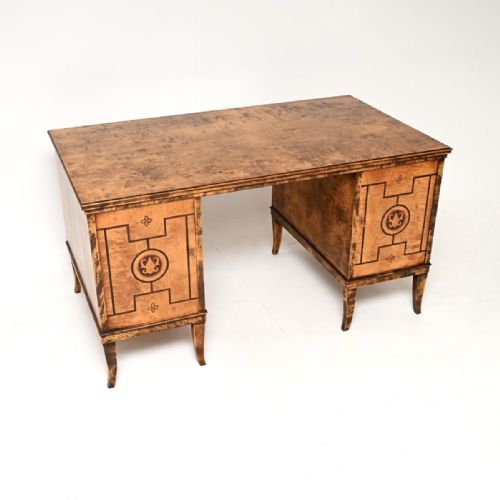
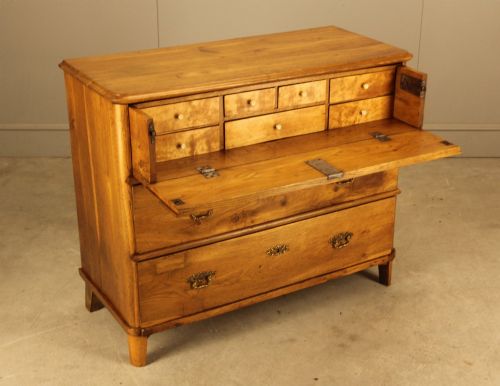
A swedish writing desk encompasses practical writing furniture originating from Sweden across the nineteenth and early twentieth centuries. These pieces range from compact painted writing tables to substantial bureau cabinets and secretaire chest of drawers.
The version most commonly encountered on this page is constructed from birch or pine, frequently featuring either native timber grains or painted surfaces in Scandinavian country or classical styles.
Makers and craftsmen utilised forms drawing upon Gustavian, Biedermeier, and Art Deco design vocabularies to create versatile writing surfaces for domestic interiors.
Materials and Construction
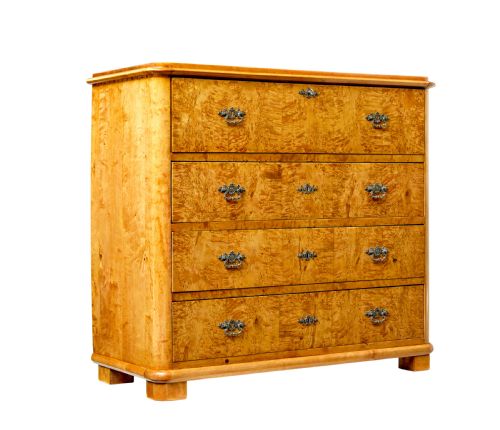
Construction relies heavily on native Scandinavian woods, primarily birch, burr birch, and pine, selected for both structural integrity and decorative grain patterns. Carpenters applied veneers of flame and burr birch to primary surfaces to create dramatic visual movement.
Painted finishes form a distinct category, utilising traditional paint layers applied to pine and softwood carcasses. Brass hardware frequently provides functional contrast to the wooden and painted exteriors.
Swedish Writing Desk Retail Price Guide 2026
Typical asking prices for swedish writing desk among the pieces listed under this phrase on Sellingantiques today, from the lower quarter to the upper quarter. They describe what is for sale here now, not the wider market.
The listings demonstrate a strong presence of nineteenth-century pine and birch, alongside early twentieth-century Art Deco and Empire Revival forms.
Assessing Quality and Execution
Quality separates along the lines of timber selection and decorative execution, distinguishing standard utility furniture from pieces commissioned for finer interiors. The handling of burr and flame birch veneers demonstrates the joiner's skill in matching and placement.
Original painted surfaces hold distinct merit over later interventions, with the integrity of the decorative scheme dictating the piece's character. Proportions and the refinement of revival details, such as Empire or Rococo motifs, further elevate the standing of an individual desk.
The Swedish Writing Desk Glossary
- Secretaire
- A desk featuring a drop-front writing flap that conceals a fitted interior of small drawers and pigeonholes. This form allows the writing surface to be closed when not in use.
- Masur Birch
- A decorative variation of birch timber displaying distinctive natural swirling patterns and knots. It is frequently utilised in high-status nineteenth-century Scandinavian furniture.
- Gustavian
- The Swedish neoclassical style spanning the late eighteenth and early nineteenth centuries. It is characterised by restrained classical proportions, fluted legs, and pale painted finishes.
- Biedermeier
- A Central European and Scandinavian design movement focusing on utilitarian comfort and clean lines. It highlights the natural grain of timbers such as birch without excessive ornamentation.
- Escritoire
- A tall writing cabinet or desk equipped with a sloping or folding writing surface. The term derives from the French word for writing.
Swedish Writing Desk: Frequently Asked Questions
How do I clean a painted Swedish desk?
Dust the surface regularly with a soft, dry cloth to prevent the accumulation of grit. Avoid harsh chemical cleaners that can damage historical paint layers.
For deeper cleaning, consult a specialist conservator who understands traditional Scandinavian paint formulations. Moisture should be kept to an absolute minimum during routine maintenance.
Where should I place a birch writing table?
Position the desk away from direct sunlight to protect sensitive birch veneers and historic paint finishes from fading. Consistent room humidity prevents the timber from splitting or warping over time.
Ensure the piece sits clear of direct heat sources such as radiators. Adequate ambient light makes the distinctive wood grain or painted details visible.
What is the difference between a secretaire and a bureau cabinet?
A secretaire generally incorporates a drop-front writing drawer or fall-front compartment within a chest or cabinet structure. These often include internal compartments for stationery and documents.
A bureau cabinet typically combines a sloping writing flap above lower drawers with an upper bookcase or shelving section enclosed by doors. Both forms originated to provide secure storage for correspondence.
How do I identify a Gustavian piece?
Look for symmetrical neoclassical proportions, straight tapered legs, and carved details such as fluting or rosettes. These pieces typically feature muted, pale painted finishes rather than exposed dark woods.
Gustavian design draws direct inspiration from French Louis XVI aesthetics translated through a distinct Swedish interpretation. The resulting aesthetic prioritises restraint and functional elegance.