
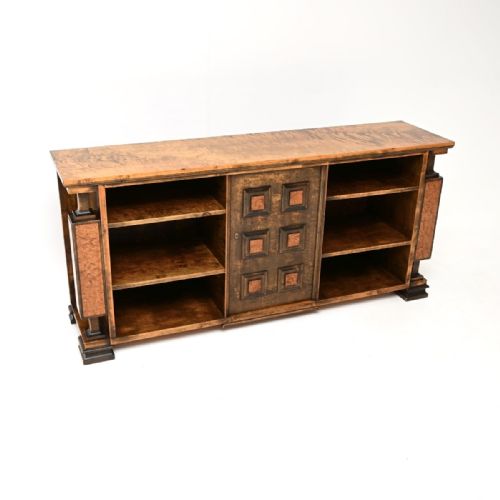
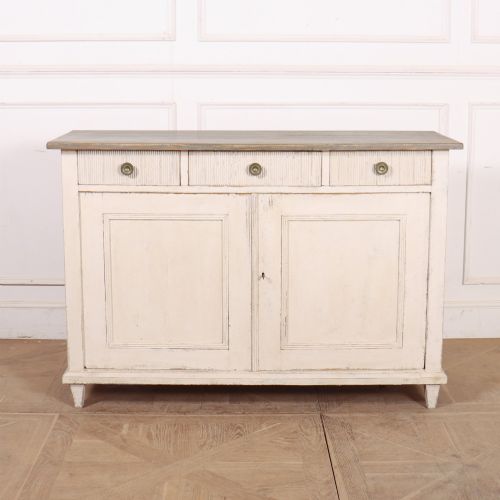
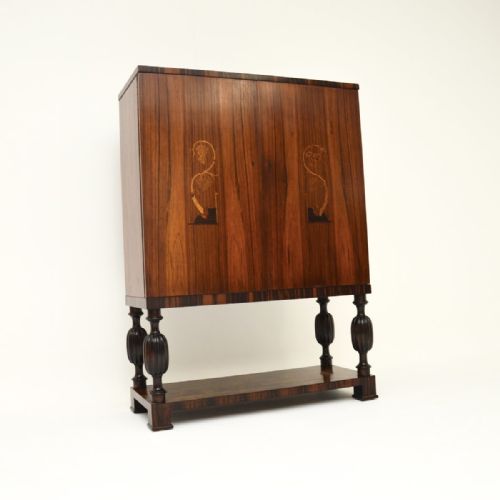
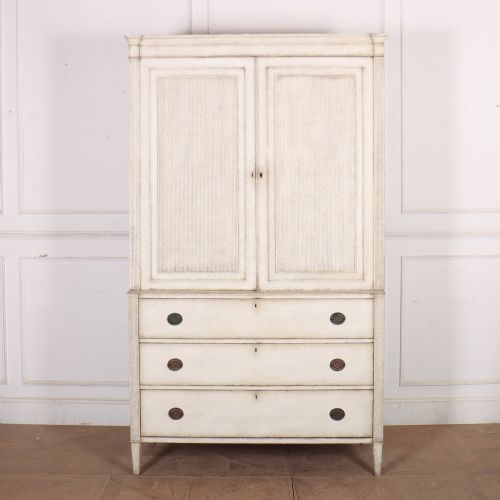


Swedish Storage Cabinet
A swedish storage cabinet brings northern light and practical timber joinery into a room, offering generous storage disguised as art.
Swedish Storage Cabinet
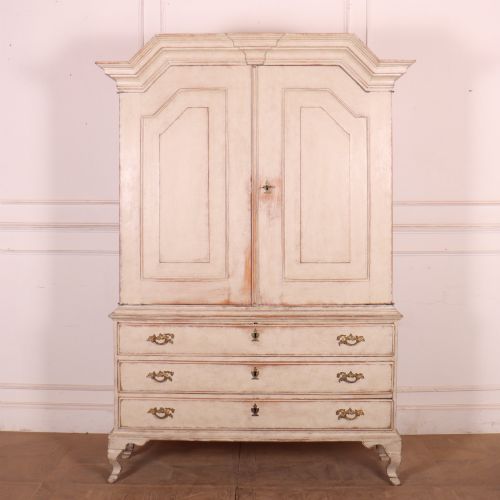
A swedish storage cabinet encompasses everything from rustic pine linen cupboards to refined satin birch bookcases spanning the eighteenth to the twentieth centuries. The form ranges from double-door kitchen cupboards and tall wardrobes to sideboards and secretaire chests.
Most examples encountered here date from the nineteenth century, built in pine or birch with painted or polished surfaces. These pieces served domestic storage needs in Scandinavian households before finding favour among collectors of northern European furniture.
Styles traverse the decorative vocabulary of Gustavian restraint, Scandinavian folk art, Art Deco and Swedish Grace. Buyers select them for their combination of clean architectural lines and functional interior shelving or hanging space.
How they were made
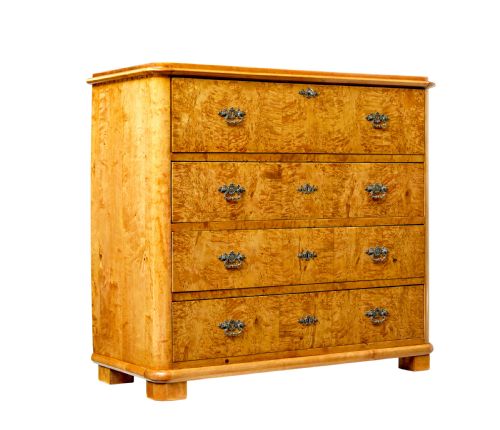
Makers relied primarily on native softwoods like pine for painted carcass work, alongside dense hardwoods such as birch, burr birch, satin birch and walnut for veneered and polished surfaces. Iron and brass hardware provided structural reinforcement and decorative closure for doors and drawers.
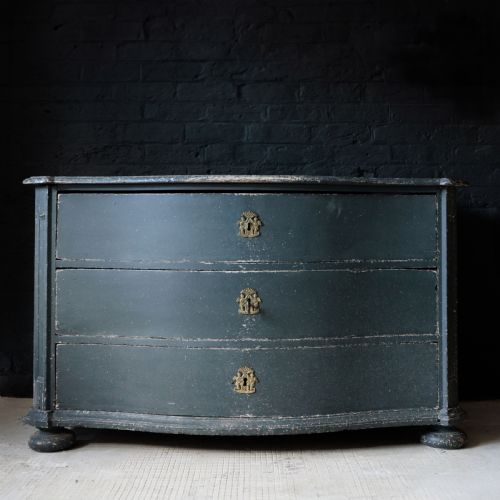
Surface finishes include hand-applied paint, traditional ragwork decoration and scraped paint effects that reveal earlier layers beneath. Finer twentieth-century examples utilise figured veneers and marquetry inlay arranged in geometric or symmetrical patterns.
Joinery methods combined traditional pegged mortise and tenon frames with dovetailed drawer construction, ensuring stability across large case pieces like linen cupboards and armoires.
Pine and birch dominate the construction materials across these listings, appearing alongside decorative applications of paint, brass, iron and burr birch.
What varies in quality
Quality rests upon the crispness of the timber selection, particularly in the choice of figured veneers such as burr birch or matched walnut. The sophistication of the painted surface, from simple folk finishes to layered historical scraping, dictates the aesthetic standing of a piece.
Proportion and architectural detailing distinguish standard utility items from masterworks designed by notable architects and firms. Integrated internal fittings, clever drawer configurations and original brass or iron mounts elevate the execution.
The integrity of the original construction, including unaltered cornices, bases and functional hardware, separates untouched survivals from heavily restored examples.
Otto Schulz for Boet
The Swedish Storage Cabinet Glossary
- Gustavian
- The Swedish neoclassical style developed during the reign of Gustav III, characterised by restrained fluted columns, oval medallions and pale monochrome paint. This aesthetic dominates eighteenth and nineteenth-century case furniture.
- Burr birch
- A richly figured timber growth harvested from birch trees, showing intricate swirling patterns prized for cabinet fronts and decorative panels. It appears frequently on nineteenth and twentieth-century pieces.
- Ragwork
- A decorative paint technique where colour is applied or lifted using rags to create a mottled, textured surface effect. It is commonly found on nineteenth-century country pine cupboards.
- Secretaire chest
- A chest of drawers featuring a pull-out writing drawer fitted with small compartments and pigeonholes. These multifunctional pieces combine desk space with enclosed drawer storage.
- Swedish Grace
- The minimalist classicism movement in Swedish architecture and design during the nineteen-twenties, preceding the rise of functionalism. It merges traditional craftsmanship with pared-back geometric forms.
Swedish Storage Cabinet: Frequently Asked Questions
How do I date a painted cupboard?
Dating relies on examining the construction methods, nail types and underlying paint layers visible beneath any surface wear. Tool marks left by hand planes and traditional joinery point towards earlier manufacture.
Paint history offers further clues, as original scraped finishes display authentic colour sequences from the eighteenth and nineteenth centuries. Comparing the cornice moulding and hardware style against documented regional pieces helps narrow the decade of creation.
Are these cabinets suitable for modern kitchens?
Many historical pieces serve admirably for contemporary kitchen storage, particularly deeper linen cupboards and pine dressers designed for utility use. Their generous interior shelving accommodates crockery and provisions while adding warmth to a room.
Allowance must be made for the shallower internal depths found in older wardrobes and sideboards compared to modern kitchen units. Measuring clearance for doors and internal shelf spacing ensures practical integration into a daily domestic routine.
What is the difference between Gustavian and folk pieces?
Gustavian pieces reflect courtly neoclassical taste with symmetrical lines, pale grey or cream paint and classical architectural motifs derived from French and Italian models. They present an ordered, formal appearance suited to refined interiors.
Scandinavian folk art pieces embrace local decorative traditions, featuring vibrant hand-painted motifs, ragwork textures and sturdy vernacular proportions. These items reflect regional craftsmanship rather than royal design academies.
How do I care for antique pine furniture?
Maintaining nineteenth-century pine requires stable indoor humidity levels to prevent timber movement and cracking in the panels. Keeping pieces away from direct heat sources protects both the wood and any historical painted surfaces.
Cleaning should be limited to dusting with a dry or slightly damp cloth, avoiding modern solvent-based polishes that can degrade aged wax or oil finishes. Gentle beeswax applied sparingly helps nourish bare pine without altering its patina.