




Swedish Rustic Sideboard
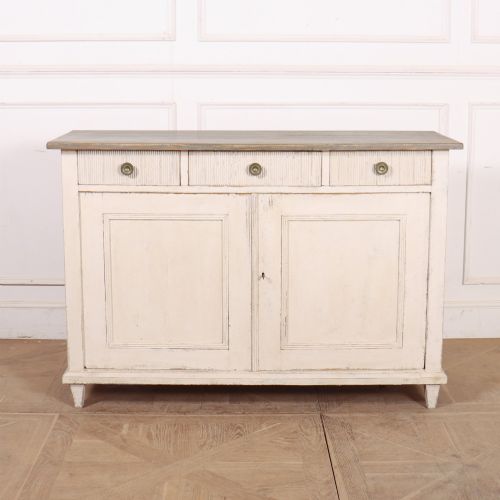
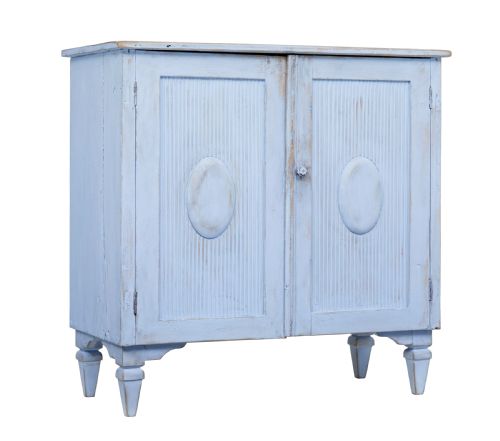
These Swedish rustic sideboards and painted cupboards bring sturdy Scandinavian country utility and faded colour to an interior.
Swedish Rustic Sideboard
A Swedish rustic sideboard typically takes the form of a painted pine cupboard or kitchen cabinet originating from the nineteenth century or earlier. Buyers searching for a swedish rustic sideboard frequently encounter substantial two-door linen cupboards, buffets, and occasionally zinc-topped sideboards or workbenches.
The dominant aesthetic unites Scandinavian country traditions with practical domestic storage. Pieces range from tall linen cupboards to lower sideboards, all sharing a utilitarian heritage rooted in rural Swedish homes.
Construction relies heavily on regional pine, often finished in original scraped paint or decorative ragwork. These surfaces provide the aged patination that defines the style.
Materials and Construction
Makers built these pieces primarily using solid pine, shaping robust carcasses designed for daily domestic use. Iron and brass hardware, such as hinges and latches, secure the doors and drawers while adding functional metal detail.
Surface treatment defines much of the construction character, utilising layered paint techniques that include ragwork and scraped finishes. Zinc occasionally tops later pieces, providing a durable and utilitarian work surface for kitchen environments.
The inventory spans the 18th and 19th centuries, focusing on pine cupboards, sideboards, and workbenches finished with paint, iron, and zinc.
Assessing Quality and Character
Quality rests in the survival of original surface treatments rather than pristine restoration. Pieces retaining their early scraped paint or authentic ragwork finish command greater interest than those stripped down to bare wood.
Proportion and structural integrity distinguish finer examples from standard utility furniture. Well-balanced door alignment and robust pine framing ensure the piece maintains its presence in a modern room.
The Swedish Rustic Sideboard Glossary
- Ragwork paint
- A decorative paint finish applied by manipulating colour with a rag to create a mottled texture. This technique produces the characteristic clouded surface found on nineteenth-century pieces.
- Scraped paint
- A finish where later coats of paint are partially scraped away to reveal earlier underlying colours. This process creates a weathered patination valued by collectors.
- Pine
- A soft timber native to Scandinavian forests, widely utilised for vernacular furniture due to its abundance and workability. It accepts paint finishes readily.
- Linen cupboard
- A tall storage cabinet traditionally used for stowing household textiles and bedding. These pieces usually feature deep internal shelving behind panelled doors.
Swedish Rustic Sideboard: Frequently Asked Questions
How do I clean a painted pine sideboard?
Dust the surface regularly with a soft, dry cloth to prevent dirt accumulation. Avoid harsh chemical cleaners that might strip the historic paint finish.
For stubborn marks, use a damp cloth with mild soap, drying the pine immediately afterwards to protect the wood and its original patination.
Can I use a workbench as a sideboard?
A nineteenth-century workbench provides a sturdy and distinctive surface that functions well in a kitchen or dining area. Its utilitarian origins offer generous lower storage or display space.
Ensure the height and depth suit your room dimensions before placement, as these industrial pieces often have deep proportions.
What is ragwork paint?
Ragwork paint is a decorative technique where colour is applied and manipulated using rags to create a soft, mottled texture. It was frequently used in Scandinavian country interiors to give depth to plain pine furniture.
Over decades, this finish wears softly, contributing to the aged character collectors seek.
How do I date a Swedish cupboard?
Dating relies on construction methods, hardware types, and the layering of paint finishes. Eighteenth-century examples often show hand-planed surfaces and forged iron hinges.
Nineteenth-century pieces tend to feature machine-sawn timbers and varied paint techniques like ragwork or scraped surfaces.