



Swedish Rustic Cabinet
A swedish rustic cabinet brings practical country storage and time-worn character into a room.
Swedish Rustic Cabinet
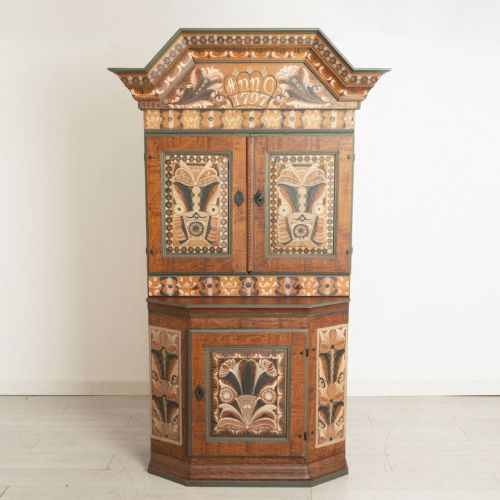
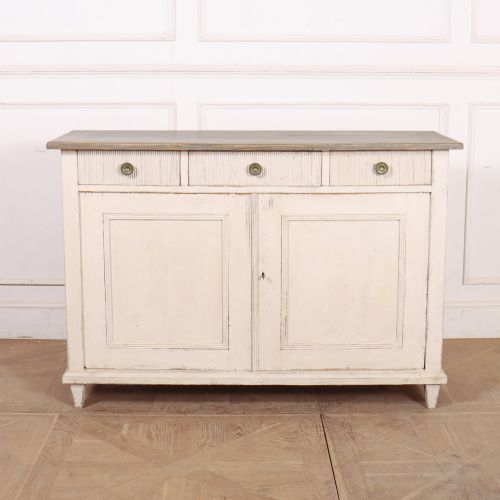
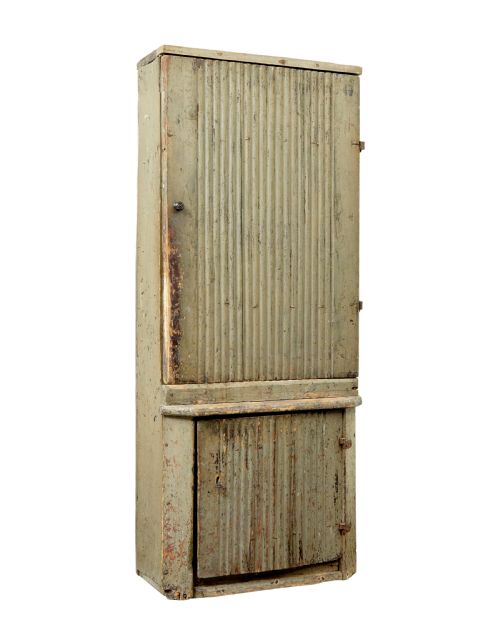
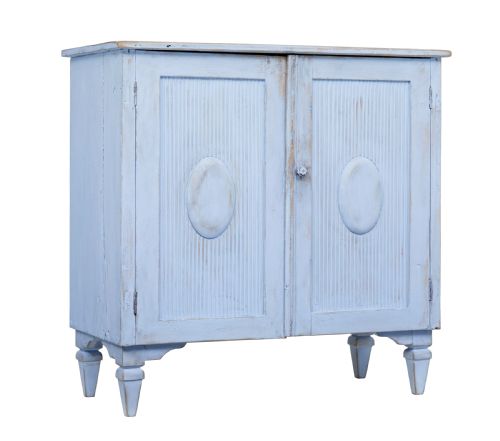
A swedish rustic cabinet is primarily built from pine, appearing in forms such as wall cupboards, linen cupboards, sideboards, and workbenches. These pieces emerge chiefly from the eighteenth and nineteenth centuries, reflecting Scandinavian country and folk art traditions.
The most common variants on this page are upright painted cupboards with single or double doors. Buyers also encounter specialised storage like corner cupboards and dressers, often bearing the marks of provincial workshops.
Materials and construction
Makers built these pieces predominantly from pine and softwood, utilising sturdy joinery suited to domestic utility. Iron and brass hardware such as hinges and latches secure the doors and drawers.
Surfaces were frequently finished with paint, including scraped paint effects and ragwork techniques. Zinc tops also appear on specific sideboard formats from the later nineteenth century.
Swedish Rustic Cabinet Retail Price Guide 2026
Typical asking prices for swedish rustic cabinet among the pieces listed under this phrase on Sellingantiques today, from the lower quarter to the upper quarter. They describe what is for sale here now, not the wider market.
Listings feature pine and painted softwood as the primary materials, spanning the eighteenth and nineteenth centuries.
Judging quality in rustic storage
Quality rests upon the preservation of original painted surfaces, such as untouched scraped paint or traditional ragwork decoration, compared to later repainting. Structural integrity in the pine carcase and authentic period hardware also distinguish finer examples.
Proportion and form play a significant role, with cleaner architectural lines in Gustavian or Baroque-influenced pieces elevating the standing of a cabinet above basic utilitarian workbenches.
The Swedish Rustic Cabinet Glossary
- Ragwork
- A decorative painting technique using rags to apply or texture colour onto a surface. This method created mottled patterns popular in traditional Scandinavian furniture.
- Gustavian
- The Swedish neoclassical style spanning the late eighteenth and early nineteenth centuries. It simplifies French Louis XVI motifs into lighter, restrained country forms.
- Scraped paint
- A finish where layers of historic paint are partially scraped back to reveal underlying colours. Collectors prize this surface treatment for its authentic aged texture.
- Softwood
- Timber from coniferous trees, predominantly pine in these listings, used universally for provincial cabinetmaking. It provided an accessible material for local carpenters.
Swedish Rustic Cabinet: Frequently Asked Questions
What is a Swedish rustic cabinet?
A swedish rustic cabinet is a wooden storage piece originating from Scandinavian country houses and farms during the eighteenth and nineteenth centuries. These items range from simple wall cupboards to large double-door linen armoires.
They were built by local tradesmen to serve everyday household storage needs, using regional softwoods and distinct painted finishes.
How were these cabinets used?
These pieces served as essential domestic storage for textiles, kitchenware, and household provisions in rural homes. Large cupboards held winter bedding and linen, while wall cabinets kept foodstuffs or tableware secure.
Workbenches and sideboards provided flat surfaces for food preparation and serving in farmhouse kitchens.
How do I date a Swedish cabinet?
Dating relies on construction methods, hardware types, and stylistic influences visible in the woodwork. Eighteenth-century examples often display Baroque proportions, while nineteenth-century pieces lean towards simpler folk art or Gustavian details.
Original paint layers and surface wear also offer clues to the age and history of the piece.
How do I live with a rustic cabinet?
These cabinets fit easily into modern interiors by providing generous concealed storage for books, dinnerware, or clothing. Their painted wooden surfaces add warmth and texture to contemporary living spaces.
Placement away from direct heat sources helps protect the historic pine and delicate painted finishes from drying out.