
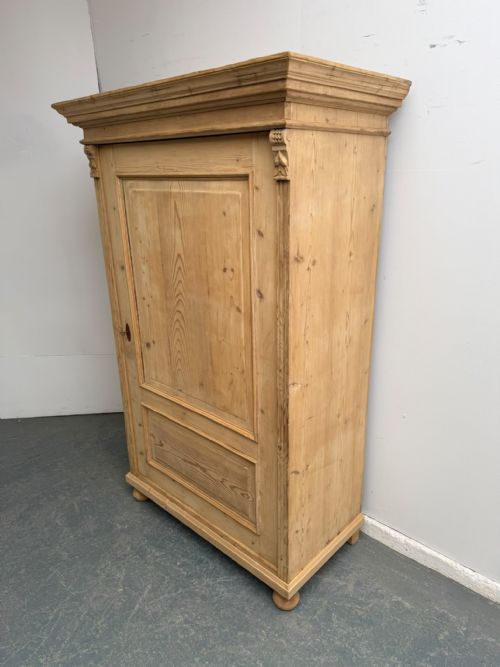
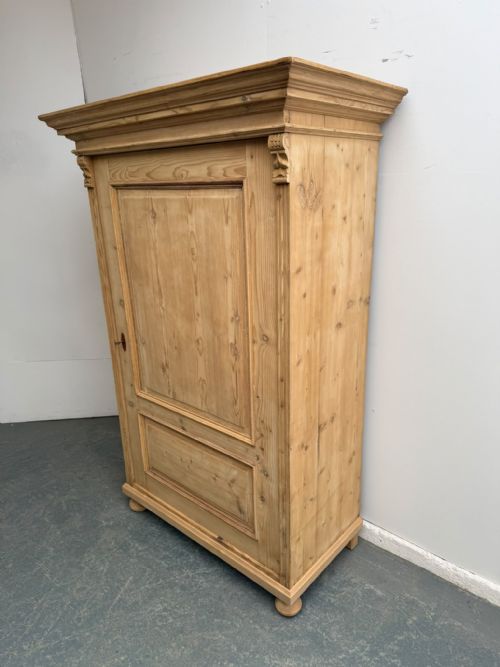
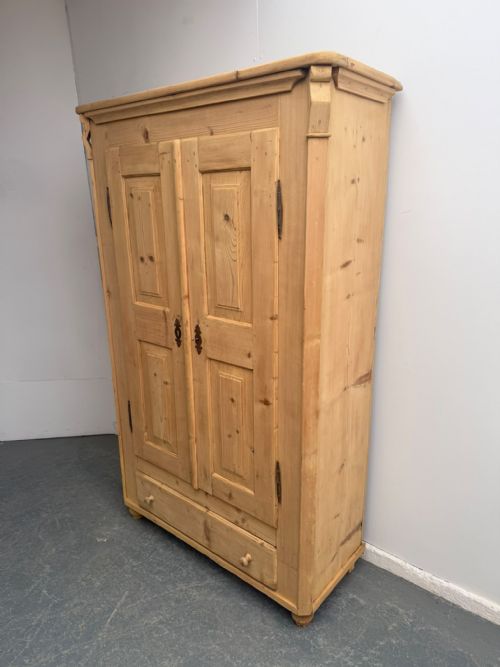
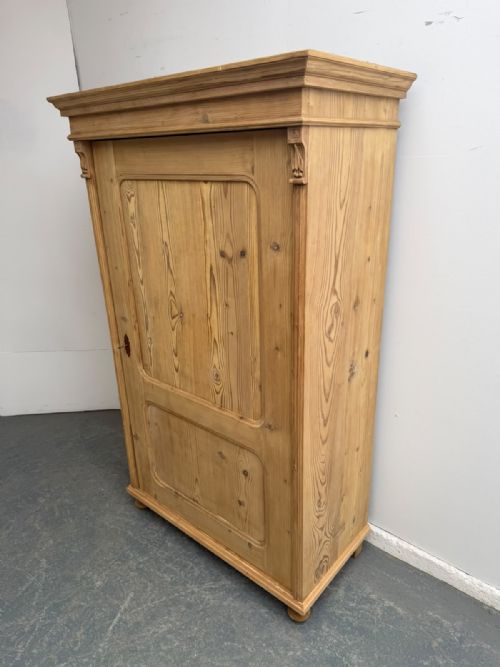
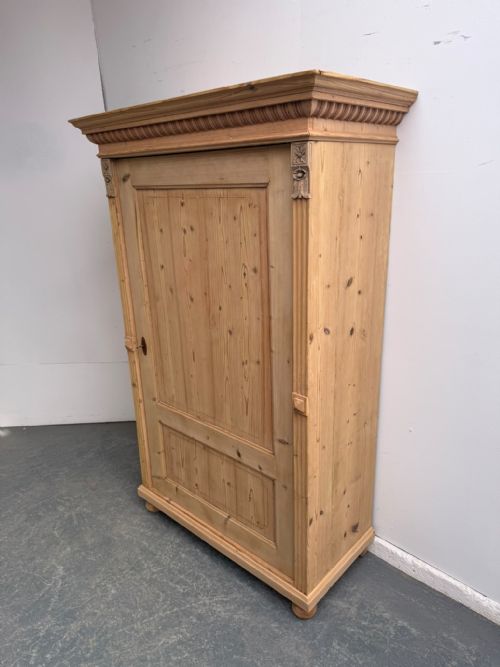
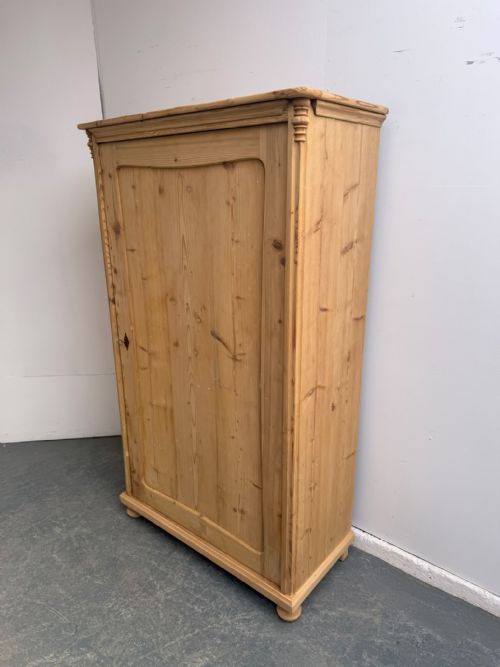
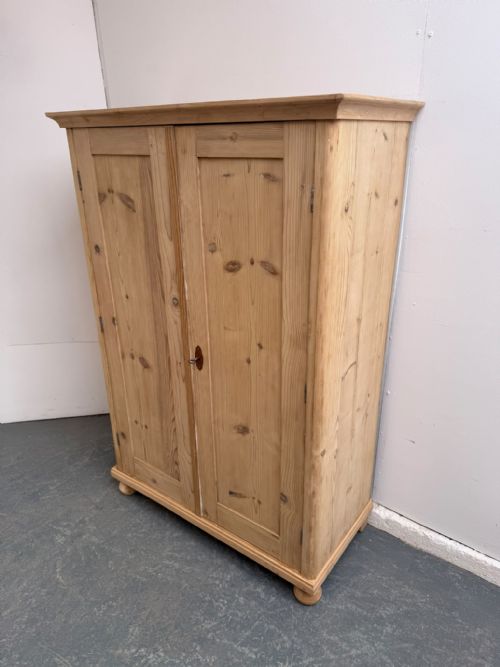
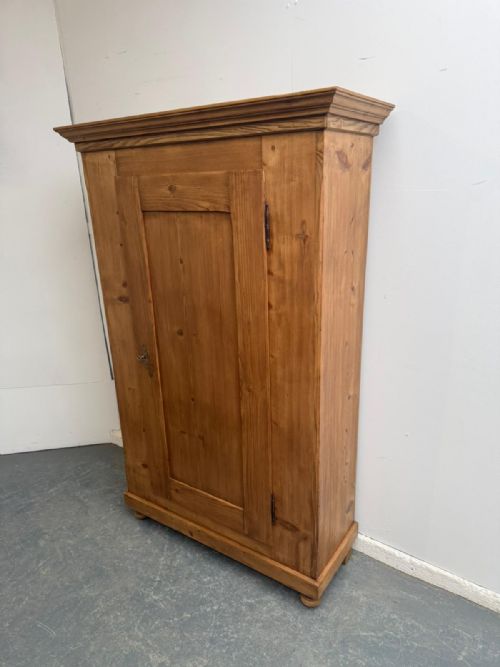
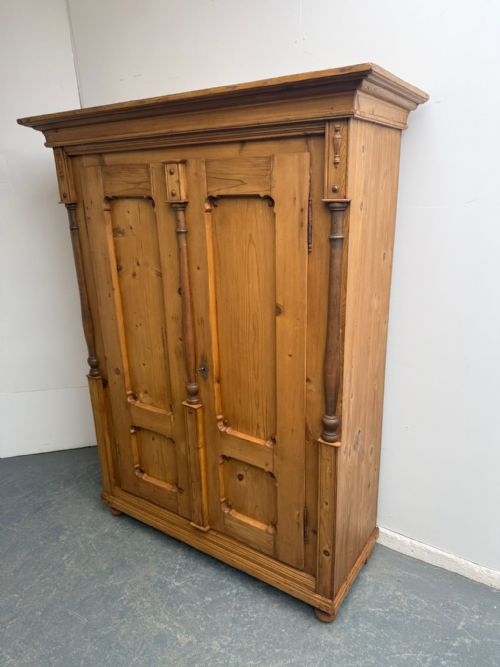


Rustic Pine Hall Cabinet
A rustic pine hall cabinet brings sturdy utility and country character to an entryway, offering compact storage for coats, boots, and everyday essentials.
Rustic Pine Hall Cabinet
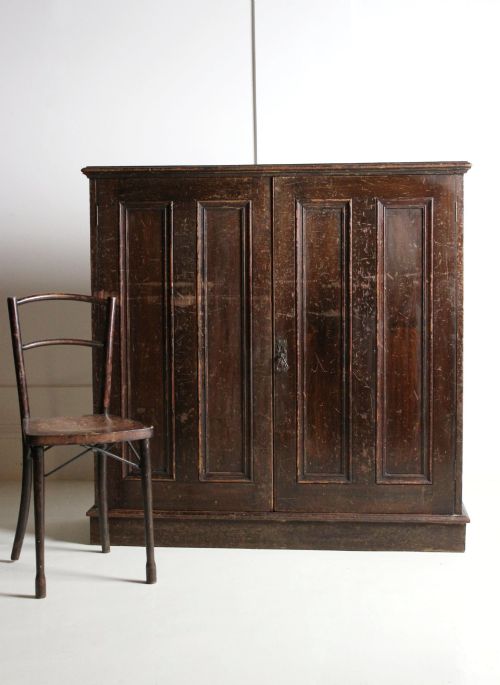
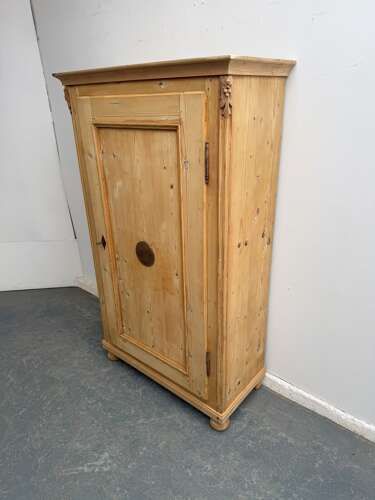
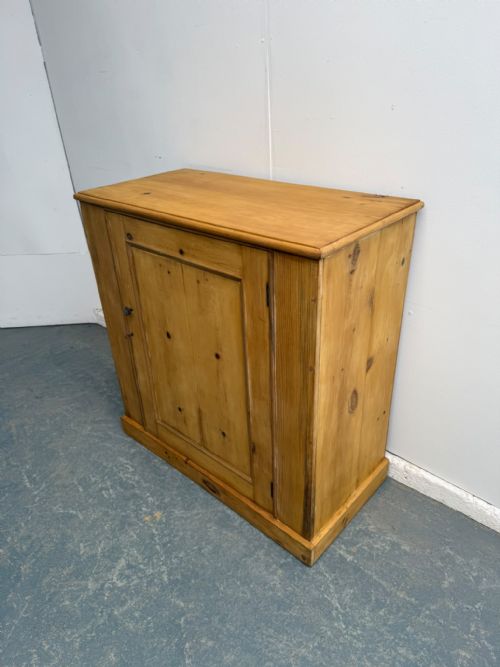
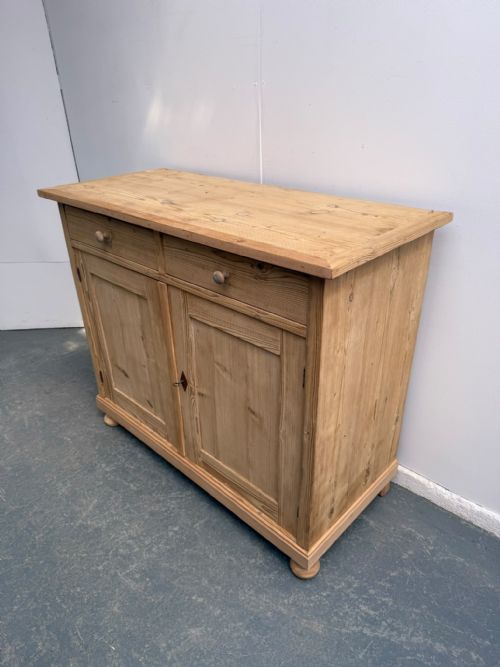
A rustic pine hall cabinet functions as an upright storage piece in a narrow space, taking the form of single-door cupboards, shallow wardrobes, and chiffoniers. These items serve to organise entrance halls and boot rooms without crowding the floor area. Buyers will most frequently encounter Victorian and 19th-century examples alongside Georgian pieces.
The construction typically relies on solid pine, shaped into practical proportions with single or double doors, and occasionally accompanied by lower drawers. Pieces range from tall, slender hall wardrobes to low, wide cupboards designed for smaller vestibules. Regional variations include Swedish and East European painted designs alongside British country workshop builds.
How they were made
Joiners built these cabinets using solid pine planks, employing straightforward methods such as fielded panels for doors and sturdy dovetails for drawer construction. Iron and brass hardware, including strap hinges, latches, and pulls, provide functional support and mechanical detail.
Surfaces receive different treatments depending on their origins and subsequent history, ranging from transparent wax finishes that highlight the grain to painted coats in grey or green. Certain items retain original paint schemes, whilst others display later finishes applied to suit domestic tastes.
Some single-door cupboards carry the curious history of a skeleton model interior, built for specific organizational tasks.
What varies in quality
The standard of a rustic pine hall cabinet depends upon the integrity of its timber and the precision of the original joinery. Cabinets featuring well-fitted fielded panels, stable door frames, and original backboards represent superior workshop production.
Proportion and depth also dictate desirability, particularly in narrow hallways where shallow wardrobes or slim single-door cupboards provide necessary clearance without sacrificing internal storage volume.
The Rustic Pine Hall Cabinet Glossary
- Fielded panel
- A central wooden panel with bevelled edges designed to fit securely within a rebated frame, allowing the wood to expand and contract naturally.
- Chiffonier
- A low sideboard or small cupboard featuring drawers and shelving, commonly utilised for compact storage in halls and living spaces.
- Dresser base
- A heavy low cabinet comprising cupboards and drawers, frequently adapted from larger dining room furniture for hallway use.
- Skeleton cupboard
- A specialised storage carcass, sometimes fitted with open frameworks or modified interiors for specific domestic purposes.
- Wardrobe
- An upright tall piece designed primarily for hanging garments, often constructed in single-piece formats during the Georgian and Victorian eras.
Rustic Pine Hall Cabinet: Frequently Asked Questions
What is a rustic pine hall cabinet?
A rustic pine hall cabinet is an upright storage furniture piece designed for entryways, incorporating cupboards, wardrobes, or drawers.
These items utilise solid pine construction and serve to house coats, boots, and everyday clutter in domestic spaces.
How do I date a pine hall cabinet?
Dating relies on examining construction methods, hardware types, and overall proportions relative to the Georgian, Victorian, and Edwardian periods.
Hand-cut dovetails, forged iron hinges, and original painted surfaces offer clear indications of an item's age and regional origin.
Are these cabinets suitable for small hallways?
Many examples are built with shallow depths specifically to accommodate narrow corridors and tight entrance spaces.
Single-door cupboards and slim hall wardrobes provide ample vertical storage without obstructing passage through the room.
Should I choose waxed or painted pine?
The choice between a waxed finish and painted pine depends on the existing interior style and whether the piece retains historic paint.
Waxed surfaces emphasise the natural grain of the timber, whilst painted versions in grey or green offer a traditional Scandinavian or country aesthetic.