

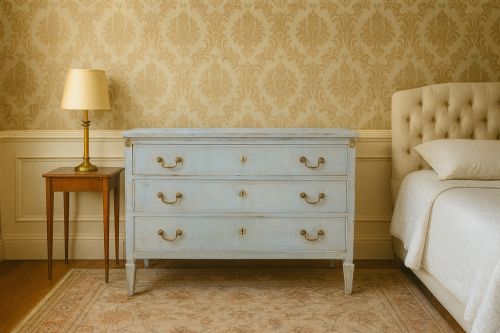


Swedish Neoclassical Chest Drawers
These Swedish neoclassical chest drawers offer restrained proportion and pale timbers, bringing a quiet architectural order to any bedroom.
Swedish Neoclassical Chest Drawers
A Swedish neoclassical chest drawers represents a refined tradition of Scandinavian cabinetmaking that developed during the eighteenth and nineteenth centuries. The pieces seen here span periods from 1750 through the nineteenth century, encompassing Gustavian designs alongside Empire Revival and Biedermeier variations. Buyers encounter practical chests and commodes featuring multiple drawers for storage.
The Gustavian examples demonstrate lighter proportions and classical restraint, often finished with pale paint. Alongside these, nineteenth-century interpretations introduce richer timbers like birch and satin birch, sometimes paired with ebonised wood details. Forms range from simple two-drawer commodes to breakfront kommodes and secretaire chests.
How they were made
Cabinetmakers constructed these carcases primarily using pine as a solid secondary timber, applying fine veneers of birch or satin birch to primary surfaces. Surfaces received careful preparation before being painted or polished to highlight the grain of the wood. Metal and brass hardware provides functional contrast to the wooden construction.
Decoration relies on restrained neoclassical motifs rather than heavy carving, utilising painted finishes in black or lighter tones. Inlaid sections appear on select birch pieces, demonstrating precision in timber selection and placement. The integration of ebonised wood creates sharp architectural lines across facades.
Many Swedish chests were painted pale white to brighten long, dark northern winters, effectively bringing permanent daylight indoors.
What varies in quality
The distinction between tiers rests upon the choice of timber and the execution of the surface finish. Pieces utilising figured birch veneer or hand-applied paint display a higher degree of artisan investment than standard painted carcases. Original hardware and mountings elevate the integrity of a commode.
Proportion and architectural clarity dictate the visual success of each chest. Refined Gustavian examples show a disciplined adherence to classical orders, whereas revival pieces demonstrate varying fidelity to earlier proportions. The crispness of inlaid details and the management of timber grain further separate standard production from superior work.
The Swedish Neoclassical Chest Drawers Glossary
- Gustavian
- The Swedish neoclassical style inspired by French design under King Gustav III, characterised by light colours, fluted columns, and restrained classical ornament. It remains the most recognisable aesthetic associated with Scandinavian antiques.
- Commode
- A low chest of drawers or cabinet designed for domestic storage, often featuring decorative hardware and painted or veneered surfaces. The term is frequently used interchangeably with chest of drawers in continental pieces.
- Biedermeier
- A Central European and Scandinavian style spanning the nineteenth century that prioritised utility, clean lines, and warm polished wood veneers over excessive ornamentation. It follows the neoclassical period and precedes later Victorian revivals.
- Satin Birch
- A lustrous timber native to northern Europe with a naturally reflective grain that catches the light. Cabinetmakers utilised it as a veneer to create bright, polished decorative surfaces on nineteenth-century chests.
- Ebonised Wood
- Timber treated with chemical stains or black finishes to imitate expensive ebony. It provides sharp contrast against pale birch or painted surfaces on neoclassical furniture.
Swedish Neoclassical Chest Drawers: Frequently Asked Questions
How do I clean a painted Swedish chest?
Dust surfaces regularly with a soft, dry cloth to prevent the accumulation of particles on aged paint. Avoid modern chemical sprays or abrasive cleaners that can damage fragile eighteenth or nineteenth-century finishes.
Test any mild cleaning solution on a hidden area first if deeper cleaning becomes necessary. Preserving the original patina remains paramount for maintaining the character and historical integrity of these pieces.
What is the difference between Gustavian and Biedermeier?
Gustavian pieces belong to the late eighteenth century and early nineteenth century, featuring light painted finishes, fluting, and direct neoclassical symmetry. They project an airy, formal elegance suited to bright interiors.
Biedermeier furniture developed later in the nineteenth century, focusing on unpainted wood veneers like birch and satin birch with smooth, curved forms. It prioritises domestic comfort and the natural grain of the timber over classical applied ornament.
Where should I place a commode at home?
These chests function effectively in bedrooms, hallways, or living spaces where surface display and concealed storage are both required. Their shallow depths often make them suitable for narrower corridors or alcoves.
Keep them away from direct sunlight and strong heat sources such as radiators to prevent timber splitting and paint flaking. Stable indoor humidity protects both the underlying pine carcase and delicate surface veneers.
How do I identify a nineteenth-century Empire revival piece?
Empire revival furniture draws upon the heavier classical motifs of the Napoleonic era, reinterpreted later in the nineteenth century. Look for architectural columns, darker ebonised accents, and symmetrical arrangements. NINETEENTH-CENTURY EMPIRE REVIVAL BIRCH CHEST OF DRAWERS items often combine these formal revival elements with native Scandinavian timbers like birch, creating a distinct regional variation of the international style.