
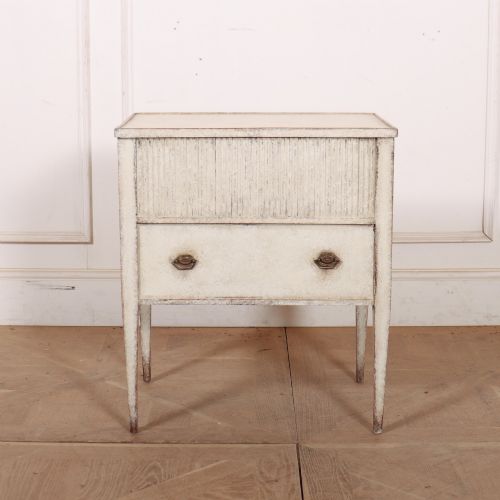


Distressed Painted Bedside Chests
These distressed painted bedside chests bring colour and historic character to a bedroom while offering practical storage beside a bed.
Distressed Painted Bedside Chests
Distressed painted bedside chests encompass compact bedside cabinets, small commodes, and low chests of drawers designed for domestic sleeping quarters. They bridge the gap between utilitarian storage and decorative furniture, often taking the form of paired cabinets or individual diminutive drawer units.
The selections span styles from English and Scandinavian country traditions to Gustavian, French provincial, and Chinoiserie designs. Examples range from eighteenth-century lamp tables to nineteenth-century pine cabinets and early twentieth-century French pieces, showing a rich geographical spread across Europe and Asia.
Buyers will most frequently encounter nineteenth-century painted pine or timber models featuring two or more drawers. These often arrive in matched pairs, finished in white or pale paint schemes that show centuries of weathering and patination.
How they were made
Makers constructed these chests primarily using pine and other painted timbers, joining structural elements with traditional carpentry methods suited to domestic furniture. Surfaces received layers of paint, with some specific items incorporating lacquered wood finishes or decorative Chinoiserie motifs.
Hardware components such as handles and drawer pulls relied on cast or forged brass and metal, secured to the timber carcasses. Faux marble tops appear on certain nineteenth-century examples, combining painted wooden surfaces with simulated stone finishes to mimic costlier materials.
Several chests arrive in matching pairs, ready to settle on opposite sides of a bed after centuries of separate adventures.
What varies in quality
The standard of these chests depends heavily on the integrity of the painted finish and how naturally the surface has aged over time. Original paint layers that show authentic wear distinguish finer decorative pieces from later, heavier repainting efforts.
Joinery execution and the weight of the timber carcass dictate the structural durability of each chest. Refined proportion, particularly in smaller commodes and bedside cabinets, separates standard utility items from more ambitious stylistic expressions like Neoclassical or Chinoiserie works.
The Distressed Painted Bedside Chests Glossary
- Commode
- A low chest of drawers or cabinet, often standing on relatively high legs. This form originated in France before being adopted across European cabinet-making traditions.
- Gustavian
- The Swedish interpretation of Neoclassical design, popular during the late eighteenth century and noted for restrained, elegant lines. Painted finishes in pale grey, cream, or white typically characterise this style.
- Chinoiserie
- European decorative style from the seventeenth and eighteenth centuries that imitated Chinese artistic traditions. These pieces feature hand-painted motifs depicting figures, landscapes, or flora.
- Faux marble
- A decorative painting technique used to simulate the appearance of genuine stone on wooden surfaces. Artisans applied pigments to create veining patterns resembling marble tops.
Distressed Painted Bedside Chests: Frequently Asked Questions
How do I choose between a bedside cabinet and a small commode?
Bedside cabinets generally feature a single cupboard door or smaller proportions suited specifically for holding bedside necessities. Small commodes offer multiple drawer tiers, providing greater storage capacity while maintaining a compact footprint.
Consider the height of your mattress and the available floor space when selecting between these two formats. Cabinets often sit at an ideal height for nighttime access, whereas commodes make a stronger visual statement as standalone bedroom accents.
What is the difference between English country and Scandinavian painted furniture?
English country pieces tend to focus on utilitarian pine construction with simpler, unpretentious painted surfaces. They reflect the domestic needs of rural households without elaborate decorative pretension.
Scandinavian designs, particularly Swedish and Gustavian examples, often incorporate brighter white or pale paintwork alongside Neoclassical carving details. These pieces prioritize light-reflecting surfaces suited to northern European interiors.
How do I care for historic painted wood surfaces?
Historic painted timber requires gentle maintenance to preserve the delicate patination and original pigment layers. Dust the surface regularly with a soft, dry cloth rather than using liquid polishes or harsh chemical cleaners.
Keep these chests away from direct sunlight and radiators to prevent the wood from drying out and the paint from cracking. Maintaining a stable room temperature protects both the structural timber and the decorative finish.
Can I use a lamp table as a bedside chest?
Lamp tables function well beside a bed if their height aligns comfortably with the mattress surface. Eighteenth-century examples offer a historic aesthetic and a compact surface area for a bedside light.
Ensure the table includes a drawer or lower shelf if you require enclosed storage for bedside items. Open lamp tables provide surface space only, lacking the concealed compartments found in traditional bedside cabinets.