




Swedish Gustavian Bench
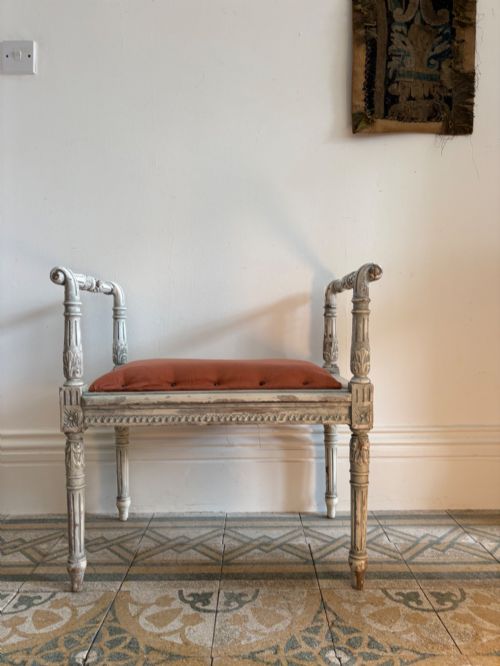
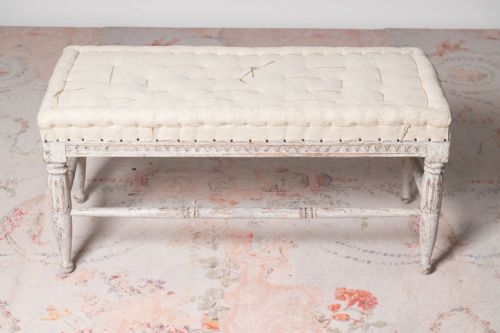
These pieces are a swedish gustavian bench, offering seating shaped by centuries of Scandinavian design and painted tradition.
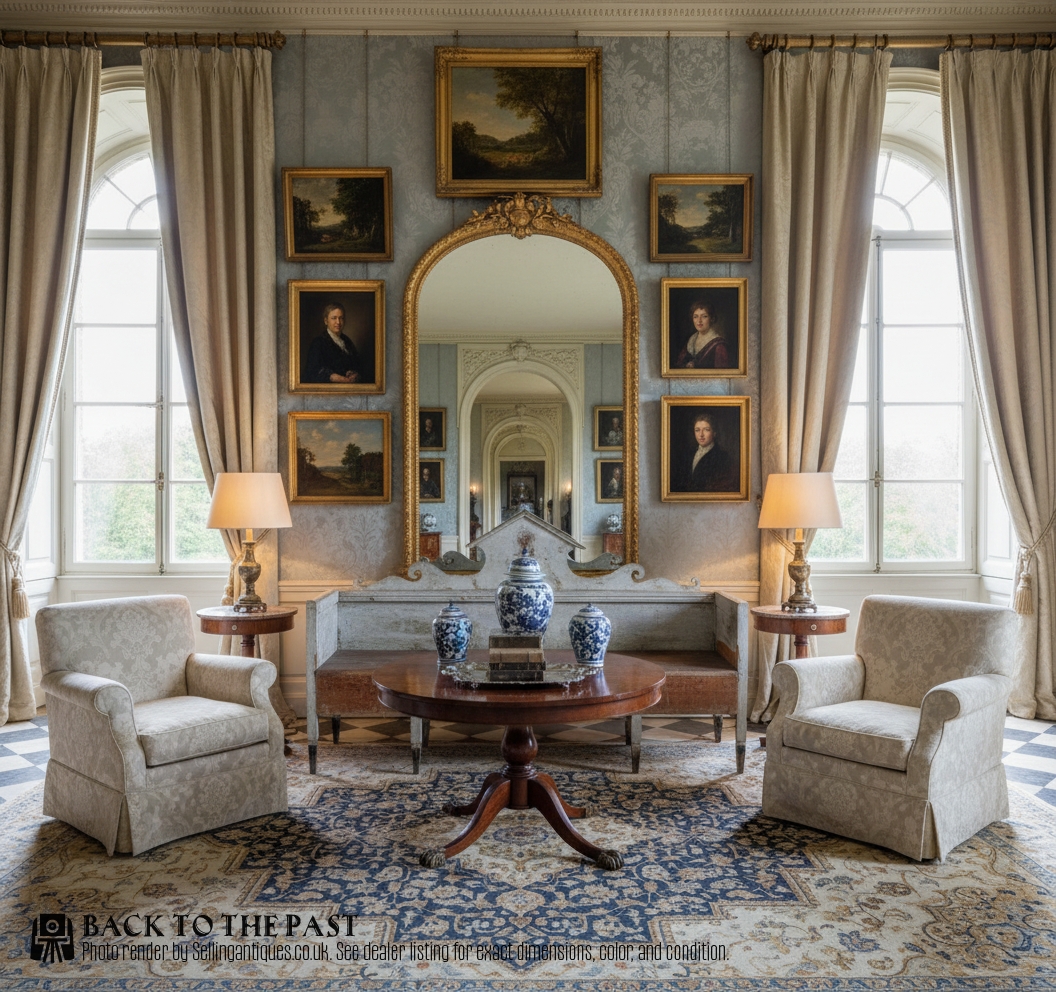
Swedish Gustavian Bench
When you search for a swedish gustavian bench, you encounter seating that spans the eighteenth, nineteenth and early twentieth centuries. These forms include settees, settle benches, sofas and various types of stools.
The version you are most likely to meet on this page is a painted pine piece reflecting Gustavian Neoclassical, Swedish Rococo or Scandinavian Country styles. Makers adapted classical lines for domestic interiors, producing both grand settees and simpler settles.
How they were made
Carpenters constructed these seats primarily from pine and other domestic woods, shaping the frames through traditional joinery. Artisans then applied layers of paint to the wooden surfaces.
Upholstery completed the seating, utilising materials such as fabric, linen and hessian for the seats. Surviving examples show both original painted finishes and later decorative treatments.
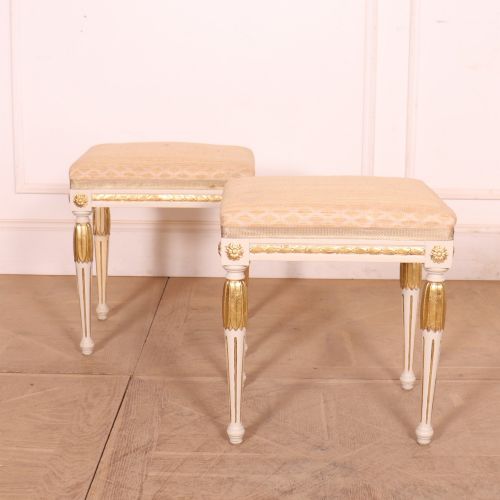
Object forms documented here range from large settees and settle benches to dining tables, stools and footstools.
What varies in quality
Quality rests upon the preservation of the original painted surface and the crispness of the carved details on the wooden frame. Pieces retaining their early paint layers show greater integrity than those with heavy later overpainting.
Proportion and the execution of neoclassical motifs distinguish finer examples from simpler provincial work. Structural balance in the legs, arms and backrests also determines the caliber of each piece.
The Swedish Gustavian Bench Glossary
- Gustavian
- The neoclassical design style of late eighteenth-century Sweden, characterised by restrained classical ornamentation and light colour palettes. It draws influence from French Louis XVI aesthetics.
- Settle
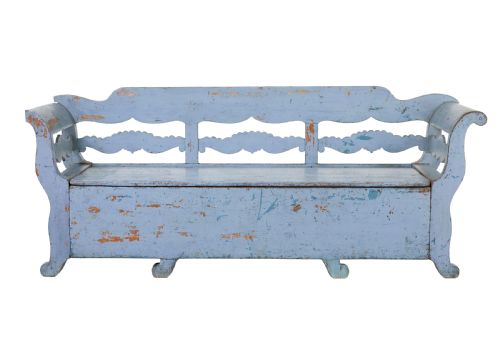
- A wooden wooden bench featuring a high back to block draughts and often incorporating storage beneath the seat. These practical forms belong to Scandinavian country traditions.
- Settee
- An upholstered seat for multiple people, sharing similarities with a small sofa. Eighteenth and nineteenth-century examples often display carved wooden frames.
- Pine
- A softwood commonly utilised in Scandinavian furniture making for its availability and workability. It forms the structural carcase for many painted pieces.
- Hessian
- A coarse woven fabric, often made from jute, utilised historically as a foundation material for traditional upholstery stuffing.
Swedish Gustavian Bench: Frequently Asked Questions
How do I date a Swedish bench?
Dating relies on stylistic markers, construction joints and the layers of paint present on the pine frame. Eighteenth-century pieces typically display distinct neoclassical carving or Rococo asymmetry compared to later nineteenth-century interpretations.
Examination of the underside and fixings provides further clues regarding age. Structural wear and the composition of the wood help differentiate eighteenth-century items from nineteenth-century alternatives.
What is a settle bench?
A settle is a traditional wooden bench designed with a high back and solid sides to deflect cold draughts in domestic interiors. They frequently include enclosed storage beneath the hinged seat.
These pieces served functional roles in daily household life across Scandinavian country settings. Their robust pine construction ensured durability through generations of use.
Are these benches painted?
Many examples feature painted wooden surfaces, ranging from original eighteenth-century finishes to nineteenth-century decorative layers. White, grey and muted tones predominate in Gustavian and Scandinavian furniture.
The presence of original paint significantly influences the character and historical interest of the object. Over time, surfaces develop a natural patina through wear.
How do I style a Gustavian bench?
These benches integrate into contemporary interiors as statement seating in hallways, living rooms or dining spaces. Their restrained neoclassical lines complement both traditional and modern decor.
Upholstered versions with linen or fabric seats provide functional comfort while maintaining historical character. Pairing them with complementary stools or tables completes the arrangement.