






Grey Painted Wooden Bench
These grey painted wooden bench pieces combine practical seating with soft historic colour, bringing understated country charm to any interior.
Grey Painted Wooden Bench
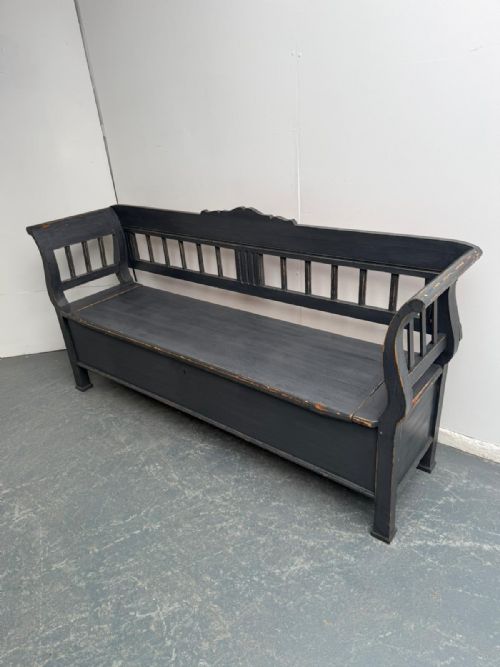
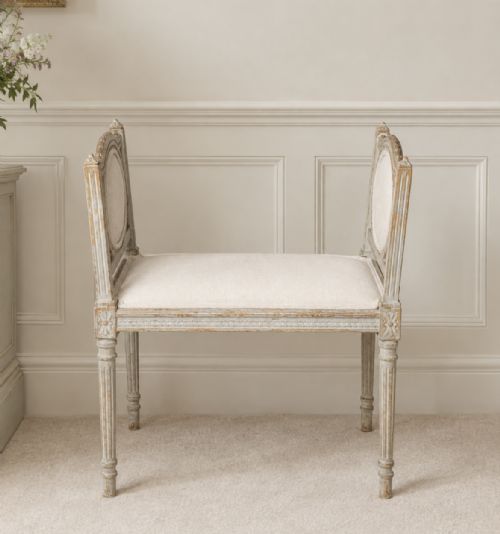
A grey painted wooden bench provides functional seating shaped by regional traditions across Europe and the British Isles. Buyers searching for a grey painted wooden bench will find pieces ranging from tall-backed box settles to low window seats and multi-seater settees. Many examples emerge from continental workshops, displaying simple folk art styles alongside refined Louis-inspired frames.
Periods span from the eighteenth century through the Victorian era and into early twentieth-century Edwardian designs. Buyers frequently encounter French provincial models and Scandinavian pieces carrying distinct Gustavian influences. Each object offers a practical seating solution rooted in historic craftsmanship and domestic utility.
How they were made
Constructed primarily from solid pine and beech timbers, these frames rely on traditional joinery methods suited to heavy daily use. Carpenters shaped structural supports by hand, securing joints with wooden pegs and iron fasteners where necessary. Box settles incorporate hinged lids and boarded compartments designed to hold household goods.
Surfaces received successive layers of paint, often applied in muted grey tones that softened the underlying grain of the wood. Some pieces feature subtle decorative carving or turned legs, while others rely on clean architectural lines. Upholstered variants integrate fabric or linen coverings fastened with brass tacks along the seat edges.
The inventory spans multiple regions, including French provincial workshops, Hungarian farmhouses, and Swedish studios.
What varies in quality
The character of the paint surface distinguishes simpler utility items from more decorative regional seating. Original layered paintwork displaying natural wear holds distinct visual depth compared to later uniform repainting. Structural integrity also varies, depending on how well the pine or beech frame has endured decades of heavy use.
Proportion and stylistic harmony separate standard domestic joinery from finer provincial design. Pieces retaining early hardware, such as original brass tacks and hinges, preserve a higher degree of historical integrity. The balance between the carved detail of the legs and the simplicity of the wooden seat dictates the overall refinement of the piece.
The Grey Painted Wooden Bench Glossary
- Settle
- A wooden bench featuring a high back to block draughts and solid arms, often built with a box storage base beneath the seat. This form remained common in European farmhouses and taverns.
- Gustavian
- The Swedish interpretation of French neoclassical design, characterised by restrained carving, fluted legs, and pale painted finishes. This style emerged during the late eighteenth century.
- Louis XV Style
- A decorative design movement marked by asymmetrical curves, cabriole legs, and organic motifs derived from French royal furnishings. Pieces in this tradition prioritise flowing organic contours.
- Box Settle
- A traditional seating form incorporating an enclosed wooden chest under the seat boards. It provided dual utility for both storage and seating in rustic interiors.
- Fluted legs
- Vertical parallel grooves carved into the surface of furniture legs to add linear texture and classical proportion. This detail appears frequently on neoclassical seating frameworks.
Grey Painted Wooden Bench: Frequently Asked Questions
Where should I place a settle?
A settle fits naturally in an entrance hallway, boot room, or large kitchen where its high back provides shelter from draughts. The enclosed box base beneath the seat also offers practical storage for shoes or household items.
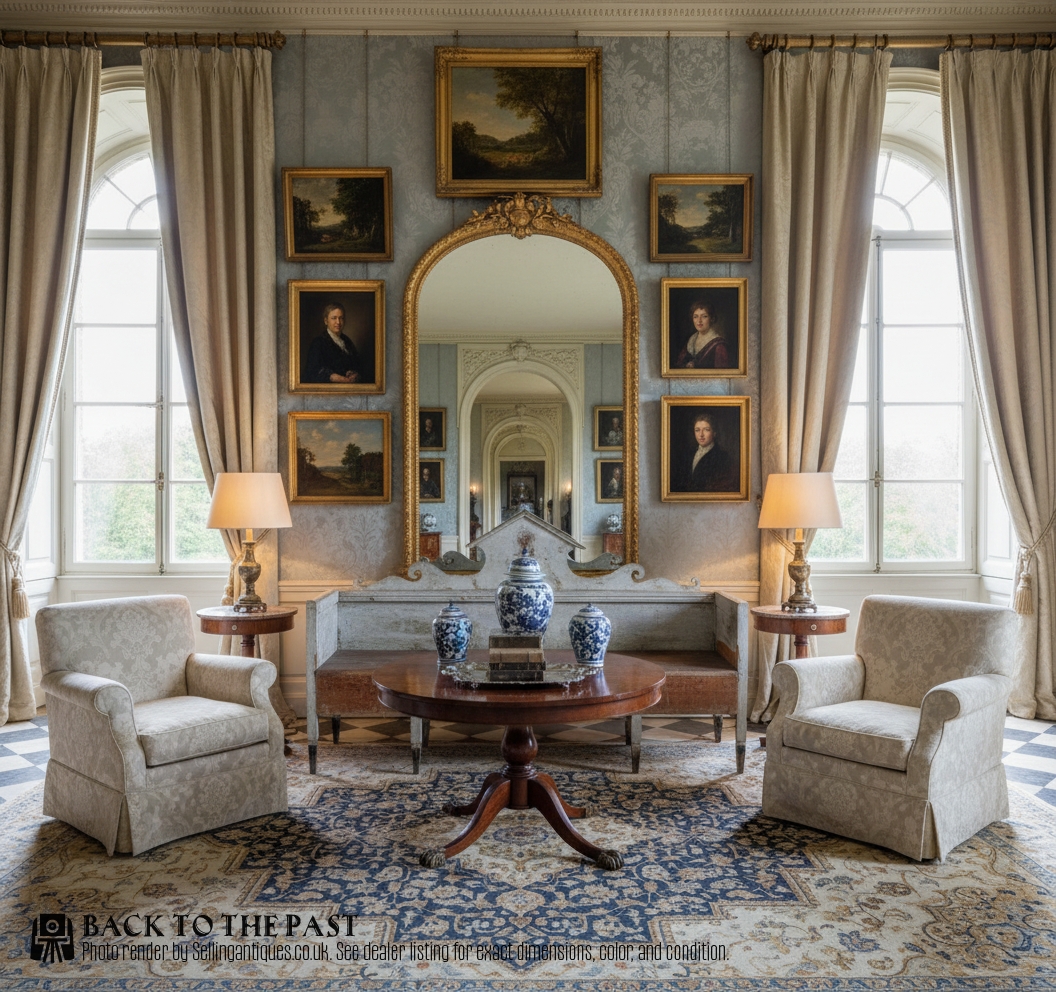
In living spaces, these benches create a strong visual anchor against a plain wall. Pairing the seat with simple cushions softens the wooden frame while maintaining the historic aesthetic.
How do I care for painted wood?
Maintain painted surfaces by dusting regularly with a soft, dry cloth to prevent dirt accumulation. Avoid harsh chemical cleaners that can damage historic paint layers.
Keep wooden seating away from direct heat sources and significant moisture fluctuations to prevent timber movement. Natural wax polishes can protect unpainted areas of pine or beech.
What is a Gustavian bench?
A Gustavian bench originates from Swedish neoclassical design traditions established during the late eighteenth century. These pieces typically feature pale grey or neutral painted finishes and clean structural lines.
Such seating combines French decorative restraint with sturdy Scandinavian craftsmanship. They suit interiors that favour light colours and simple classical proportions.
How do I date an old bench?
Dating relies on examining the construction methods, tool marks visible on the timber, and the style of the legs or backrest. Hand-cut joints and original hardware indicate earlier production periods.
Paint analysis helps determine whether the surface finish dates to the original period or represents later application. Comparing the form to established regional styles narrows down the likely decade of manufacture.