


Swedish Art Deco
Swedish art deco brings together pale northern timbers and clean architectural lines to create seating and cabinetry of striking restraint.
Swedish Art Deco
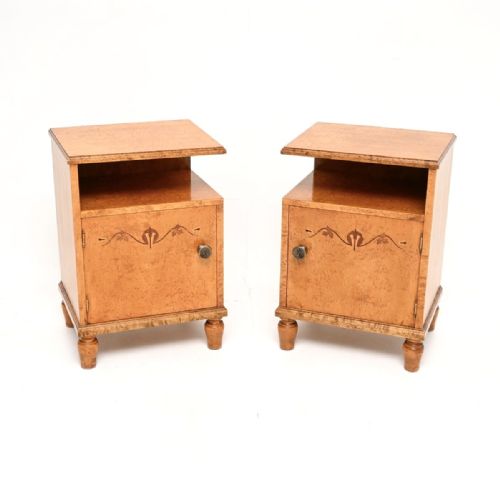
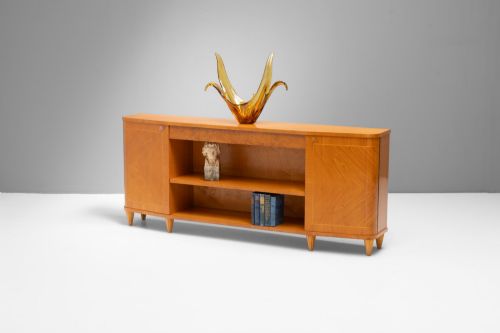
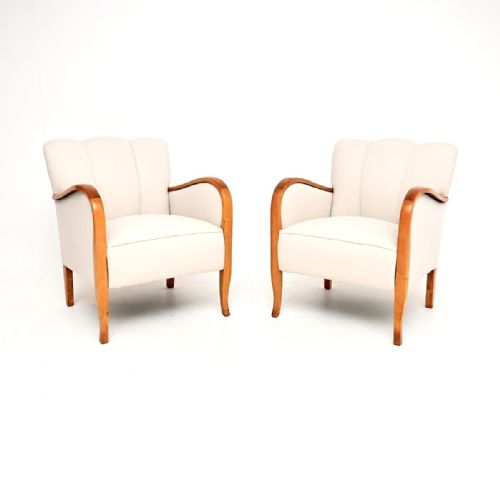
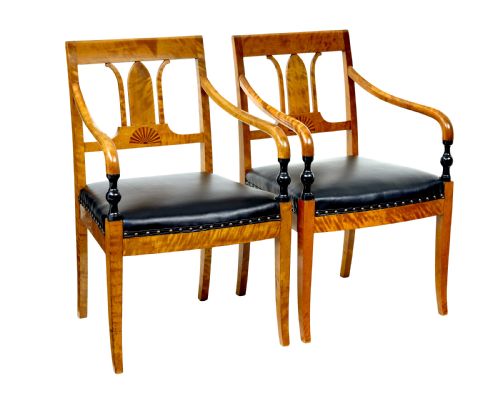
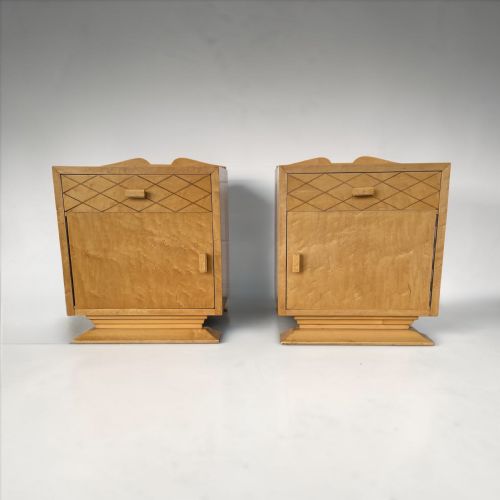
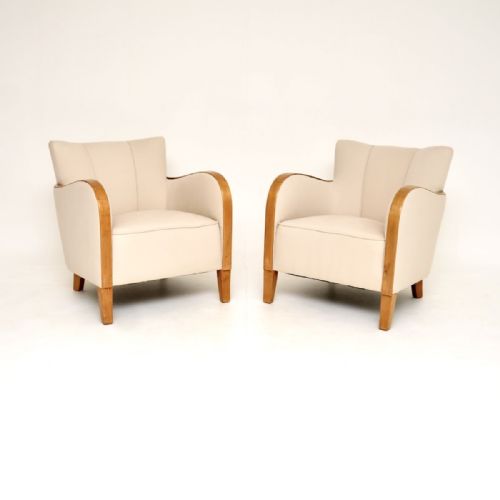
When a buyer explores Swedish art deco, they encounter seating, desks, and storage pieces predominantly anchored in the nineteen-thirties and nineteen-twenties. The selection on this page is heavily populated by armchairs, often found in pairs, alongside cabinets, coffee tables, and bedside units.
The aesthetic bridges neoclassical restraint and early modernist utility, drawing on the transitional style known locally as Swedish Grace. Visitors will frequently meet armchairs upholstered in leather and built from pale birch variants, reflecting the Nordic preference for light domestic interiors.
Materials and construction methods
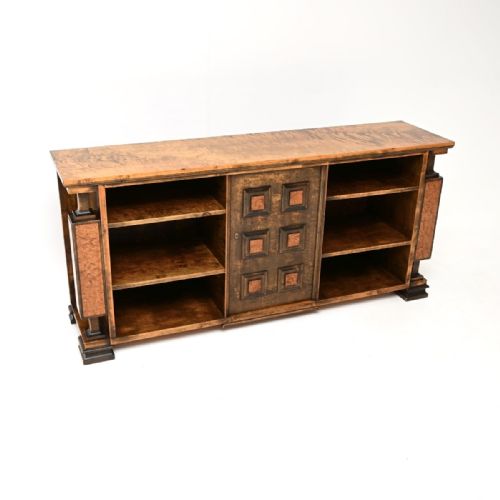
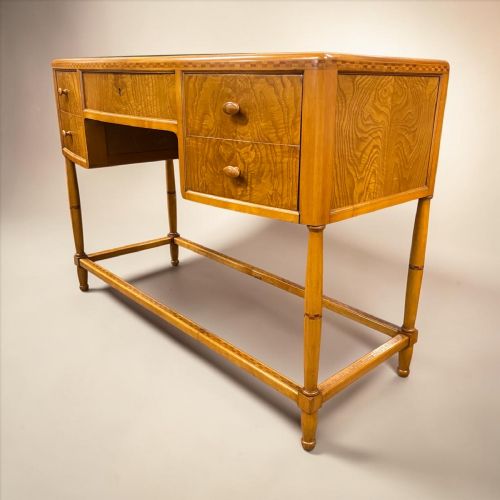
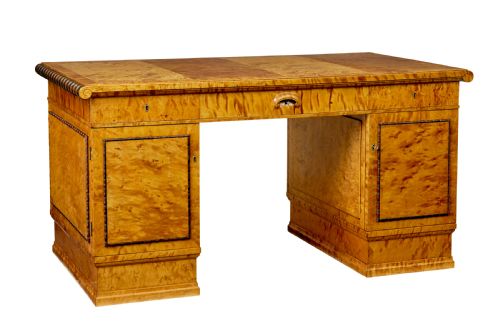
Cabinetmakers and upholsterers relied on native northern hardwoods, principally birch, satin birch, elm, and burr elm, often applied as veneers over denser secondary woods. Flame birch and karelian birch provided striking grain patterns that defined the flat surfaces of desks and cabinets.
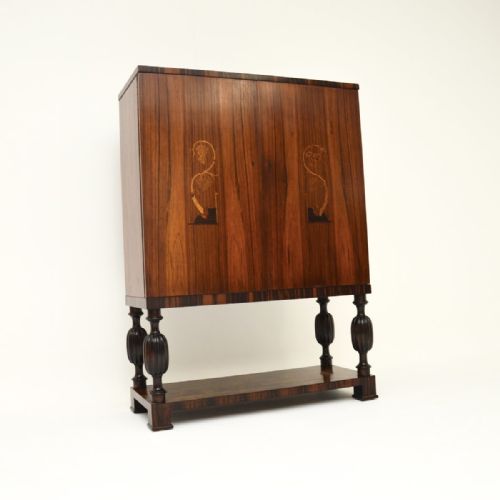
Metal accents in brass appeared alongside fabric and leather upholstery to create contrast against the pale wooden frames. Marquetry inlays and carved details were used sparingly to accent the architectural geometry of tables and storage furniture.
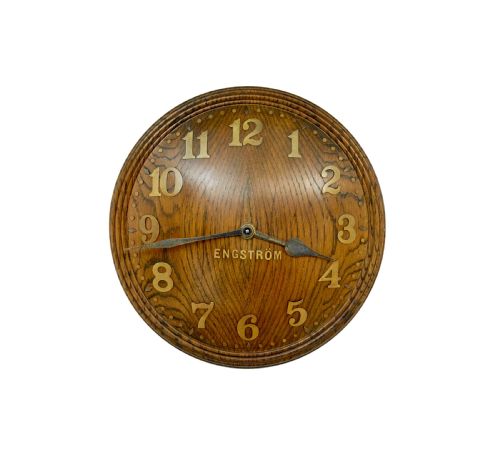
Even a humble wall clock received the designer treatment, proving the era applied decorative ambition down to the last second.
Distinctions in execution
The tier of a piece rests heavily on the selection and matching of timber veneers, particularly where flame or burr birch creates symmetrical patterns across cabinet doors and tabletops. Superior examples display seamless grain continuity and meticulous handling of contrasting woods like walnut and rosewood.
Structural integrity and the retention of original upholstery materials dictate the standing of seating forms. Pieces retaining distinct maker attribution or original hardware command higher regard among collectors of Scandinavian design.
Engström by Zenith·Sandberg & Co·Otto Schulz for Boet·Olof Ahlberg·Axel Larsson
The Swedish Art Deco Glossary
- Satin birch
- A timber featuring a natural sheen and smooth texture, widely utilised across Scandinavian cabinetry and seating frames.
- Klismos
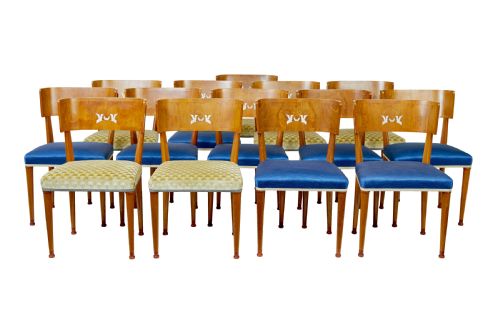
- An ancient Greek chair form with curved legs and a concave backrest, reinterpreted by twentieth-century designers.
- Marquetry
- The art of applying decorative pieces of veneer to a structure to form intricate geometrical or pictorial patterns.
- Flame birch
- A figured wood grain displaying undulating flame-like patterns, prized for decorative cabinet facades.
- Swedish Grace
- A neoclassical design movement that preceded and heavily influenced the domestic output of the nineteen-thirties.
Swedish Art Deco: Frequently Asked Questions
What defines Swedish art deco furniture?
These pieces combine classical proportions with functional modernism, relying on pale northern timbers like birch rather than heavy dark woods found in other European movements.
Craftsmen focused on clean geometric lines, minimal ornamentation, and exceptional grain figuring to create a luminous domestic environment.
How do I care for satin birch surfaces?
Protect pale timbers from direct sunlight to prevent the natural amber darkening process from shifting the tone unevenly across the grain.
Dust with a soft dry cloth and avoid silicone-based polishes that can degrade the historic finish over decades of use.
Where were these pieces used?
Originating in Scandinavian urban apartments and country houses, these furnishings suited formal reception rooms, libraries, and bedrooms.
Cabinets and desks served practical storage needs while armchairs and coffee tables created comfortable conversation areas in light-filled drawing rooms.
How do I distinguish nineteen-twenties pieces from nineteen-thirties pieces?
Nineteen-twenties examples often carry stronger elements of Swedish Grace with softer neoclassical curves and elaborate marquetry detailing.
Nineteen-thirties production shifts towards more streamlined modernist geometries, unadorned surfaces, and functional forms designed for mass production.