
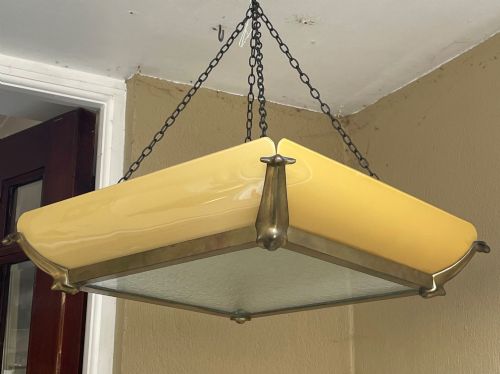
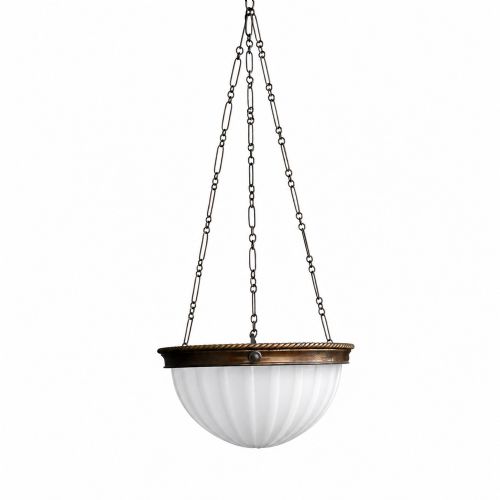
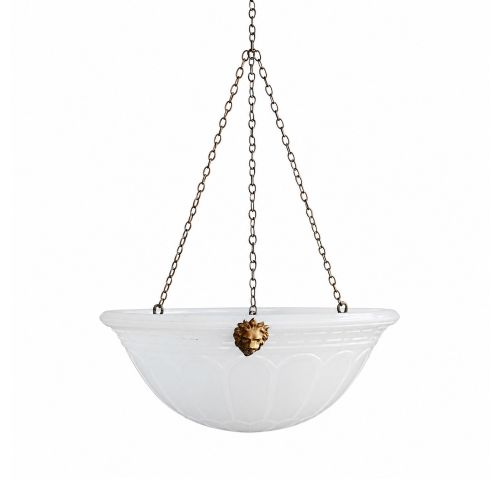
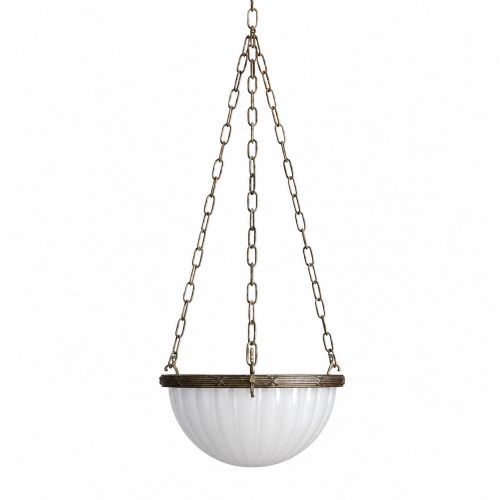


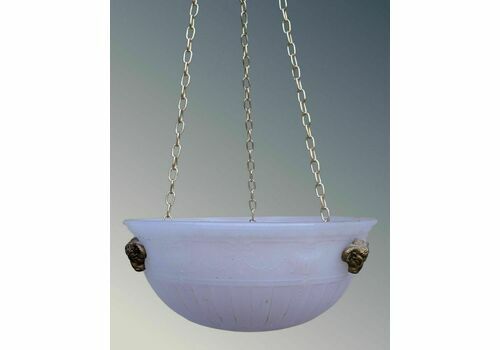


Flycatcher Ceiling Light
These flycatcher ceiling light fixtures bring diffused illumination and distinctive period character to a room.
Flycatcher Ceiling Light
A flycatcher ceiling light sits flush or hangs on cords to cast a soft downward glow. You will encounter pendant bowls, dish lights, and plafonnier shades designed to anchor a room's lighting scheme.
The selection ranges from Edwardian and Arts and Crafts examples to distinct Art Deco designs. These fittings serve as both functional illumination and decorative architectural accents.
How they were made
Glassmakers employed frosted, opalescent, moonstone, and pink glass to diffuse glare while maintaining brightness. Carved alabaster forms provide a solid, tactile alternative to blown or moulded glass.
Metalwork components utilise brass, patinated brass, and bronze to suspend the glass bowls securely. Fabric cords and suspension chains complete the structural hanging systems.
Materials span frosted glass, carved alabaster, and patinated brass across Edwardian and Art Deco periods.
What varies in quality
Subtlety of glass tone and density separates standard production from finer examples. Uniformity in frosting and the depth of opalescence dictate visual appeal when illuminated.
Cast metal mounts and bronze detailing show varying degrees of crispness. Heavy carved alabaster requires clean execution and balanced proportions to hold the eye.
The Flycatcher Ceiling Light Glossary
- Plafonnier
- A shallow bowl-shaped ceiling light mounted close to the ceiling. This form directs light broadly across the space.
- Moonstone glass
- A milky, semi-translucent glass type that diffuses light evenly. It creates a soft, luminous appearance when lit.
- Alabaster
- A fine-grained mineral stone carved into thin bowls for lighting. Its natural veining scatters a warm, muted glow.
- Opalescent glass
- Glass containing ingredients that cause it to milky-blue or fire in different tones under light. This effect adds depth to hanging shades.
- Patinated brass
- Brass treated to darken or age the surface finish. This treatment reduces bright metallic glare.
Flycatcher Ceiling Light: Frequently Asked Questions
How high should I hang my flycatcher ceiling light?
Suspension height depends on ceiling clearance and the room's primary function. Dining areas and hallways often suit lower hanging positions.
Ensure adequate clearance beneath the lowest point of the glass bowl for everyday traffic flow.
What rooms suit an Art Deco flycatcher light?
Art Deco pieces complement living rooms, bedrooms, and entrance halls seeking period authenticity. Their clean lines fit both historic and contemporary interiors.
Pair them with restrained furnishings to let the glass bowl become a focal point.
How do I distinguish alabaster from glass shades?
Alabaster is a carved stone showing natural mineral veining and a heavier weight. Glass is formed through blowing or moulding.
Lighting a shade reveals the distinct fibrous texture of stone compared to the homogeneous translucency of glass.
Can I use modern LED bulbs in these fixtures?
Modern LED bulbs work well provided they match the required wattage and physical dimensions of the vintage fitting. Choose warm white tones to replicate historic light quality.
Check the internal clearance of the bowl before installation to ensure the bulb fits safely.