
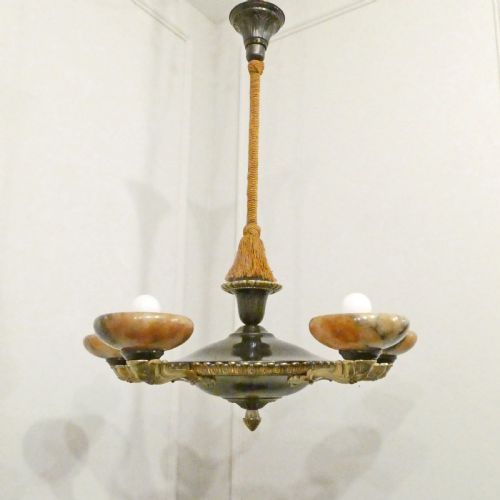


Art Deco Ceiling Bowl
These art deco ceiling bowl fixtures cast an even, warm light that anchors a room and defines the period.
Art Deco Ceiling Bowl
An art deco ceiling bowl takes the form of a shallow dish or plafonnier suspended by metal chains, cords, or rods. These fixtures hang close to the ceiling or drop further down as pendants and chandeliers.
Most examples date from the nineteen-twenties and nineteen-thirties, reflecting the geometric and streamlined tastes of those decades. You will encounter both single bowl pendants and matched pairs designed for larger spaces.
How they were made
Makers shaped heavy natural alabaster into smooth, glowing dishes or carved decorative surfaces by hand. Glass bowls were pressed into moulds to create frosted, satin, opalescent, or mirrored finishes.
Metal components utilise brass, bronze, copper, and wood for the suspension hardware, mounts, and chains. Fabric cords also appear as hanging supports for the lighter glass shades.
Some bowls are shaped like clam shells, bringing a touch of the seaside straight to the ceiling.
What varies in quality
The sophistication of the glass moulding or the purity and natural veining of the alabaster dictate the visual weight of the piece. Crisp pressing in satin or opalescent glass produces sharper decorative motifs than softer, plain alternatives.
Hardware execution matters equally, with cast bronze or heavy brass mounts showing greater attention to detail than simpler metalwork. The integration between the hanging mechanism and the bowl determines the overall harmony of the design.
René Lalique
The Art Deco Ceiling Bowl Glossary
- Plafonnier
- A ceiling light fixture where the bowl sits flush or close to the ceiling mount. These direct illumination upwards into the room.
- Alabaster
- A fine-grained, translucent stone used extensively for carved lighting bowls. It diffuses light with a soft, warm glow.
- Opalescent glass
- Glass that displays milky, milky-blue, or fire-like colour shifts when light passes through it. This technique adds depth to the surface.
- Pressed satin glass
- Glass shaped in a metal mould to achieve a frosted, matte texture. It reduces glare while highlighting the geometric pattern.
Art Deco Ceiling Bowl: Frequently Asked Questions
How do these bowls hang?
These fixtures typically suspend from chains, metal rods, or fabric cords attached to a central ceiling rose. The weight of the bowl determines whether it uses three-point chains or a single central stem.
Heavier alabaster dishes require robust metal hardware, whereas lighter glass shades often utilise simpler cords or brass fittings.
Were these used in specific rooms?
These lights served as primary overhead illumination in principal rooms like reception halls, dining rooms, and parlours. Their shallow bowl design directed light upward toward the ceiling to reduce harsh shadows.
Smaller versions suited bedrooms and hallways, while pairs provided balanced illumination across grander spaces.
How do I distinguish glass from alabaster?
Alabaster is a natural stone with visible mineral veining and a cool touch, whereas glass is manufactured and uniform in structure. Holding a light behind the material reveals the distinct cloud-like formations of stone against the smooth consistency of glass.
Pressed glass surfaces also show mould seams from production, which do not occur on carved stone.
How do I date these lights?
Dating relies on the materials, manufacturing techniques, and stylistic traits associated with the nineteen-twenties and nineteen-thirties. Pressed satin glass and streamlined metal fittings point firmly toward the later nineteen-thirties.
Earlier pieces often feature carved alabaster or heavy bronze mounts in the empire style.