



Carved Stone Lighting
Carved stone lighting brings solid weight and warm translucency into a room through alabaster, marble and onyx fixtures.
Carved Stone Lighting
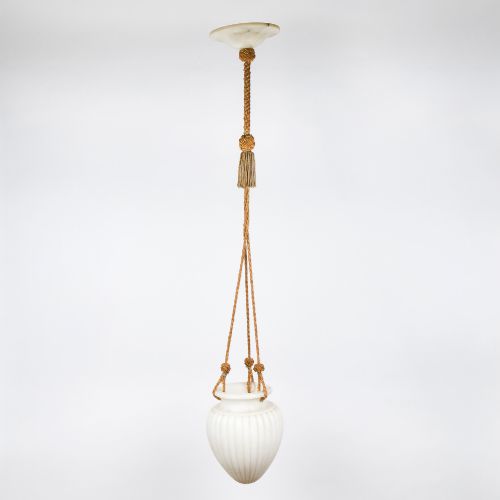
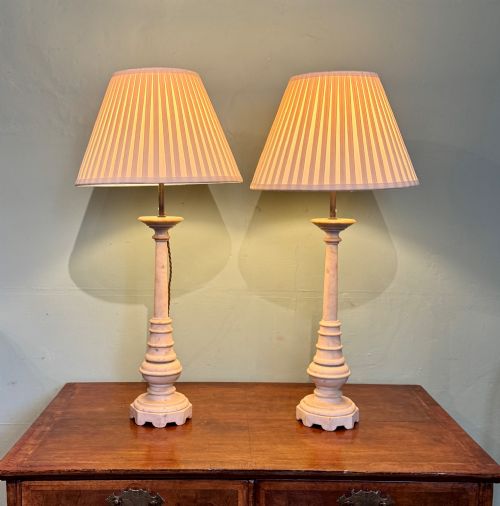
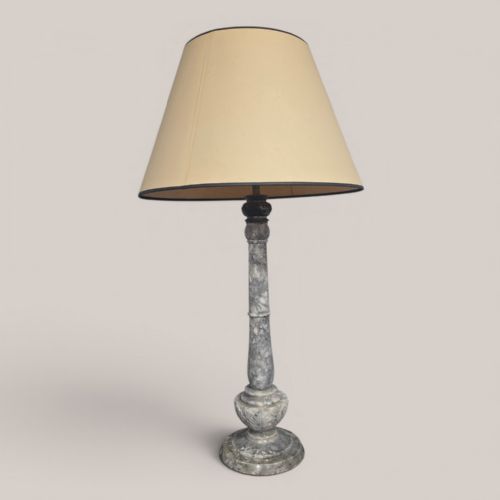
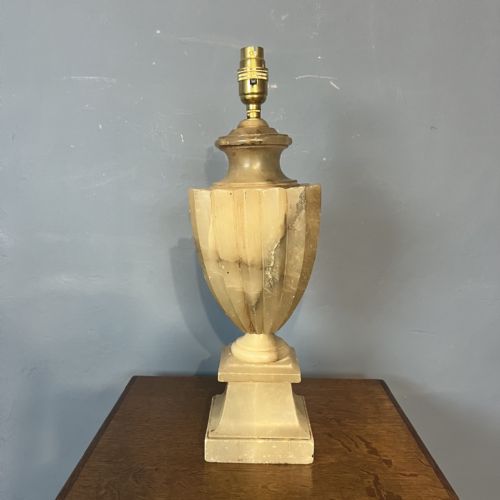
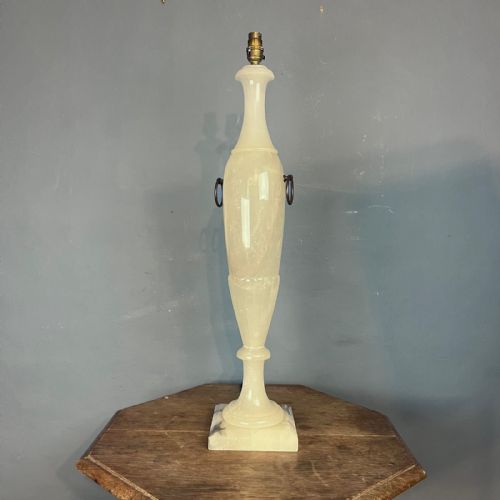
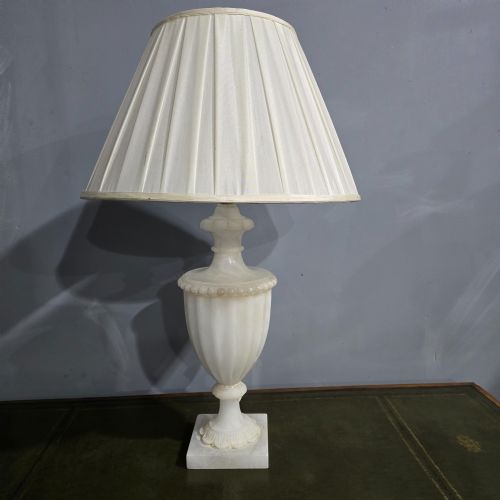
Carved stone lighting spans substantial floor standing marble lamps, hanging alabaster ceiling dishes and heavy table lamps designed to diffuse a soft, even glow through natural mineral layers. When exploring carved stone lighting, buyers encounter pieces fashioned from white alabaster, marble and onyx, often shaped into classical vases, hanging bowls or figural columns.
The selection here draws heavily from the early twentieth century, alongside nineteenth-century examples including Grand Tour chambersticks and neoclassical revival pieces. Table lamps and pendant lights dominate the offerings, frequently paired with brass mounts, fabric cords and braided wiring to complete the functional setup.
How they were made
Makers shaped these fixtures by turning and carving dense blocks of natural stone on a lathe or working them by hand to achieve thin, translucent walls. Alabaster and marble were chosen for their ability to soften internal illumination, while metal components like brass provided secure structural mounts for bowls and shades.
Wiring and cord choices such as fabric cord and braided cord integrate electrical fittings into heavy stone bodies, balancing the sheer weight of the mineral material with functional suspension or stability.
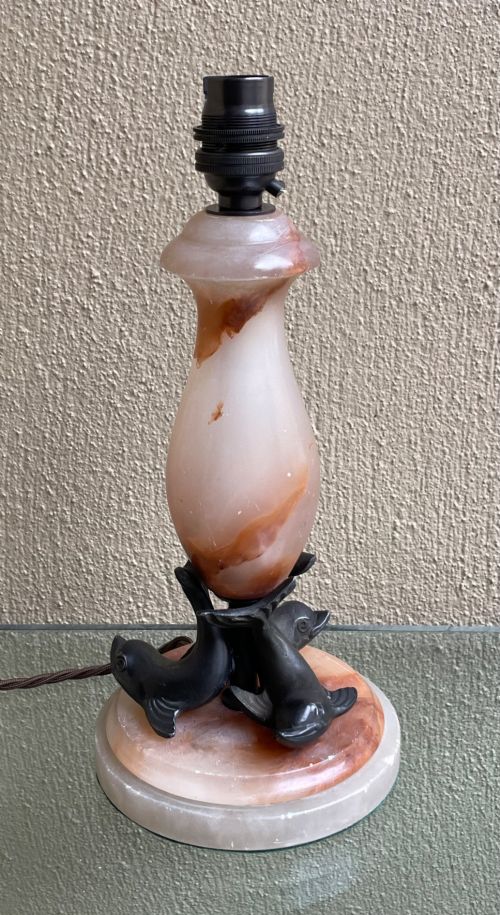
Even dolphins found their way into lighting design, immortalised as carved alabaster pedestals holding up the evening glow.
What varies in quality
The distinction between standard utility and superior craftsmanship rests in the depth of the carving and the natural translucency of the stone. Finer examples display subtle veining and even light diffusion without heavy opaque patches, whereas lesser pieces can appear dense and lifeless when lit.
Proportion and decorative ambition also divide the range, separating plain functional cylinders from sculptural figures, classical cassolettes and finely turned architectural profiles.
The Carved Stone Lighting Glossary
- Alabaster
- A fine-grained, soft stone prized for its milky appearance and ability to transmit light gently. It is easily carved into bowls, urns and lampshades.
- Cassolette
- A decorative vessel shaped like a censer or perfume burner, frequently adapted during the nineteenth century into ornamental table lamps.
- Grand Tour
- A nineteenth-century cultural excursion undertaken by wealthy travellers who collected small marble and stone antiquities and souvenirs to bring home.
- Onyx
- A banded variety of chalcedony quartz that exhibits striking layered patterns when polished and lit from within.
- Neoclassical Revival
- A late nineteenth and early twentieth-century style drawing inspiration from classical Greek and Roman architecture and decorative arts.
Carved Stone Lighting: Frequently Asked Questions
How do I clean alabaster lamps?
Dust alabaster surfaces gently with a dry microfibre cloth to prevent dirt settling into the porous stone. Avoid using water or liquid chemical cleaners, which can stain or dissolve the delicate mineral structure.
For stubborn marks, consult a professional restorer rather than attempting chemical removal at home. Keeping the stone dry preserves its translucent finish and natural polish.
How do I date an alabaster lamp?
Dating relies on examining the wiring, the style of the metal mounts, and the turning techniques visible on the stone body. Pieces from the Art Deco era often feature geometric lines and stepped profiles, while nineteenth-century items lean toward classical revival or Grand Tour motifs.
Original braided or fabric cords and patinated brass fittings offer additional clues to a piece's age. Comparing the turned profile to documented periods helps narrow down the decade of production.
Can I use modern LED bulbs?
Modern LED bulbs work well in these fixtures because they generate significantly less heat than traditional incandescent lamps. Low heat output protects vulnerable stone and historical wiring from thermal stress.
Select bulbs with a warm colour temperature to replicate the soft, inviting glow originally intended by the maker. Ensure the bulb wattage matches the limits of the lamp's vintage electrical holder.