
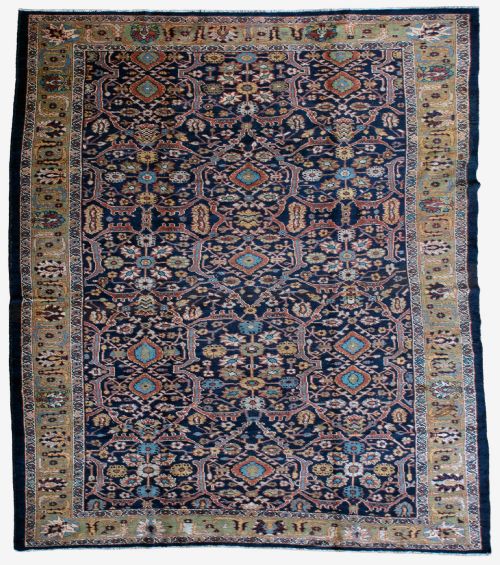
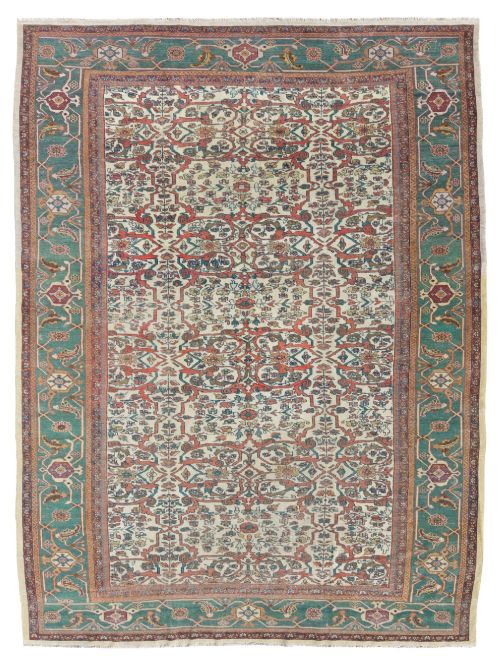
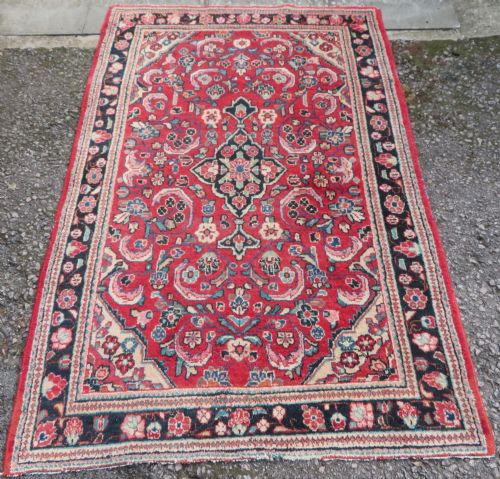
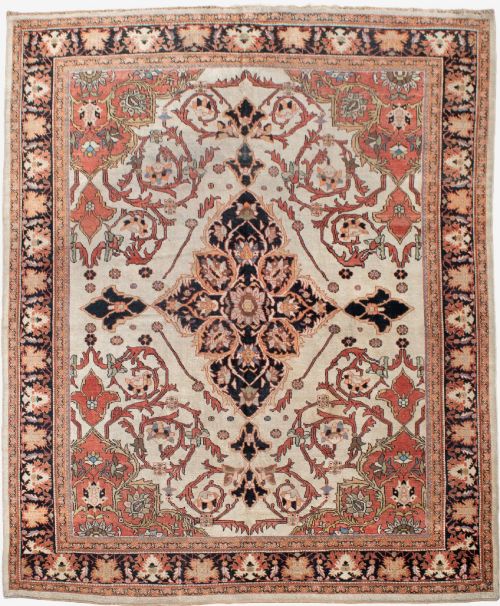


Sultanabad Mahal Rug
A sultanabad mahal rug brings grand Persian scale and robust village weaving into a room.
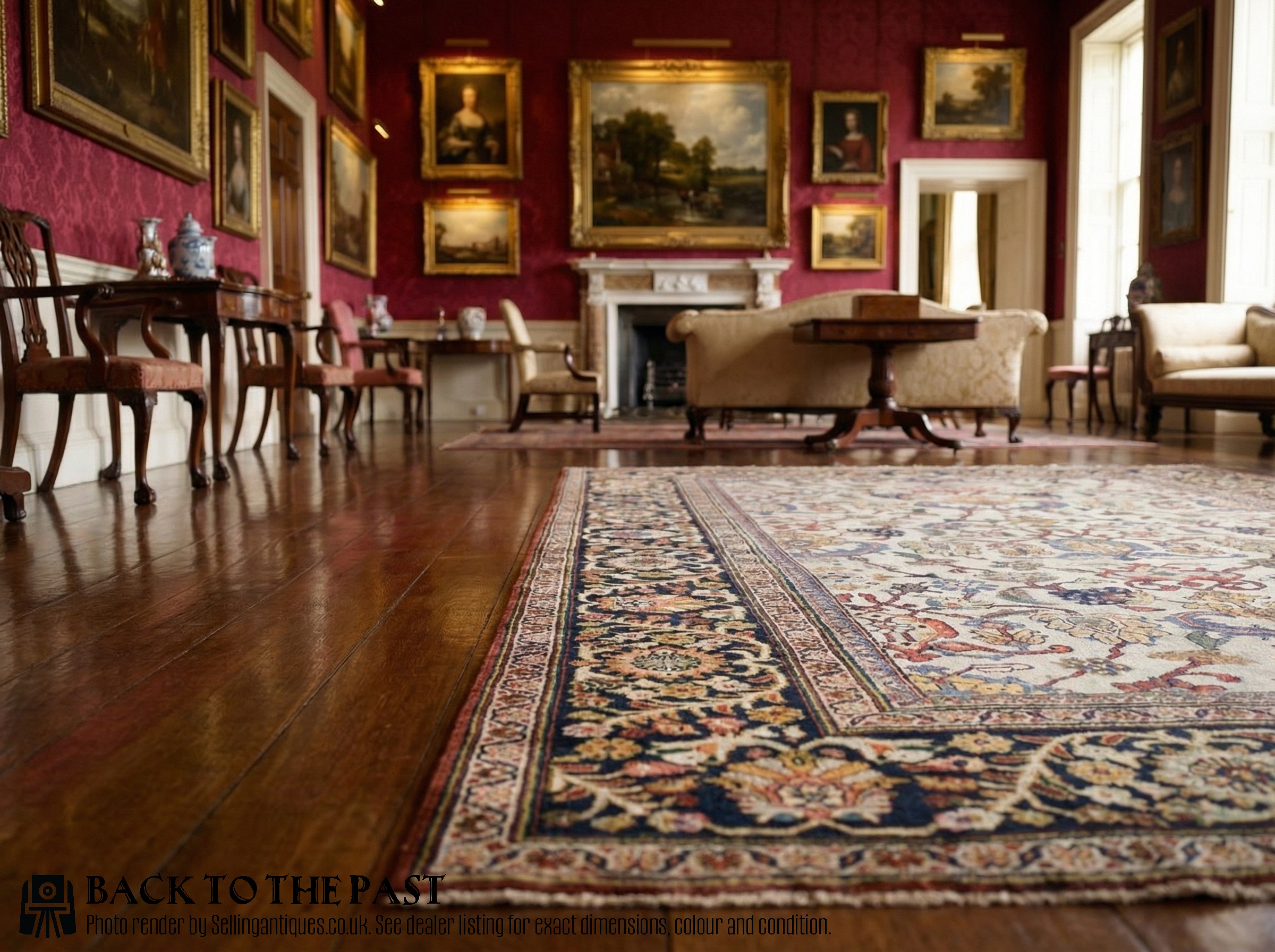
Sultanabad Mahal Rug
A sultanabad mahal rug is a large floor covering hailing from Western Persia, often produced in expansive room sizes suited for formal spaces. These carpets date predominantly from the late nineteenth and early twentieth centuries, spanning periods from eighteen seventy to the nineteen thirties. Buyers searching for a sultanabad mahal rug seek traditional Oriental styling with generous dimensions.
The pieces encountered most frequently on this page are antique Mahal and Ziegler carpets. These floor coverings bridge grand commercial workshop output with sturdy village rug production. They serve as durable centrepieces for large rooms while offering historical Persian character.
How they were made
Weavers constructed these rugs using wool for the pile and cotton for the foundation structures. The combination of wool and cotton provides a heavy, resilient fabric designed to withstand daily foot traffic. Artisans knotted the pile by hand onto sturdy cotton warps and wefts.
Dyes derived from natural sources imparted deep shades to the wool, creating the characteristic palette seen across the pieces. These materials and techniques produced floor coverings capable of enduring for over a century while retaining their structural integrity.
Listings span from eighteen seventy to nineteen thirty, featuring wool and cotton construction in Persian Sultanabad, Mahal, and Ziegler styles.
What varies in quality
The quality of a sultanabad mahal rug depends largely on the subtlety of its wool pile and the harmony of its traditional Persian design. Finer examples display a careful balance between the openness of the field and the density of the floral motifs. Variations in scale and ground colour, such as scarce blue or green fields, separate standard production from more distinctive examples.
Purity of the wool and consistency in hand-knotting dictate how gracefully the carpet ages over decades of use. The execution of the border patterns and the precision of the weaving contribute to the overall presence of the carpet in a room setting.
The Sultanabad Mahal Rug Glossary
- Mahal
- A type of Persian carpet originating from the region around Sultanabad, known for large-scale patterns and muted palettes. These rugs were often produced for Western tastes during the nineteenth and twentieth centuries.
- Ziegler
- A nineteenth-century firm that commissioned carpets in Persia, adapting traditional designs for the European market. Ziegler carpets often feature expansive floral motifs and softened colourways.
- Sultanabad
- A nineteenth-century carpet-producing district in West Persia that became a major centre for commercial rug manufacture. It gave its name to the distinctive style of room-size carpets woven in the area.
- Wool
- The textile fibre sheared from sheep, used for the soft, dense pile of these Persian rugs. It accepts natural dyes readily and provides natural resistance to wear.
- Cotton
- A soft vegetable fibre spun into yarn, utilised for the foundation warps and wefts of these carpets. It provides a stable, rigid grid that holds the hand-knotted wool pile securely in place.
Sultanabad Mahal Rug: Frequently Asked Questions
Where should I place a sultanabad mahal rug?
These large room-size carpets suit principal living areas, dining rooms, or libraries where their generous dimensions can anchor the furniture. Their robust wool and cotton construction handles everyday movement.
Position the carpet so that major pieces of furniture sit comfortably on top, framing the traditional Persian design within the room.
How do I clean a sultanabad mahal rug?
Careful regular vacuuming without a beater bar removes surface dust from the wool pile without catching the hand-knotted fringe. Professional textile cleaning is necessary for deep washing.
Avoid harsh chemical treatments that can strip the natural dyes from the wool and damage the cotton foundation.
What periods do these rugs come from?
The pieces listed date from the late nineteenth century through to the nineteen thirties, spanning the heyday of West Persian carpet production. Most examples originate from eighteen seventy up to nineteen thirty.
This era encompasses the late nineteenth-century workshop output and the early twentieth-century traditional village weaving traditions.
How do I distinguish Mahal from Ziegler carpets?
Mahal rugs typically display traditional Persian village patterns adapted for broader room sizes, while Ziegler pieces often reflect specific commercial commissions for European tastes. Both styles emerged from the Sultanabad district during the same era.
Distinguishing between them relies on examining the scale of the floral motifs and the specific handling of the border designs.