




Studded Walnut Armchairs
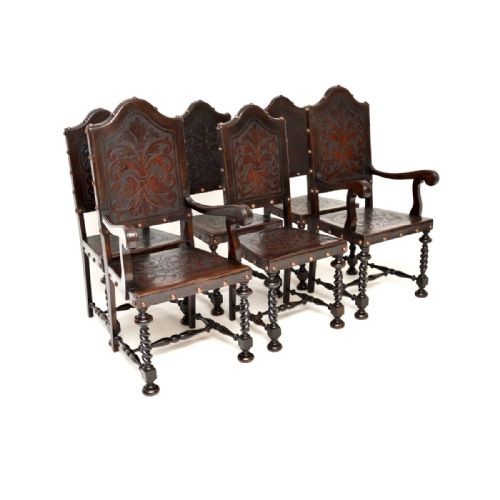
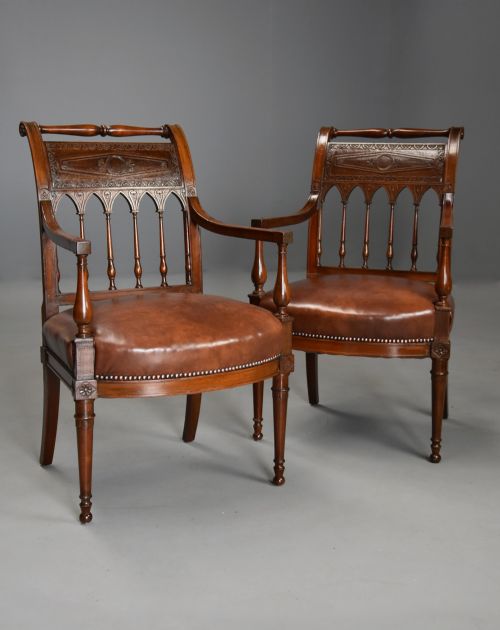
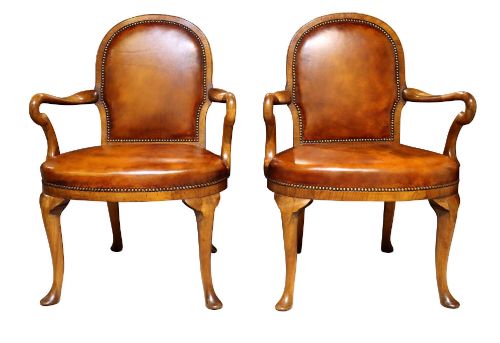
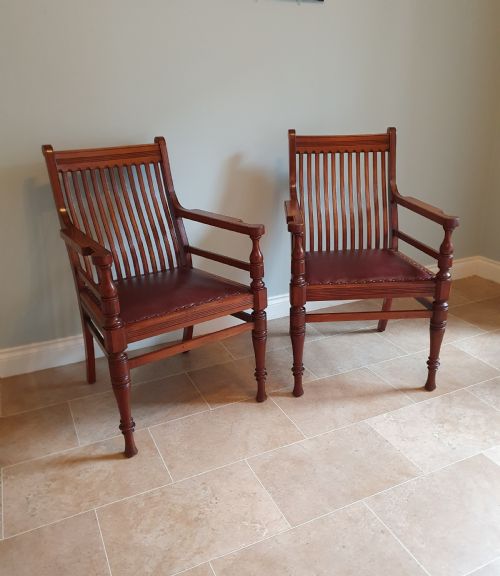
These studded walnut armchairs combine robust timber frames with rich leather or fabric upholstery, offering both commanding presence and traditional comfort.
Studded Walnut Armchairs
When you search for studded walnut armchairs, you encounter seating constructed from walnut timber and finished with decorative metal studding along the upholstery edges. These chairs span multiple eras, encompassing desk chairs, wing backs, club chairs, and dining suites.
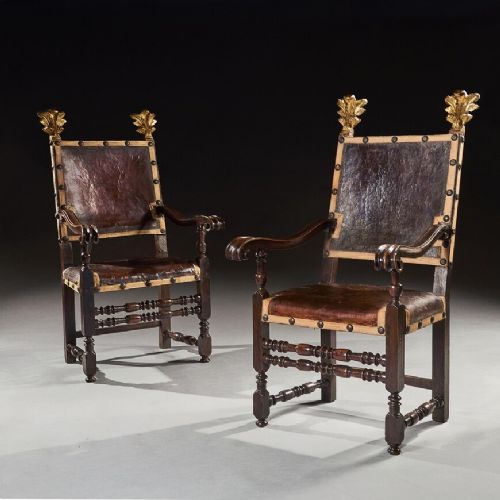
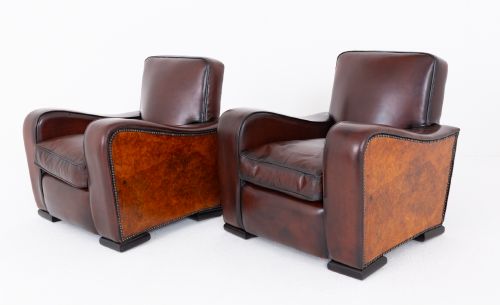
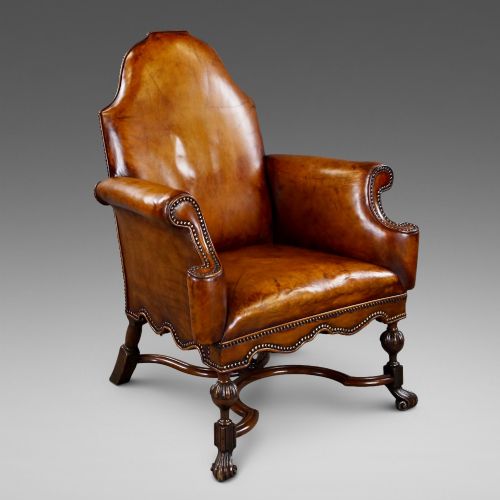
The selections on this page range from 17th century Italian Baroque and Georgian iterations to Victorian library seating and 1930s Art Deco club chairs. Walnut frames frequently feature carved details, cabriole legs, or claw and ball feet.
French styles appear alongside English and Portuguese influences, offering variations from open armchairs to high-backed wing chairs. Leather seats and backs predominate, often paired with brass studs that secure the upholstery to the wooden frame.
Materials and construction methods
Walnut serves as the primary structural timber, chosen for its strength and grain pattern, sometimes appearing as burr walnut or enriched with parcel-gilt details. Frames are constructed with traditional joinery to support the weight of the sitter and the tension of the upholstery.
Upholstery materials include leather, embossed leather, velvet, and fabric, fastened to the wooden framework using metal studs or brass tacks. Leather surfaces may receive hand-colouring or embossing, depending on the period and style of the piece.
The inventory includes desk chairs, wing backs, dining sets, and salon suites spanning the 17th through 20th centuries.
Evaluating craftsmanship and condition
Quality in these seating pieces rests upon the crispness of the walnut carving, the integrity of the frame construction, and the grade of the upholstery materials. Finer examples display carefully proportioned cabriole legs, substantial timber scantlings, and well-preserved leather.
The execution of the decorative studding and the quality of the timber finishing distinguish standard production from superior craftsmanship. Original upholstery methods and period-appropriate leather contribute to the desirability of older examples.
The Studded Walnut Armchairs Glossary
- Cabriole leg
- A furniture leg that curves outward and then tapers inward, finishing in a pad, claw, or scroll foot. This form derives from animal limbs and appears frequently on Georgian and later walnut chairs.
- Wing back
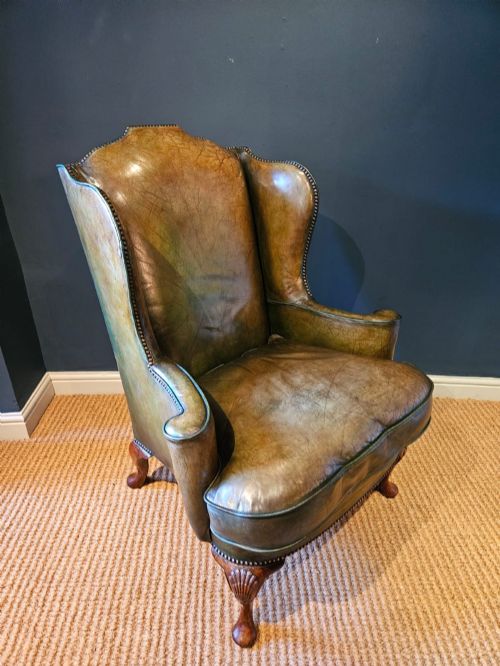
- An armchair featuring side panels attached to the arms and framing the back, designed to shield the sitter from drafts. These chairs often combine walnut legs with leather upholstery.
- Parcel-gilt
- Partially gilded with gold leaf applied to specific carved details on the walnut frame. This decorative technique highlights particular elements of Italian Baroque and formal seating.
- Os De Mouton
- A French term describing shaped and carved chair legs or stretchers resembling sheep bone. This characteristic feature appears on select late 19th century walnut chairs.
- Club chair
- A low, comfortable upholstered armchair designed for relaxation. Art Deco and Victorian versions frequently pair walnut frames with studded leather coverings.
Studded Walnut Armchairs: Frequently Asked Questions
How do I identify a Georgian walnut armchair?
Georgian pieces often feature shaped walnut frames with cabriole legs, sometimes terminating in claw and ball feet. The proportions tend to be robust, supporting leather or fabric seats secured with brass studs.
Look for traditional joinery methods and patination on the walnut surfaces that indicate age. Wing back and desk chair configurations are common within this period style.
Are these chairs suitable for daily desk use?
Several variations on this page are designated as desk chairs or captains chairs, built specifically for sitting at a writing table. Their sturdy walnut frames and supportive upholstered backs accommodate extended periods of work.
When selecting a chair for a desk, check the seat height and arm clearance relative to your workspace. The combination of leather upholstery and wooden frames provides a durable seating option for regular use.
What maintenance do leather and walnut chairs require?
Walnut frames benefit from occasional dusting and treatment with appropriate wood balms to prevent the timber from drying out. Leather upholstery requires conditioning to maintain flexibility and prevent cracking over time.
Keep these chairs away from direct sunlight and heat sources to protect both the wood finish and the leather. Gentle cleaning with suitable leather soaps preserves the surface texture without damaging the material.
How can I tell a 17th century chair from a 19th century revival?
Seventeenth-century pieces, such as Italian Baroque designs, display authentic period construction techniques, tool marks, and historical wear on the walnut timber. Revival pieces from the 19th century often utilise machine-assisted joinery while copying earlier styles.
Examining the underside of the seat, the type of screws or nails used, and the oxidation of the wood helps determine the actual age. Period-specific carving styles also offer clues to whether a piece is original or a later interpretation.