
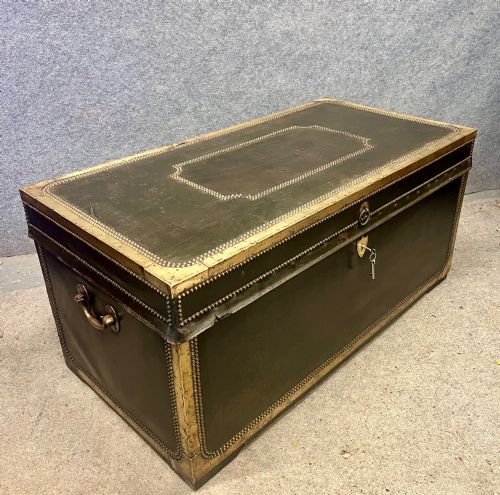

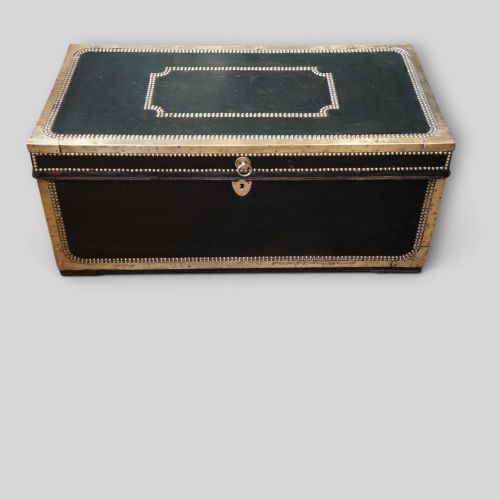
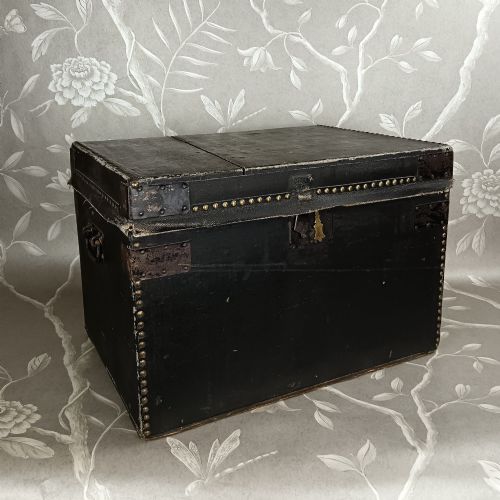
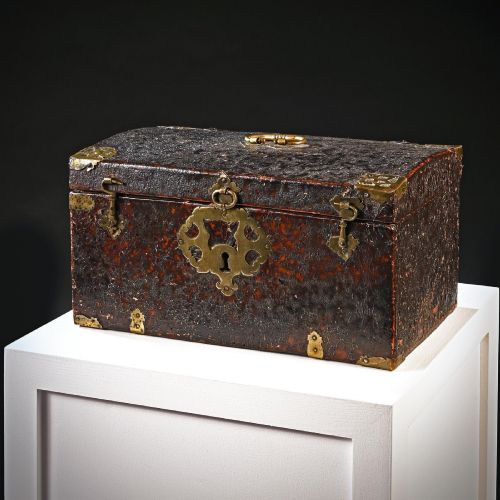
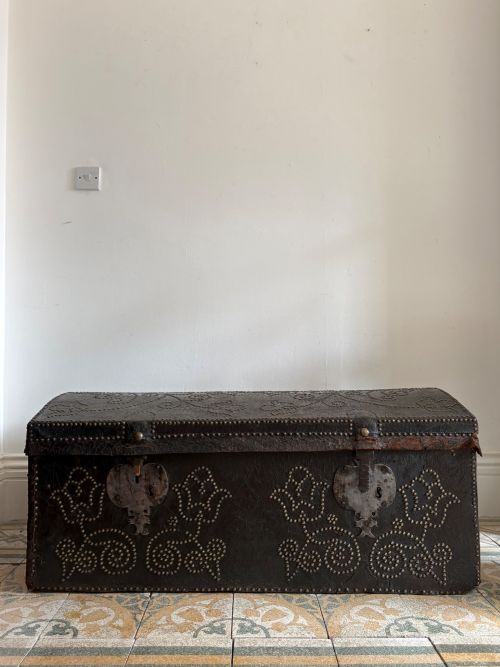
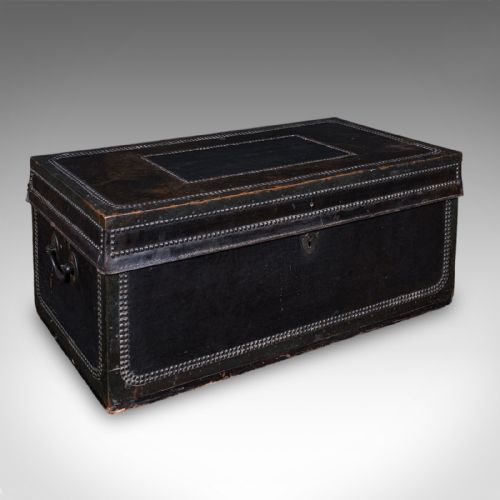


Studded Leather Storage Box
When you handle a studded leather storage box, you hold centuries of travel, trade and utility in hide and metal.
Studded Leather Storage Box
A studded leather storage box bridges the gap between travel luggage and domestic furniture. When searching for a studded leather storage box, you encounter pieces spanning from the seventeenth century through the Victorian era.
The selections here range from compact travelling boxes and dome-top trunks to large campaign chests, ottomans and blanket boxes. China Trade and Regency examples appear frequently alongside Spanish coffers and Victorian pine kists.
These items served travellers crossing oceans on China Trade routes as well as households requiring robust storage. Their sturdy construction ensured survival across generations of use.
Materials and Construction
Craftsmen built these pieces using timber foundations such as camphor wood, mahogany, birch, pine and rosewood. They then covered the wooden carcase in leather, hide or painted leather.
Brass, iron and metal bindings reinforced the edges and corners against the strains of travel. Rows of brass studs secured the hide to the wood while adding decorative patterns.
Makers integrated sturdy carry handles in metal or leather to facilitate transport on coaches and ships. Internal compartments and linings often utilised camphor wood to protect contents from insects and dampness.
Materials across these listings combine leather, hide, brass, iron and camphor wood.
Judging Quality and Character
The distinction between ordinary utility items and exceptional pieces rests in the quality of the materials and the precision of the brass-work. Fine examples feature carefully selected timbers like camphor wood or rosewood beneath substantial, well-preserved hide.
Detailing on the metal studs and corner mounts separates standard trunks from superior ones. Maker labels, original hand-dyed finishes and intact interior fittings elevate the standing of a piece significantly.
Samuel Pratt·Wm. Insall of Bristol·Seabrook of St.Pauls London
The Studded Leather Storage Box Glossary
- Campaign trunk
- A portable chest designed for military officers and travellers, often built in sections with recessed brass hardware.
- Camphor wood
- An aromatic timber frequently utilised in trunks made for the China Trade to repel insects.
- Dome top
- A rounded lid construction designed to shed water during travel and increase internal storage capacity.
- Coaching trunk
- A heavy-duty leather box reinforced with metal bands for transport on the roof of stagecoaches.
- Ottoman
- A padded storage box or stool functioning simultaneously as seating and furniture.
Studded Leather Storage Box: Frequently Asked Questions
How were these trunks used originally?
Travellers packed clothing and valuables into these boxes for long journeys by coach, ship or train. Their rugged construction protected contents from the elements during transit.
In domestic settings, families used them as blanket boxes, stationary storage or low tables in grand country houses.
Where were China Trade trunks made?
These pieces were produced in southern China ports such as Canton for export to Western markets. They combined traditional European furniture forms with local materials like camphor wood.
European merchants and sea captains commissioned them specifically for the return voyage home.
How do I care for antique leather?
Keep leather storage boxes away from direct sunlight and heat sources to prevent the hide from drying and cracking. Maintain the surface with appropriate conservation waxes rather than modern synthetic polishes.
Ensure the room humidity remains stable to protect both the leather exterior and the internal wooden structure.
How do I date a leather trunk?
Examine the construction methods, nail types and lock mechanisms to determine the period of manufacture. Earlier seventeenth and eighteenth-century examples often feature heavier iron mounts and hand-hammered studs.
Victorian and later nineteenth-century pieces frequently display machine-made brass studs and standardised hardware.