




Studded Back Dining Chairs
Studded back dining chairs bring substance to a room, offering sturdy frames and pegged or upholstered details that anchor a traditional table.
Studded Back Dining Chairs
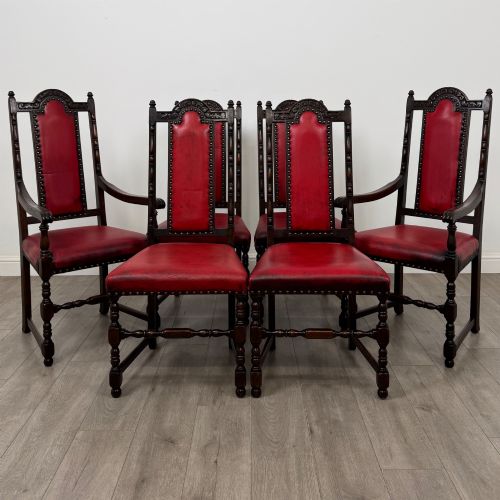
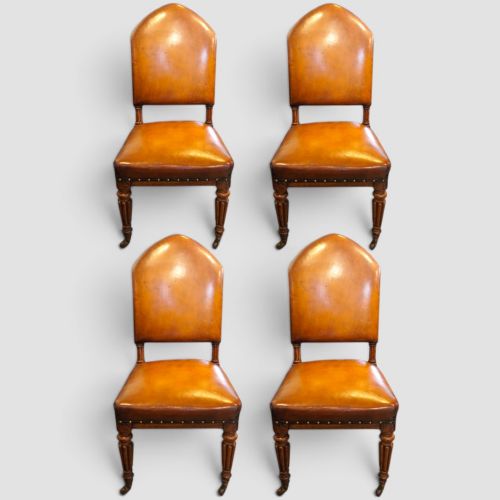
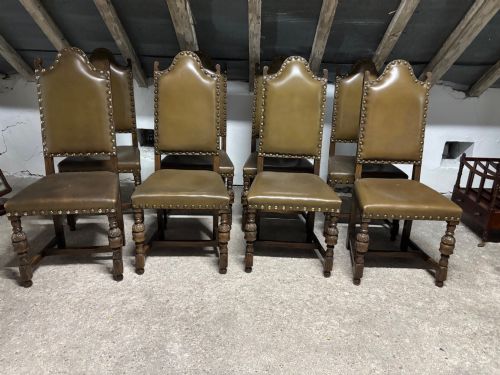
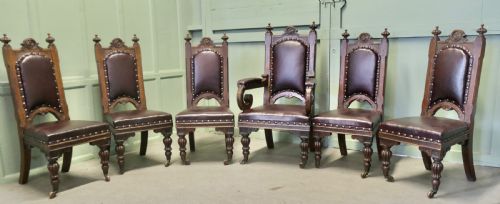
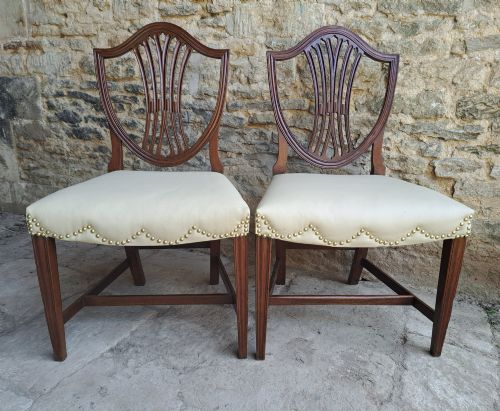
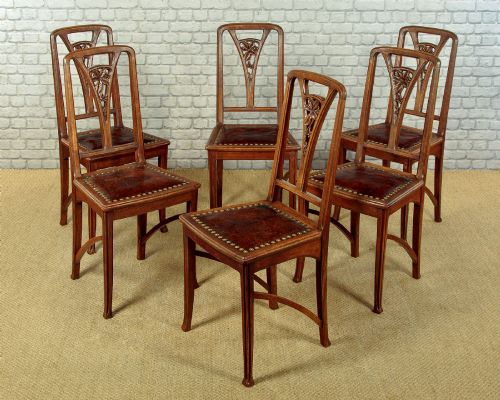
Studded back dining chairs encompass robust seating designed around a dining table, spanning periods from the eighteenth century through the twentieth century. You will frequently encounter oak and mahogany examples originating from the Victorian, Edwardian, and Georgian eras, alongside revival styles.
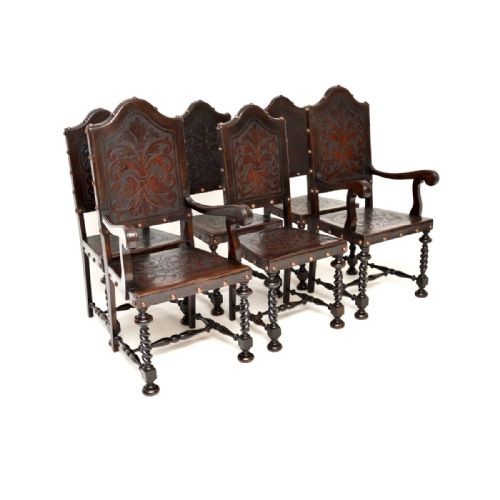
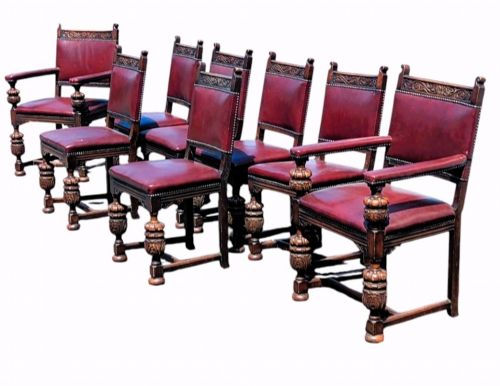
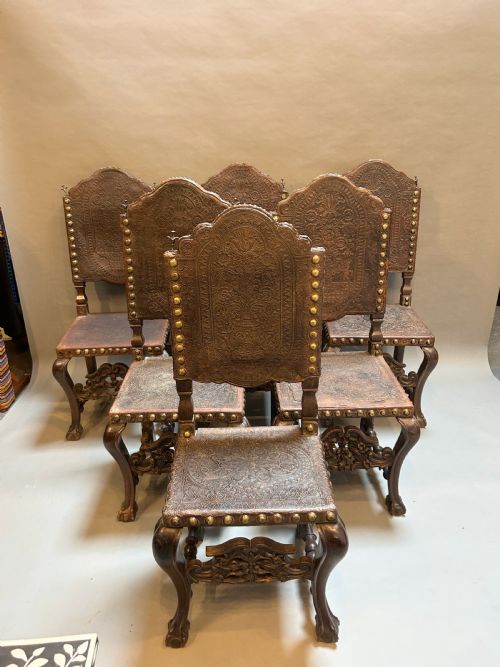
The selection ranges from single side chairs to large sets of six or eight, featuring high backs, carved woodwork, and leather or fabric upholstery secured with metal fasteners. Regional variations appear in Portuguese, French, and Spanish designs alongside British iterations.
Form follows function across these pieces, with high back heights offering lumbar support during long meals. Dining chairs, armchairs, and hall chairs all populate this category, each sharing the characteristic studded upholstery trim.
How they were made
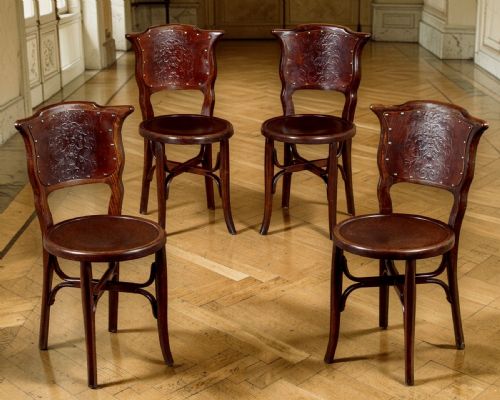
Carpenters and cabinetmakers constructed these frames using hardwoods such as oak, mahogany, walnut, beechwood, and fruitwood, often joining components through traditional mortise and tenon joinery. Turnings, hand-carving, and bentwood techniques shaped the structural elements depending on the period and style.
Upholstery involved stretching leather or fabric over padded foundations, secured to the timber frame using brass or metal studs driven in by hand. These individual fixings not only held the textiles firmly in place but also provided a decorative border along the chair backs.
Thousands of tiny metal tines hold the leather backs in place, each hammered by hand to keep generations upright.
What varies in quality
The distinction between ordinary and exceptional examples lies in the selection of timber and the crispness of the hand-carving. Dense, well-figured oak or mahogany frames with deep, sharply defined relief work represent superior craftsmanship compared to softer woods and shallow detailing.
Upholstery execution also dictates the tier of a piece, specifically the regularity of the studded trim and the quality of the embossed leather or fabric. Original fixings and intact hide demonstrate greater integrity than modern re-coverings on compromised frames.
Thonet Or J & J Kohn·George Henry Walton
The Studded Back Dining Chairs Glossary
- Carver armchair
- A dining chair featuring arms, traditionally placed at the head of the table. These matching pieces complement standard side chairs in a set.
- Bentwood
- Timber shaped by steaming and bending it into curved forms. This technique created lightweight yet resilient frames common in later periods.
- Embossed leather
- Hide decorated with raised patterns pressed into the surface. This material often covers the backrests and seats of continental European chairs.
- Shield back
- A chair back shaped in the outline of a shield, popular during the Georgian era. This refined silhouette frequently appears on mahogany dining seats.
- High back
- A tall chair back designed to rise significantly above the seat level. Such proportions provide prominent vertical lines and increased back support.
Studded Back Dining Chairs: Frequently Asked Questions
How do I clean studded leather chairs?
Wipe the wooden frames with a dry cloth and treat the leather surfaces gently using a specialised leather conditioner to prevent drying.
Avoid harsh chemical cleaners around the metal studs to prevent corrosion and tarnishing on the upholstery tines.
Can I mix these chairs with a modern table?
Combining antique timber seating with a contemporary table creates a striking contrast of textures and eras in a dining room.
Ensure the seat heights match the table clearance so guests sit comfortably during meals.
How do I spot a Victorian set?
Victorian dining chairs often feature heavier carved decoration, darker oak or mahogany timbers, and high backs influenced by Gothic or Renaissance revivals.
Examine the underside of the seats for tool marks and construction methods consistent with nineteenth-century workshops.
Are large sets harder to find?
Complete sets of six, eight, or twelve matching chairs are scarcer because individual pieces often became separated or damaged over decades of use.
When purchasing a large grouping, check that the frames share identical turning, wood grain, and stud placement.