
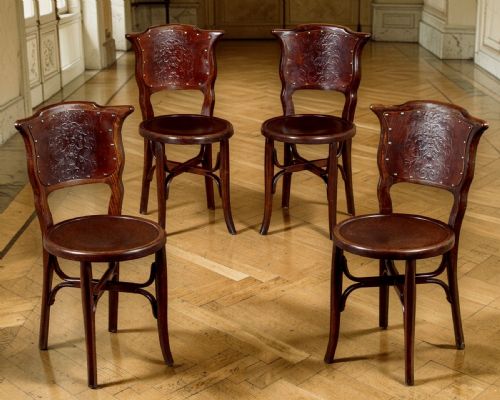


Embossed Back Chairs
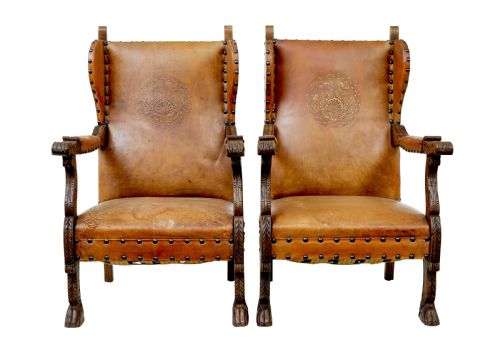
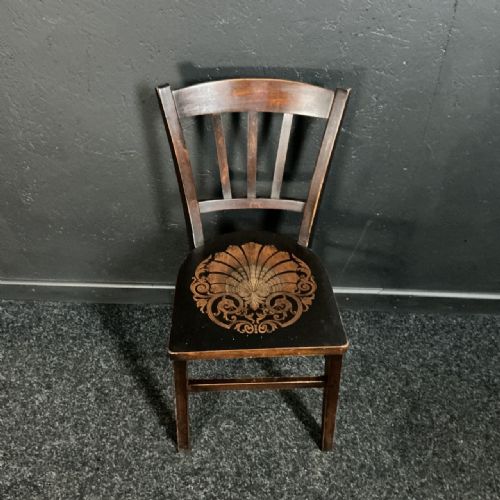
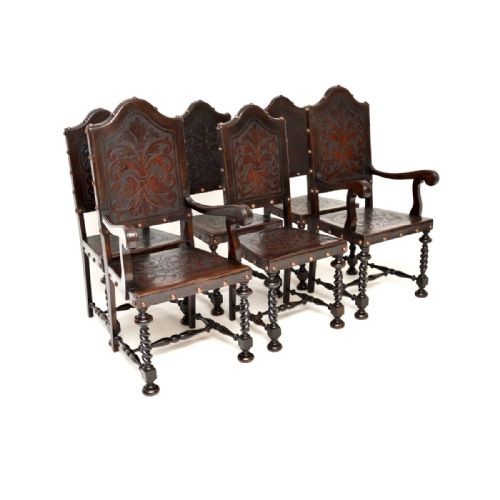
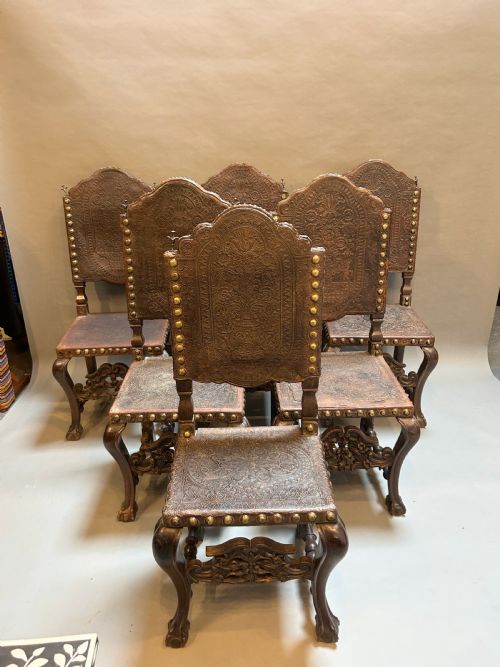
These embossed back chairs bring tactile pattern and sturdy timber into a room, offering genuine historic character for daily seating.
Embossed Back Chairs
When you search for embossed back chairs, you encounter seating united by decorated splats or leather panels, spanning the eighteenth century through to the Edwardian period and nineteen-hundreds. The listings here present diverse forms including dining chairs, side chairs, armchairs, hall chairs, and rocking chairs.
The selection ranges from pairs and larger sets down to single throne and hall chairs. Makers such as Thonet or J & J Kohn appear alongside Black Forest manner pieces and Arts and Crafts designs.
How they were made
Carpenters and joiners utilised solid hardwoods like oak, walnut, mahogany, beech, and birch to construct the frames, often employing hand carving to shape the timber. Bentwood techniques also appear among the twentieth-century selections.
The characteristic back panels rely on leather or embossed plywood, stamped or pressed with decorative patterns. Artisans secured these panels into the timber frames using brass studs or joinery methods appropriate to the period.
Recorded forms span dining chairs, side chairs, armchairs, hall chairs, and rocking chairs.
What varies in quality
The distinction between tiers rests upon the crispness of the carving and the depth of the pressing in the leather or plywood panels. Firmer timber joinery and substantial framing separate robust examples from simpler workshop output.
Consistency across a set elevates value, particularly when matching chairs retain their original embossed panels and structural integrity. Material selection also plays a part, where dense hardwoods and quality brass detailing indicate higher manufacture standards.
Thonet·J & J Kohn
The Embossed Back Chairs Glossary
- Splat
- The vertical central strip of timber in the back of a chair. It often receives carving or supports an embossed panel.
- Bentwood
- Wood steamed and bent into curved structural shapes. This technique defines specific nineteen-hundred chairs in the records.
- Gothic Revival
- An architectural and decorative style drawing on medieval motifs. It recurs frequently across nineteenth-century seating.
- Hall Chair
- A rigid, upright timber seat traditionally placed in entrance halls. These pieces often display prominent armorial or carved back detailing.
Embossed Back Chairs: Frequently Asked Questions
What periods do these chairs cover?
The pieces span from the eighteenth century through the nineteenth century, including Victorian and Edwardian examples up to nineteen-hundred.
Craftsmanship and materials shift across these decades, reflecting changing regional styles like Spanish Revival and Gothic Revival.
Are these chairs suitable for daily dining?
Many of these listings are dining chairs and side chairs designed specifically for table use. Their sturdy oak and walnut frames provide reliable support for regular seating.
It remains wise to check the height and proportions against your table before purchasing a complete set.
How do I identify Spanish Revival pieces?
Spanish Revival examples typically feature heavy oak framing combined with embossed leather and tall backs. They often incorporate traditional regional joinery and dark timber patination.
Comparative details include prominent brass studwork securing the leather panels to the wooden structure.
What is a Black Forest manner chair?
These chairs showcase elaborate carved decoration inspired by nineteenth-century Swiss woodcarving traditions. Animal motifs, such as a dancing bear, frequently appear on the backrests.
The style prioritises dramatic figurative carving over standard geometric or floral panel patterns.