


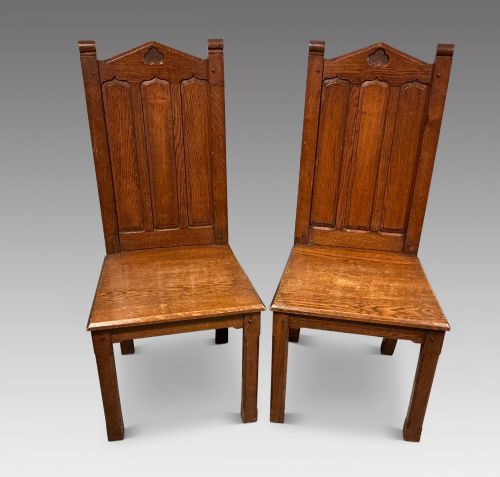

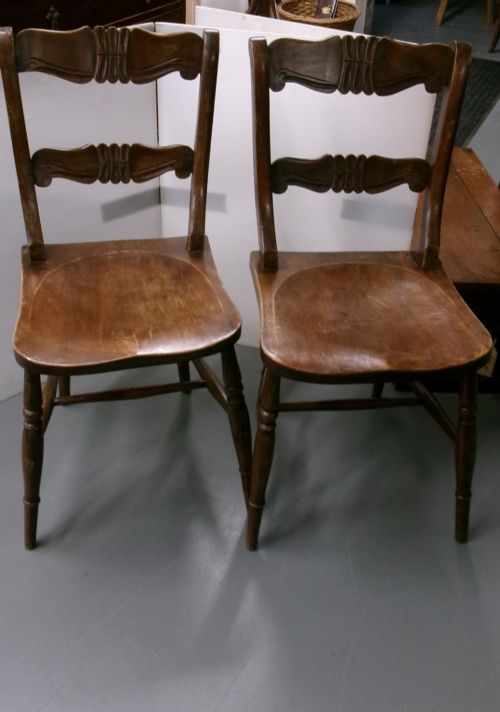


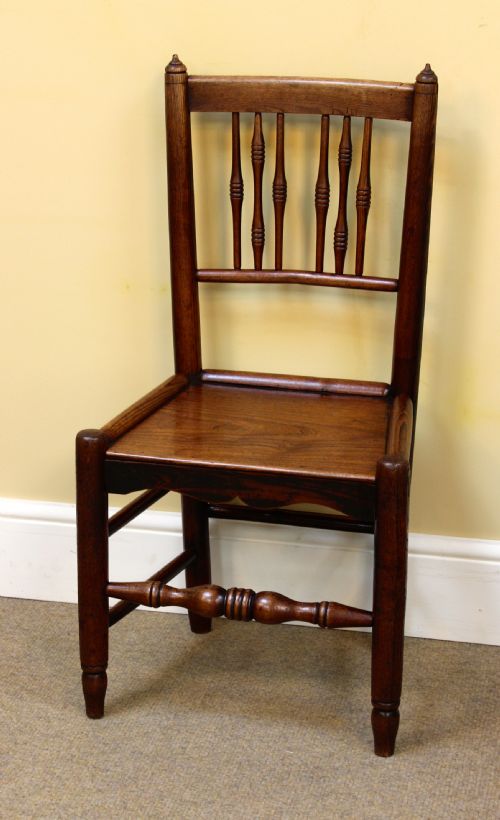
Dark Timber Side Chair
A dark timber side chair brings weight and character to a room, offering sturdy seating grounded in centuries of cabinet-making tradition.
Dark Timber Side Chair
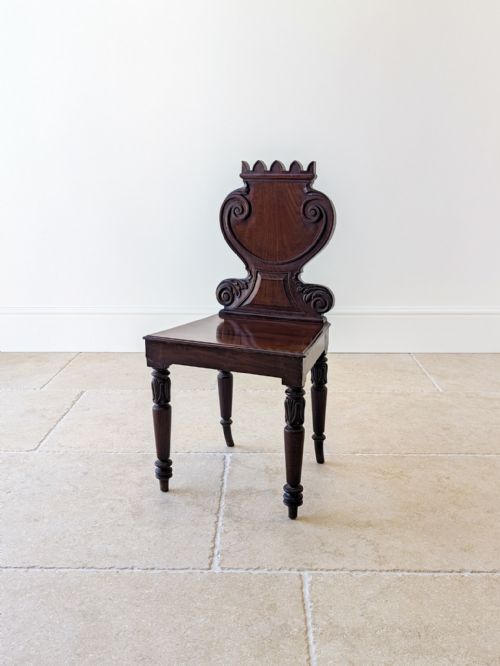
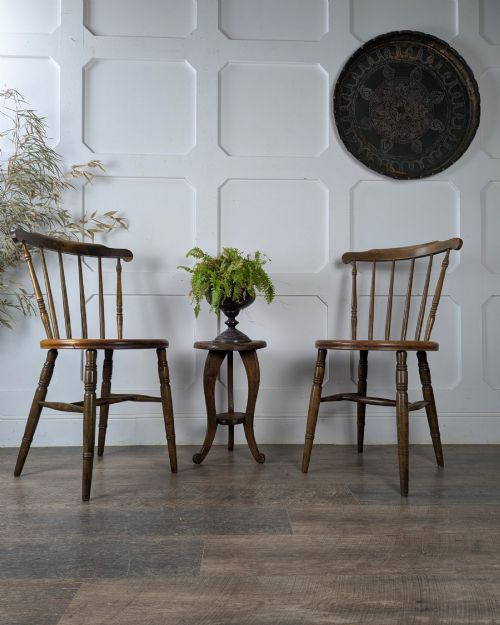
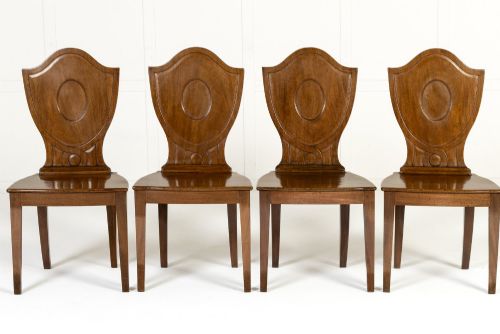
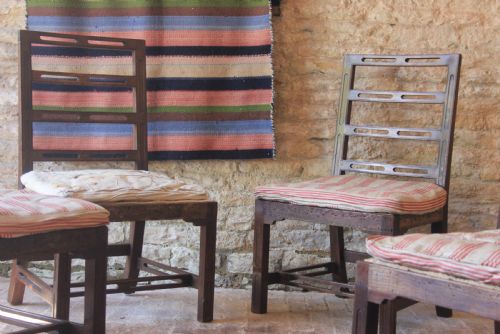
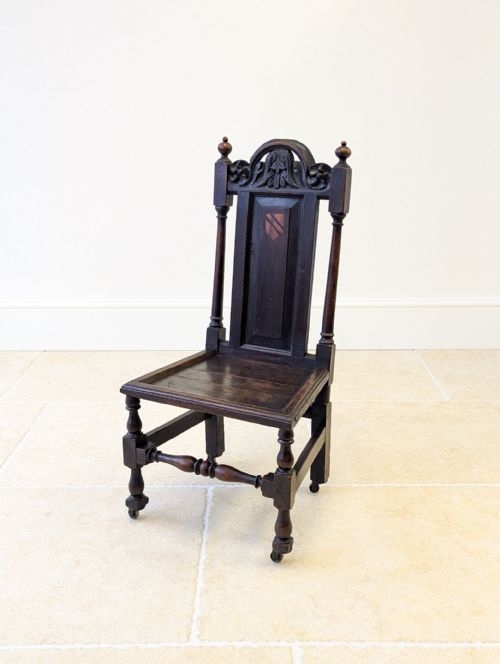
When searching for a dark timber side chair, buyers encounter a diverse selection spanning from the seventeenth century through the Edwardian period, with Victorian and Georgian examples appearing frequently. These pieces function primarily as hall chairs, dining chairs, and occasional bedroom seating rather than deep lounging furniture.
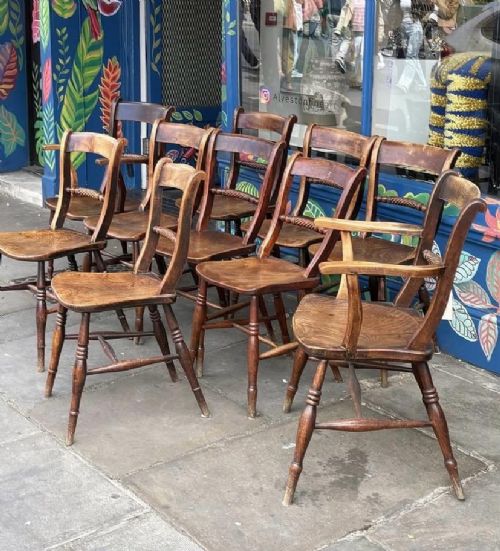
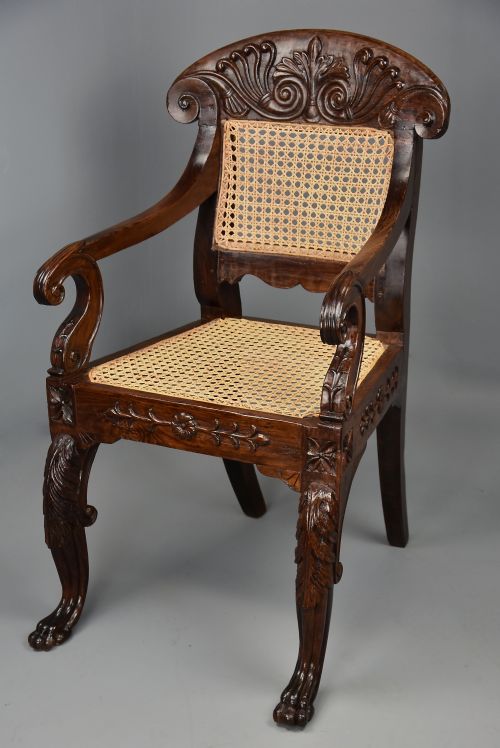
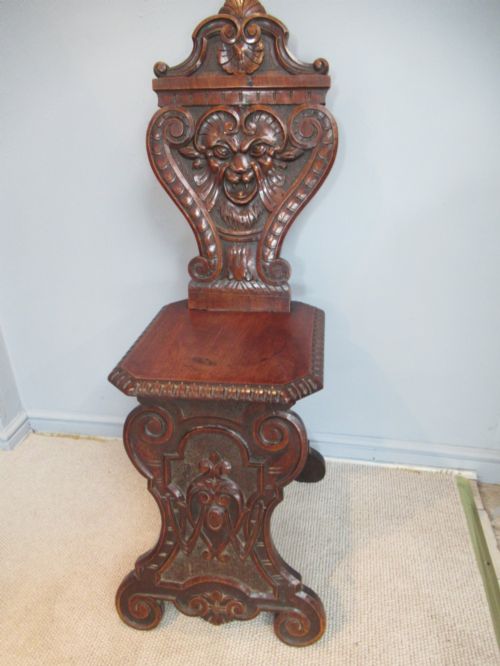
The inventory on this page ranges from formal, heavily carved mahogany hall chairs with armorial details to rustic elm and ash country kitchen chairs. Regional variations include Irish, Welsh, American, and Anglo-Indian pieces alongside standard English designs.
How they were made
Craftsmen utilised solid hardwoods such as mahogany, oak, walnut, rosewood, and padouk, often pairing them with secondary timbers like beech, ash, and elm for structural elements. Construction relied on traditional joinery methods, supplemented in later nineteenth-century examples by bentwood techniques.
Surfaces received various treatments, from hand-applied paint and natural wax finishes to intricate carved relief work and applied fabric upholstery.
Listings feature mahogany, oak, walnut, rosewood, ash, elm, and beech across the Georgian, Victorian, and Edwardian periods.
What varies in quality
The standard of a piece depends heavily on the crispness of the timber carving and the architectural ambition of the design, such as sculptural George III backs versus plain kitchen forms. Original surface patination and the integrity of the timber joints distinguish superior examples from heavily restored or lesser items.
Thonet·J & J Kohn·Dinco Penny
The Dark Timber Side Chair Glossary
- Hall chair
- A stiff-backed wooden chair traditionally placed in an entrance hall, often featuring a solid carved seat and a painted or carved family crest.
- Padouk
- A heavy, durable tropical hardwood with a rich reddish-brown colour, utilised in colonial and nineteenth-century furniture.
- Bentwood
- Wood softened by steam and bent into curved shapes under pressure, a technique associated with late nineteenth-century manufacturers.
- Armorial
- Bearing a heraldic coat of arms, frequently engraved or painted onto the wooden backsplats of formal dining and hall chairs.
Dark Timber Side Chair: Frequently Asked Questions
Where did people put hall chairs?
Hall chairs stood along the walls of grand entrance passages and corridors in country houses, serving primarily as decorative statements rather than comfortable seats for prolonged sitting.
Guests and visitors used them briefly while waiting to be received by the household.
How do I identify a Georgian chair?
Georgian chairs, dating from the eighteenth century, typically display restrained classical proportions, elegant mahogany framing, and precise hand-carved details like interlaced backs.
They often lack upholstery, relying instead on sculptural woodwork for visual impact.
Can I use these chairs daily?
Most wooden side and hall chairs remain structurally robust enough for daily use at a dining table or as accent pieces in a living space.
Buyers should check that the joints remain tight and the timber stable before subjecting antique frames to heavy regular weight.
What is a carver chair?
A carver is an armchair designed to match a set of single dining chairs, traditionally used by the head of the household at the table ends.
These pieces share the stylistic motifs and timber of the smaller side chairs in the set.