

Stud Leather Armchairs
Stud leather armchairs combine durable hides with decorative metal fastenings, offering supportive seating for studies, libraries, and living rooms across multiple historical periods.
Stud Leather Armchairs
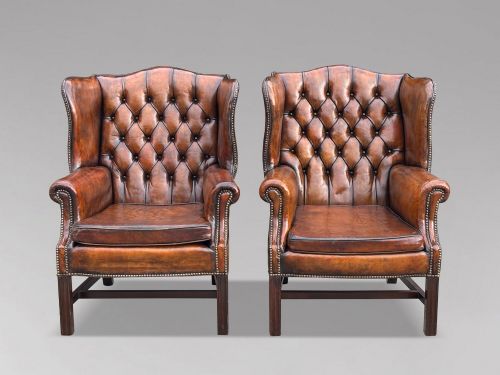
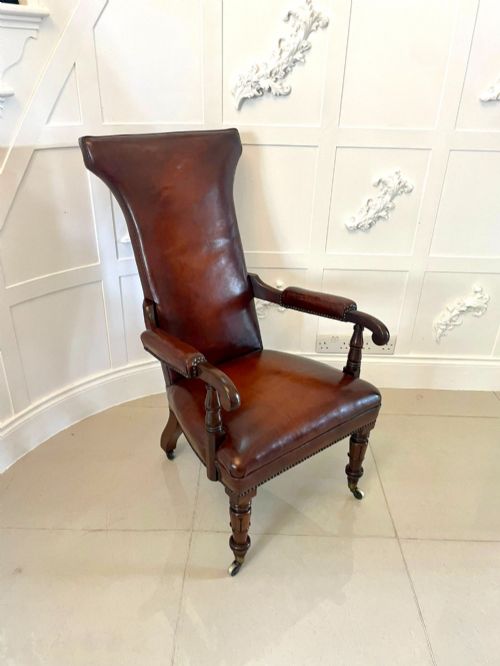
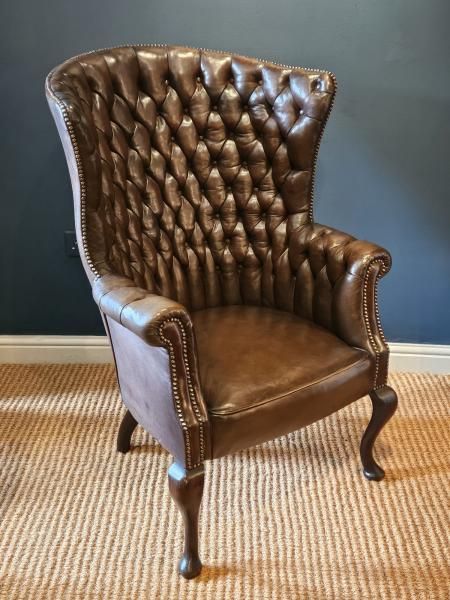
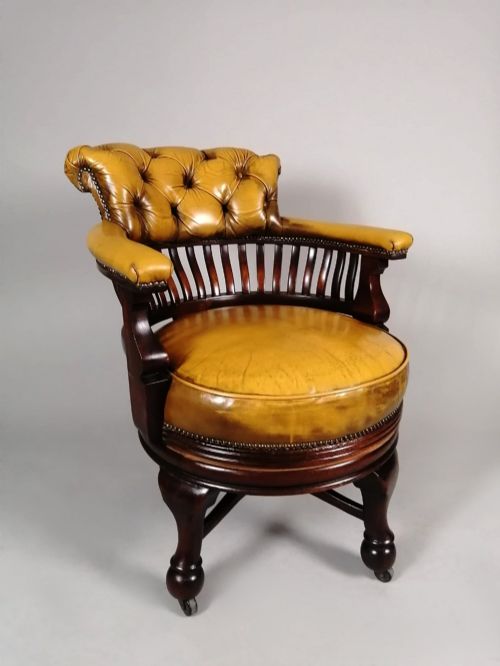
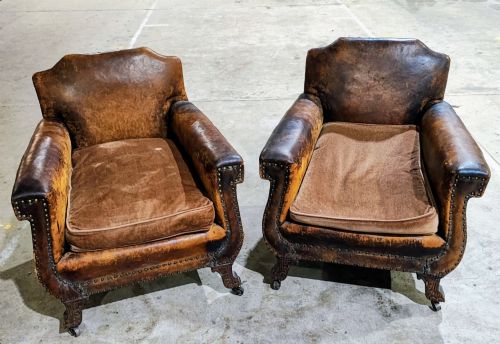
Stud leather armchairs encompass a wide variety of seating forms designed for functional utility and comfort, ranging from library and desk chairs to deep club chairs and wingbacks. When exploring stud leather armchairs, buyers frequently encounter 19th-century and Edwardian examples alongside 1930s club styles.
Origins span British workshops, French studios, and international schools, providing diverse interpretations of classic seating. These chairs serve functional seating roles while displaying traditional upholstery methods.
How they were made
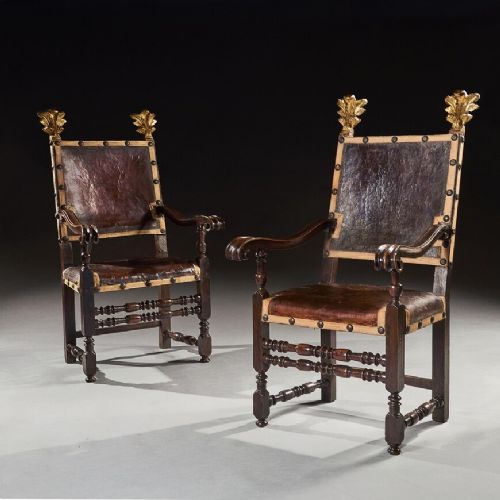
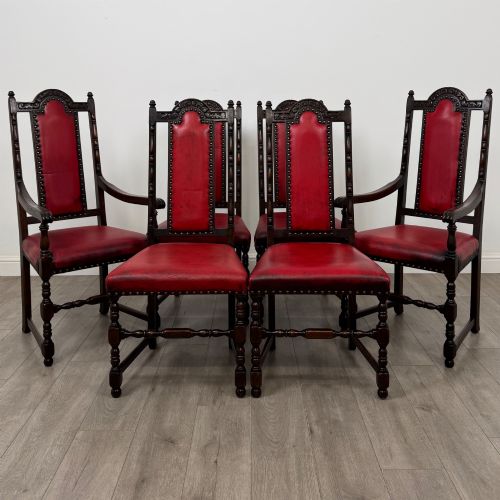
Makers built the foundational frames of these chairs using timbers such as mahogany, oak, walnut, and hardwood, often incorporating carved details or turned supports. Joinery techniques varied from straightforward pegging to intricate cabinetmaking.
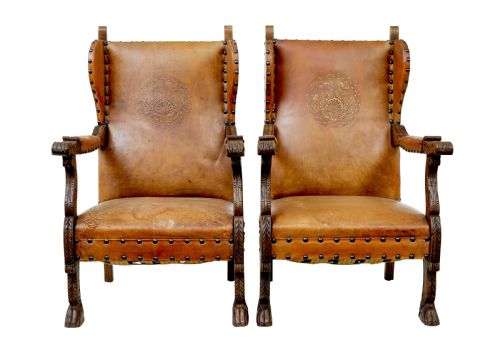
Upholsterers stretched leather over internal padding and secured the hides to the wooden frames using individual brass studs driven in by hand. These metal fastenings functioned both to hold the heavy leather firmly in place and to provide a decorative border along the seams.
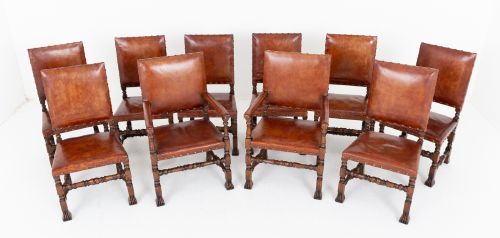
Listings feature oak, mahogany, and walnut frames paired with brass hardware.
What varies in quality
Quality rests upon the integrity of the underlying timber frame and the weight of the leather selected for the upholstery. Denser hardwoods and thicker, hand-dyed hides indicate superior construction that endures decades of daily use.
The precision of the upholstery work also dictates value, seen in the even spacing of the brass studs and the tension of the leather across the springs and padding. Refined carving on mahogany or walnut frames distinguishes high workshop output from simpler utilitarian seating.
The Stud Leather Armchairs Glossary
- Gainsborough chair
- A type of upholstered armchair with an open-padded arm design, short cabriole or straight legs, and a wide seat popular in the Georgian period.
- Chesterfield
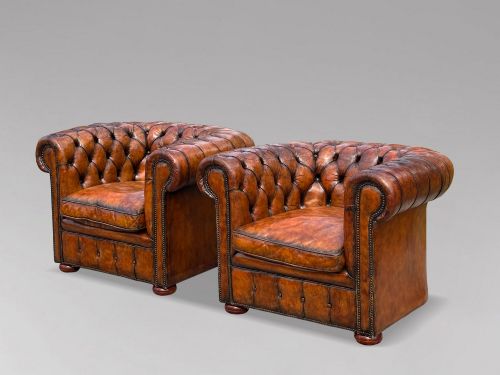
- A deep-buttoned upholstered seating style characterised by low backs and rolled arms finished with individual stud work.
- Wingback
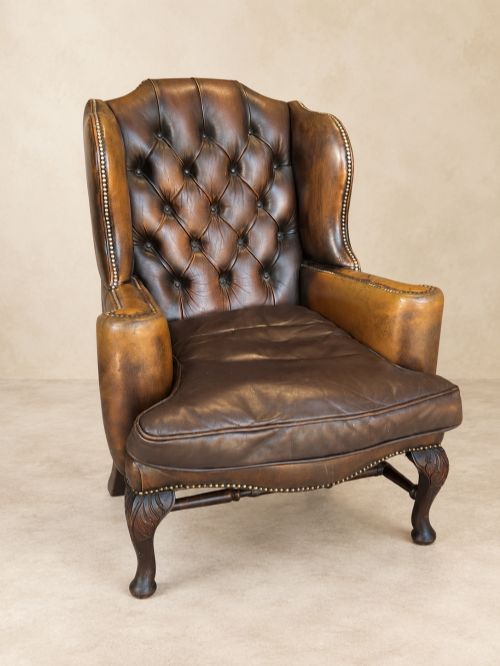
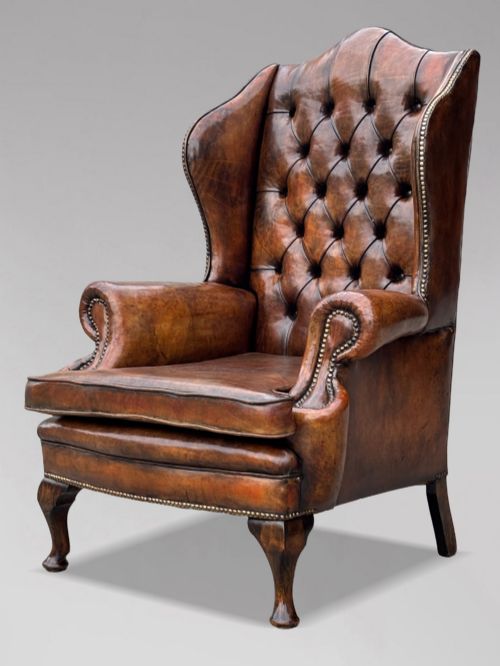
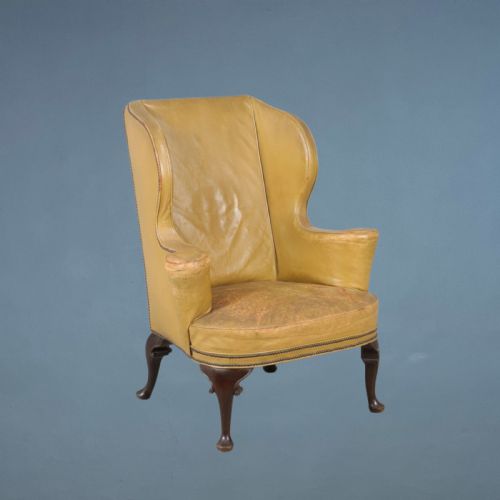
- An armchair featuring protective side panels designed to shield the occupant from draughts while retaining heat from an open fire.
- Cabriole leg
- A furniture leg that curves outward at the knee and tapers inward at the ankle, frequently ending in a pad or claw foot.
- Bentwood
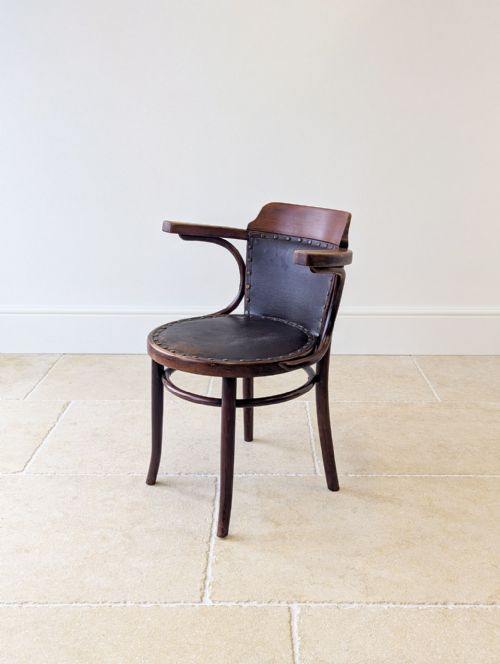
- Wood that has been heated and bent into curved structural components, often utilised in lighter desk and café seating designs.
Stud Leather Armchairs: Frequently Asked Questions
Where should I place a stud leather armchair?
These chairs suit studies, libraries, and living rooms where durable seating is required. Their solid construction makes them practical for daily reading or desk work.
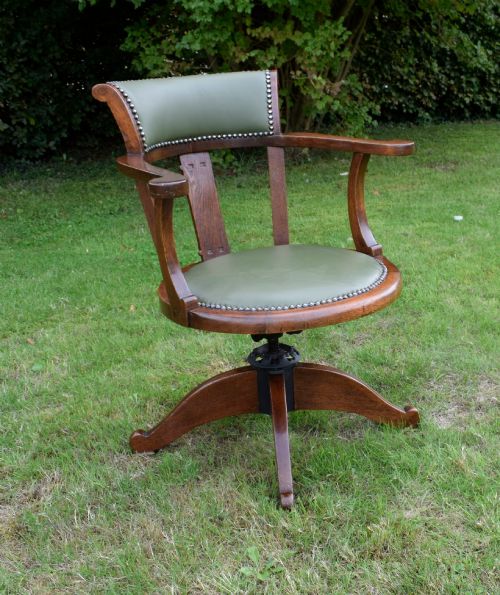
Pairing a desk chair with a traditional writing table creates a functional workspace. Club and wingback variants fit comfortably beside fireplaces or reading corners.
How do I care for antique leather upholstery?
Leather benefits from occasional conditioning to maintain suppleness and prevent the hide from drying out over time. Keeping the chairs away from direct heat sources protects the material.
Dusting the surface regularly with a soft cloth removes particles that might otherwise wear down the finish. Brass studs can be gently cleaned without touching the surrounding leather.
What is the difference between a club chair and a wingback?
Club chairs offer deep, low-slung seating with rounded arms designed for relaxed lounging. They often feature generous proportions and padded cushions.
Wingback chairs feature high backs with protective side panels intended originally to block draughts. They provide a more upright seating posture suitable for reading or fireside use.
How can I tell a Victorian chair from an Edwardian one?
Victorian seating generally displays heavier proportions, darker woods, and dense ornamentation such as deep buttoning and elaborate carving. Frames from this era prioritised substantial presence.
Edwardian pieces often show lighter timber frames and simpler lines influenced by revival styles. Manufacturers during this later period streamlined forms while retaining traditional leather and stud details.