
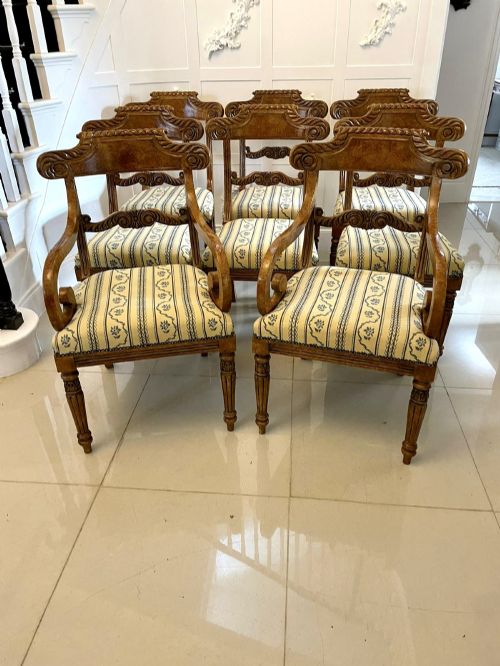
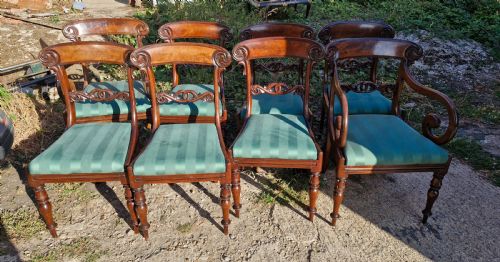
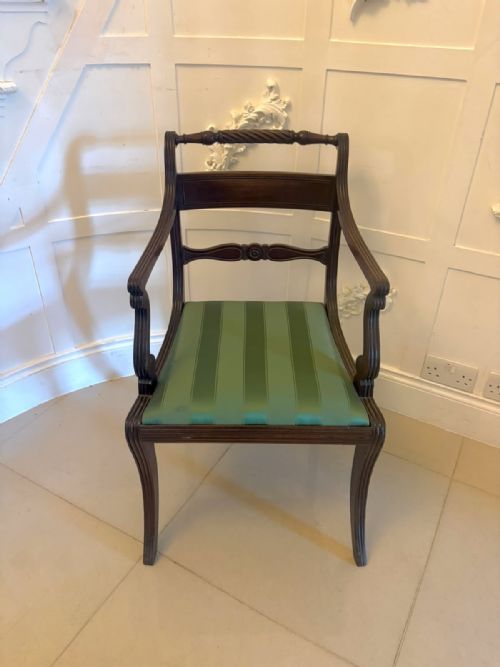
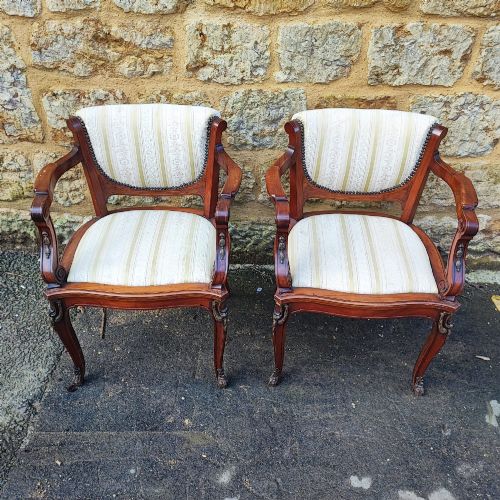
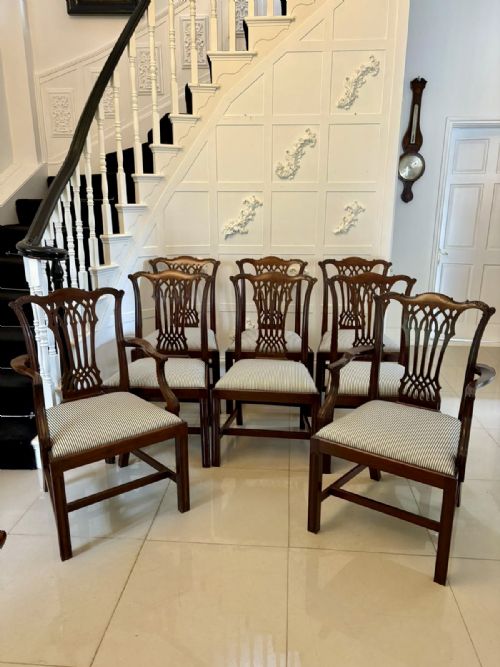
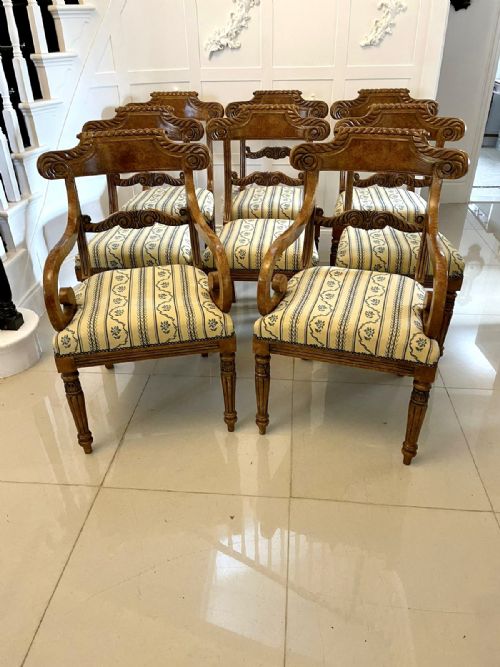
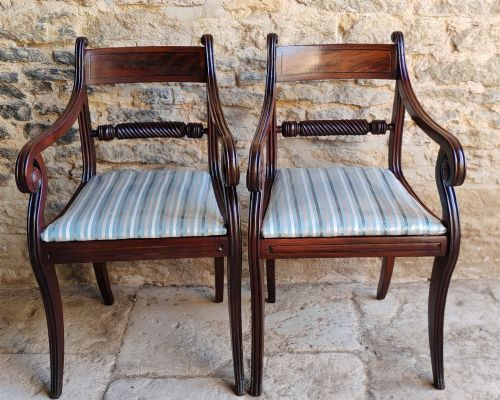


Striped Upholstered Carvers
Striped upholstered carvers are substantial seating pieces providing arm support, and these examples combine period frames with patterned textile coverings.
Striped Upholstered Carvers
Striped upholstered carvers comprise armchairs, desk chairs, and carver chairs designed for formal use around dining tables or within studies. These pieces appear across Georgian, Regency, Victorian, and Edwardian periods, reflecting changing domestic fashions.
The version most commonly encountered on this page combines a wooden frame with fabric upholstery arranged in linear patterns. Frames derive from traditional forms including Regency, Chippendale Revival, and Gothic Revival styles.
Makers utilised various timbers such as mahogany and oak to construct these robust seating options. Painted finishes and faux birds eye maple also appear among the listed variants.
How they were made
Upholstery relies on textile coverings applied over supportive stuffing and springs. Brass elements occasionally accent the timber framework on specific Regency and Victorian examples.
This site lists striped upholstered carvers spanning the Georgian, Regency, Victorian, Edwardian, and later periods in mahogany, oak, and painted maple.
What varies in quality
Quality differences emerge in the crispness of timber carving and the selection of primary woods. Dense mahogany and figured maple indicate higher ambition in production than standard native woods.
The execution of the joinery and the precision of the frame assembly separate standard production from superior workshop output. Original surface treatments and well-preserved structural integrity elevate specific pieces above others.
The Striped Upholstered Carvers Glossary
- Carver
- An armchair, traditionally placed at the head of a dining table. These pieces feature integrated armrests to distinguish them from standard side chairs.
- Regency
- An English design period spanning the early nineteenth century. This style draws inspiration from classical Greek, Roman, and French motifs.
- Chippendale Revival
- A later nineteenth and early twentieth century aesthetic reviving mid eighteenth century cabinet maker designs. These items frequently display elaborate carved mahogany frames.
- Gothic Revival
- An architectural and decorative style referencing medieval forms. Pieces display pointed arches, heavy oak construction, and ecclesiastical motifs.
- Faux birds eye maple
- A decorative painted finish imitating the spotted grain pattern of natural maple timber. This technique creates visual texture on furniture surfaces.
Striped Upholstered Carvers: Frequently Asked Questions
What is a carver chair?
A carver chair is an armchair designed to match a set of dining chairs, traditionally used at the head of a table. These pieces feature supportive armrests.
They provide a more formal seating position compared to standard armchairs while maintaining visual harmony with surrounding dining seating.
Where were these chairs placed?
These armchairs served primarily in dining rooms as host seating or within studies and libraries as desk chairs. Their sturdy construction suited daily domestic use.
Regency and Georgian examples often stood around large mahogany dining tables, whilst Edwardian versions functioned as occasional seating in reception rooms.
How do I identify a Regency frame?
Regency frames exhibit classical restraint, featuring clean lines and architectural proportions derived from ancient Roman and Greek designs. Mahogany remains the dominant timber.
Details often include reeded legs, brass inlay, and subtle carved accents rather than heavy ornamentation.
What defines Edwardian upholstery styles?
Edwardian upholstery often reflects lighter proportions and comfortable padding influenced by preceding Victorian excess. Frames frequently adopt French revival motifs.
Textiles utilised during this period include patterned fabrics fitted closely to open armchair frameworks.