

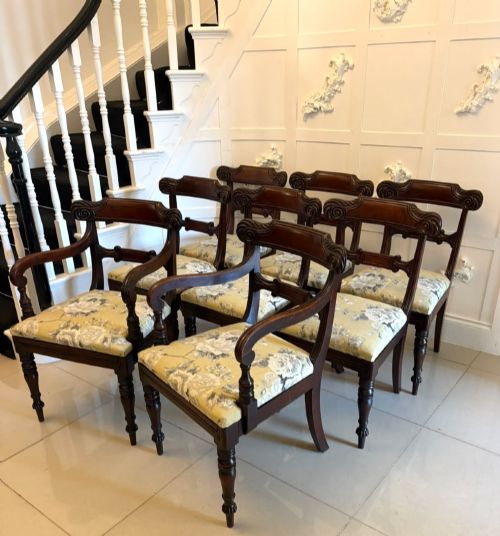
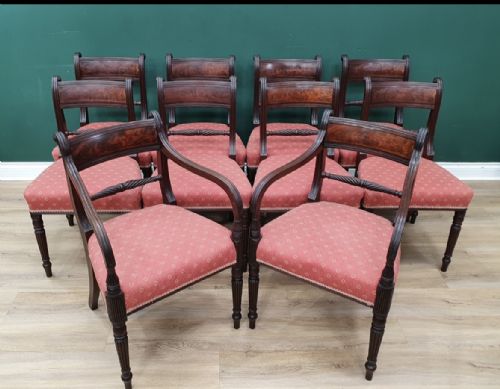
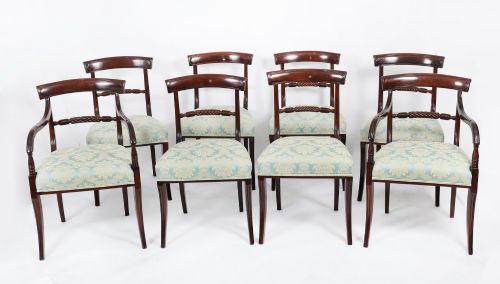
Regency Carver Dining Chairs
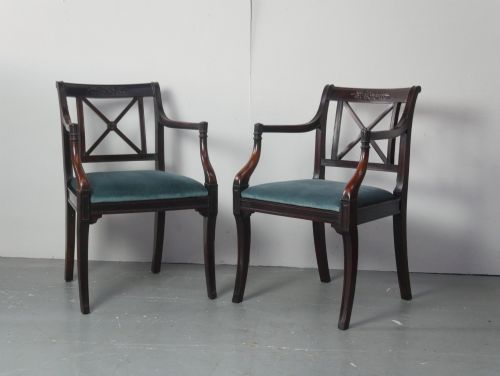
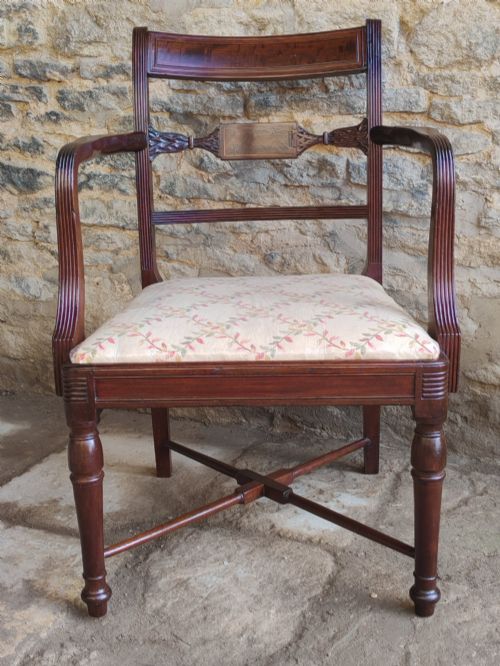
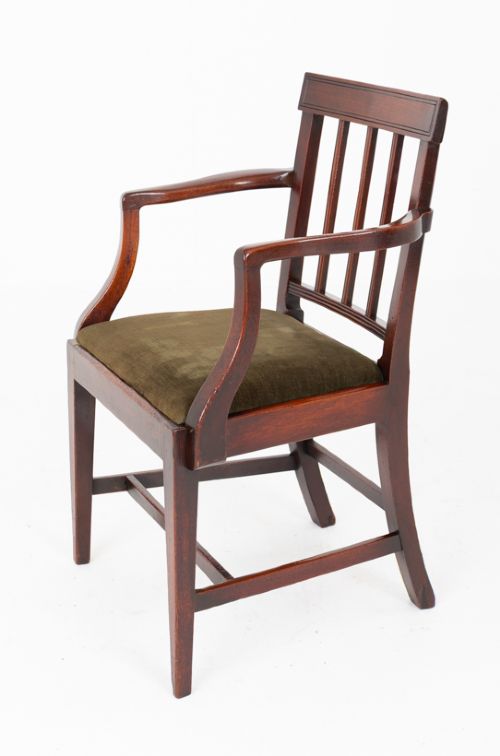
Regency carver dining chairs combine sturdy construction with sweeping armrests, offering robust seating designed to anchor a formal dining table.
Regency Carver Dining Chairs
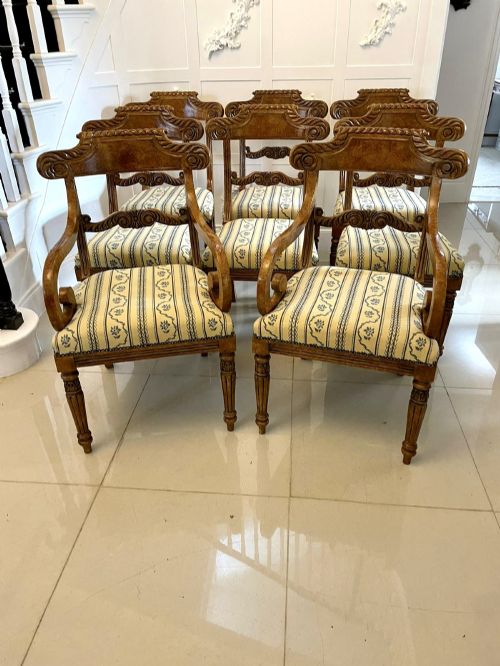
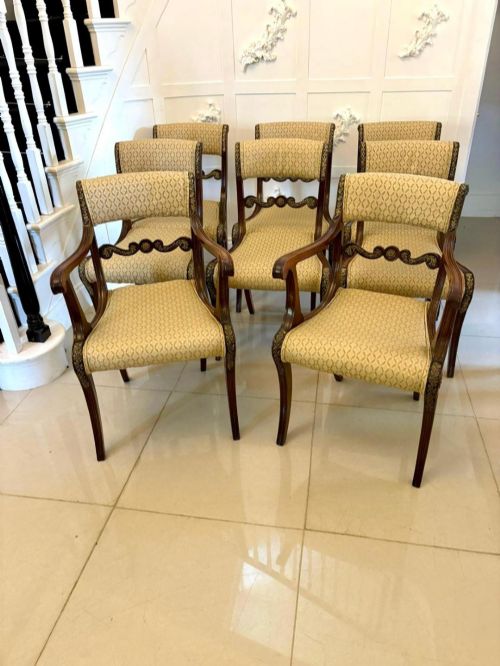
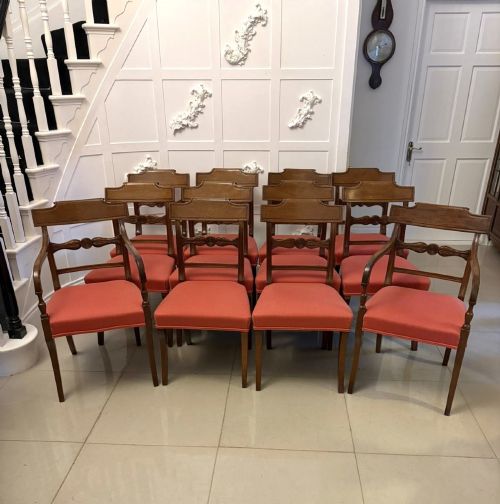
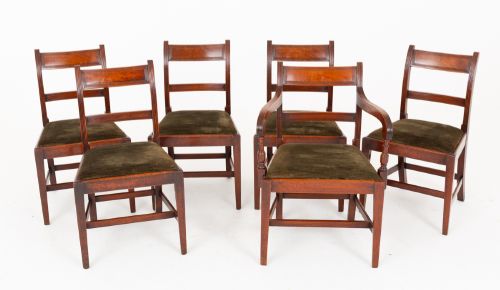
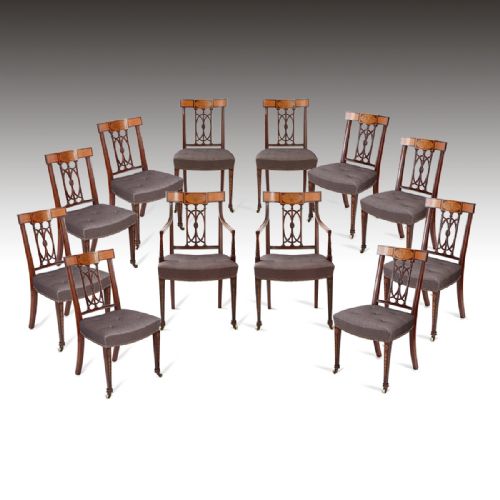
Regency carver dining chairs provide armchair seating intended to head a set of dining chairs, appearing frequently alongside matching single chairs in sets of six, eight, or twelve. The forms span the Georgian period, the Regency era itself, later William IV examples, and subsequent twentieth-century revivals.
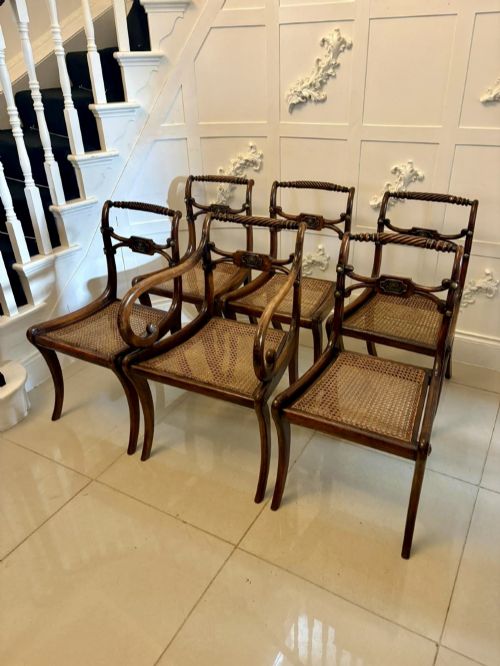
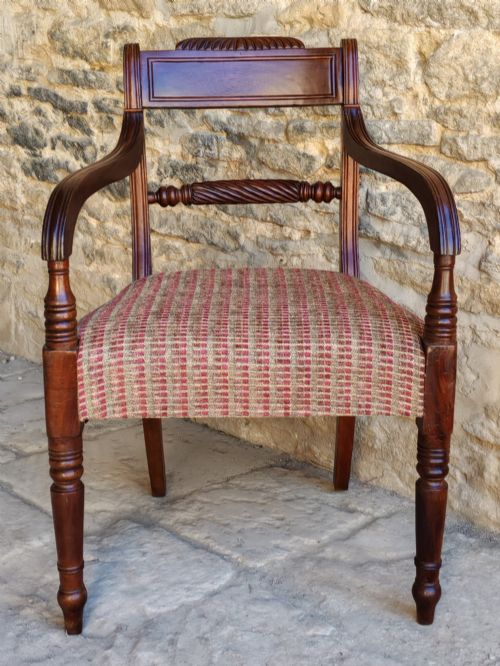
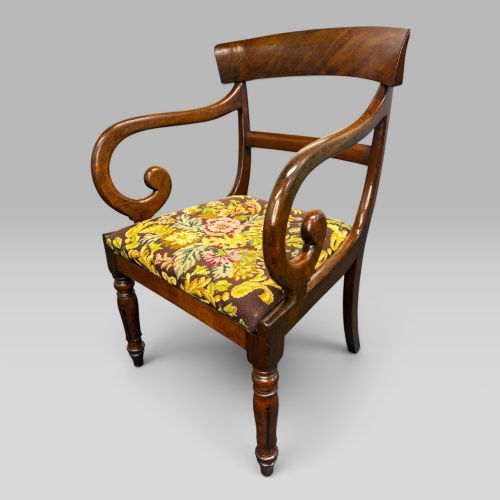
Makers shaped these armchairs with distinctive back designs such as bar backs, rope backs, shield backs, and scroll arm configurations. The physical evidence shows regional variety too, including Scottish and Irish pieces alongside English workshop productions.
Buyers encounter individual pairs, matched sets, and larger dining suites that integrate carvers with standard dining chairs. The styles transition fluidly from late eighteenth-century George III aesthetics through to Edwardian reproductions.
How they were made
Cabinetmakers relied heavily on mahogany as the primary timber, supplementing it with fruitwood, elm, yew, and decorative faux bird's-eye maple surfaces. Wood was selected for grain pattern and strength, particularly where frames met sweeping arm supports and curved crest rails.
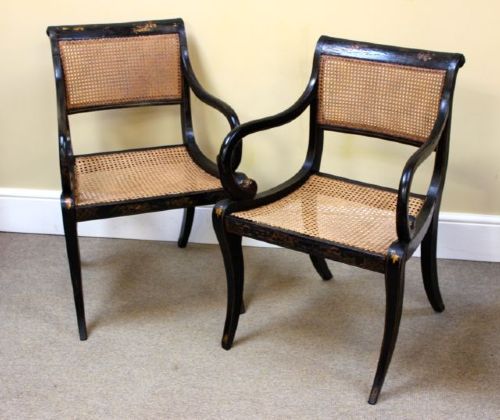
Seating construction utilised drop-in pads upholstered in fabric, velvet, or textile, alongside traditional woven cane panels. Brass details occasionally reinforced structural joints or decorated the sabre legs characteristic of the period.
Some dining chairs arrive disguised in faux bird's-eye maple, proving that nineteenth-century makers thoroughly enjoyed a good timber illusion.
What varies in quality
The refinement of the carving on scroll arms and back splats dictates the visual tier of a chair, separating standard production from exhibition pieces. Originality of surface finish and the integrity of the timber frame distinguish untouched period examples from heavily restored or later revival pieces.
Proportion and scale play significant roles, where larger dining chairs with balanced proportions and matching sets command greater attention than mismatched assemblages.
Thomas Clarkson and Sons·Gillows
The Regency Carver Dining Chairs Glossary
- Carver
- An armchair designed to match a set of dining chairs, historically placed at the head of the table. These pieces feature integrated armrests for added support.
- Bar back
- A chair back featuring a horizontal crossbar, often curved to fit the spine. This style frequently incorporates reeded or carved central details.
- Rope back
- A chair design where the top rail or splat mimics the twisted form of rope. It appears commonly on early nineteenth-century seating.
- Sabre leg
- A curved, outwardly tapering leg shape resembling a cavalry sabre. This form provides stability while maintaining a light silhouette.
- Cane
- Woven rattan material utilised for chair seats and back panels. It offers flexible, breathable support.
- Elbow armchair
- An alternative term for a carver chair, highlighting the low arms designed to rest elbows while seated.
Regency Carver Dining Chairs: Frequently Asked Questions
How do I use carvers at a dining table?
Carver chairs traditionally sit at the head and foot of a dining table to provide arm support for hosts or guests of honour. They can also function as occasional desk chairs or library seating when not gathered around a dining setting.
Because carvers feature arms that project outward, ensure your table clearance accommodates the height of the armrests underneath the tabletop.
What is the difference between Regency and Regency Revival?
Regency pieces were manufactured during the Regency era and the broader early nineteenth century, displaying period-specific patination and construction methods. Regency Revival pieces date from later periods, such as the Edwardian era or the 1920s, reproducing earlier aesthetic forms using contemporary workshop techniques.
Examining the timber shrinkage, joinery methods, and underlying hardware helps clarify the actual age of the chair.
Can I mix carvers with different single chairs?
Many historical sets were assembled over time or matched by dealers to create functional dining groups. Look for consistent timber tones, matching leg styles, and corresponding back designs to maintain visual harmony across the set.
Matched sets often combine a pair of carvers with four, six, or eight single chairs sharing a unified stylistic vocabulary.
How should I care for cane seats?
Caned panels require moderate humidity to prevent the natural rattan fibres from becoming brittle and snapping. Avoid placing these chairs near direct heat sources or in overly dry indoor environments.
Occasional gentle dusting and wiping with a slightly damp cloth keeps the woven strands clean and preserves their natural flexibility.