
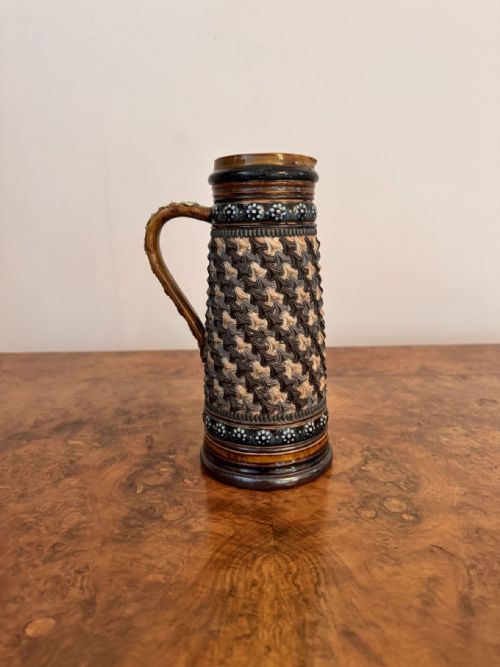
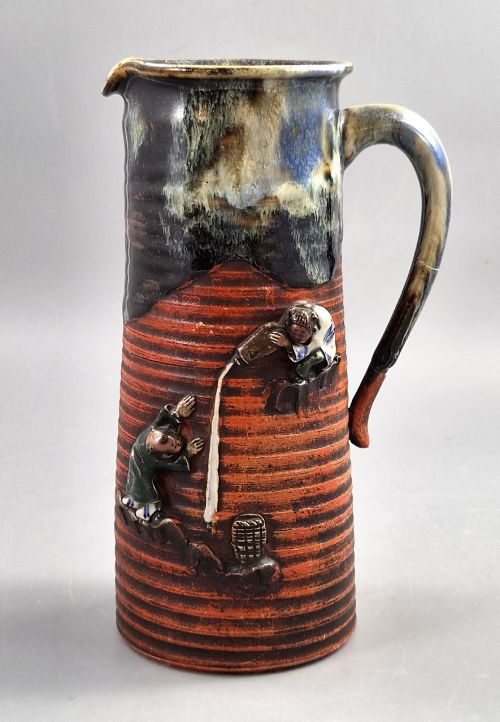
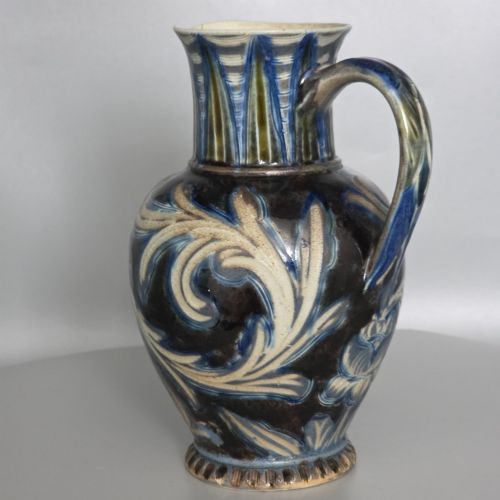
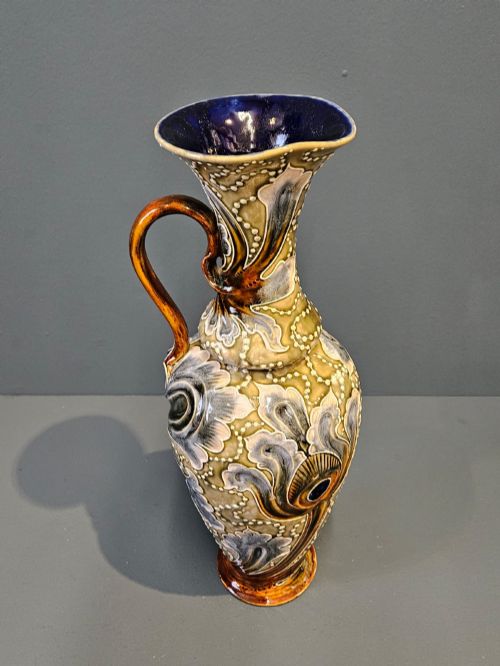
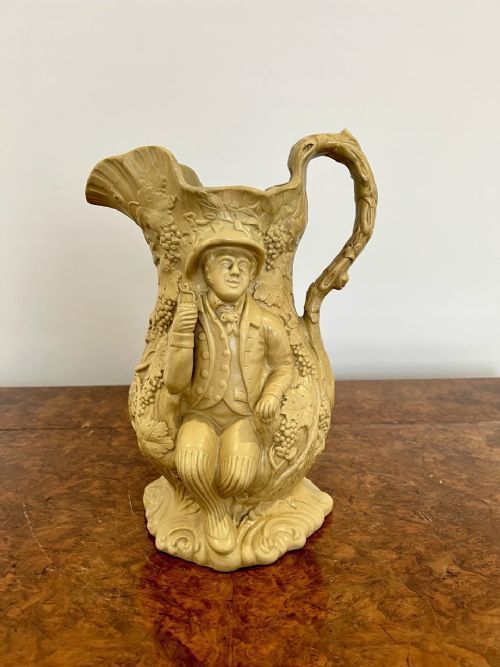


Stoneware Water Jug
These stoneware water jug examples span the nineteenth century and the Victorian era, offering robust utility and sculptural presence for the home.
Stoneware Water Jug
A stoneware water jug represents the heavier, salt-glazed or ceramic pouring vessels produced largely during the Victorian period and the nineteenth century. Buyers encounter utilitarian domestic pieces alongside ornate art pottery jugs bearing relief moulding or incised decoration from workshops such as Doulton Lambeth.
Most pieces date from the 1800s through to about 1900, encompassing English manufactories and continental examples. Forms range from large harvest jugs and silver-rimmed pitchers to slender ewers and decorative carafes designed for everyday service or display.
The selection leans heavily toward British production, particularly Victorian salt glaze and buff-coloured bodies, though Japanese and French items also appear. Collectors search for these specific historic jugs to bring texture and period character into modern interiors.
Materials and construction methods
Makers utilised dense stoneware, earthenware, and salt glaze, firing the clay at high temperatures to achieve a durable and largely impermeable body. Many nineteenth-century pieces employ relief moulding techniques to build up crisp classical or pastoral scenes directly on the exterior.
Art pottery examples incorporate incised work, applied sprigs, and specialised ceramic glazes, sometimes accented with pewter mounts or silver rims. Parian ware and ironstone versions also emerge in the material record, offering alternative matte or glazed white finishes.
Several Victorian jugs feature leaping hound handles, eternally poised to chase the hunt across the side of your morning water pitcher.
Distinctions in craftsmanship and design
Quality rests in the crispness of the relief moulding and the depth of the incised or hand-decorated motifs. Superior nineteenth-century jugs display sharp detailing in figures and foliage, while lesser examples show softer, blurred impressions from worn moulds.
The handling of the glaze and the integration of handles, such as hound motifs or applied foliage, separate standard utilitarian vessels from exhibition-grade art pottery. Artist signatures or specific factory stamps further elevate the standing of a piece within its period.
The Stoneware Water Jug Glossary
- Stoneware
- A robust, vitrified pottery made from clay fired at high temperatures until semi-vitreous. It resists liquids naturally without requiring a heavy glaze.
- Salt Glaze
- A glossy, slightly textured finish achieved by throwing common salt into the kiln during high-temperature firing. The vapour reacts with the silica in the clay to produce an orange-peel texture.
- Relief Moulding
- A technique where decorative patterns, figures, or scenes are pressed into the clay or cast in relief against the vessel wall. It creates a three-dimensional surface effect popular on Victorian jugs.
- Parian Ware
- A fine-grained, unglazed porcelain resembling white marble, developed in the nineteenth century. It is named after Parian marble from the Greek island of Paros.
- Ewer
- A large jug or pitcher with a wide spout and a curved handle, traditionally used for holding water. Many Victorian examples served decorative purposes alongside formal dining.
Stoneware Water Jug: Frequently Asked Questions
Were these jugs used for water?
Many nineteenth-century vessels served specific utilitarian roles at the dining table or washstand, holding fresh water, ale, or cider for daily consumption.
Larger scaled examples often functioned as harvest jugs or ice water containers in hotels and large domestic households.
How can I tell a Victorian jug from an earlier piece?
Victorian examples frequently display registration marks, specific factory stamps, or distinctively ornate Arts and Crafts and Gothic revival styling.
Earlier pieces from the early nineteenth century often rely on simpler salt-glazed surfaces or heavy classical relief moulding without modern registry ciphers.
Can I still use these antique jugs for serving drinks?
Most sound stoneware and salt-glazed pieces remain structurally capable of holding liquids, provided there are no hairline cracks through the body.
Inspect the interior for cleanliness and historical residue before deciding to utilise an antique vessel for modern dining.