


Stoneware Planter Pot
These stoneware planter pot examples range from Victorian salt-glazed vessels to Japanese ceramics, bringing robust utility and decorative form to gardens and interiors.
Stoneware Planter Pot
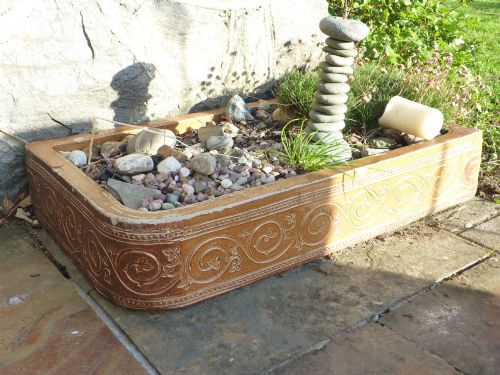
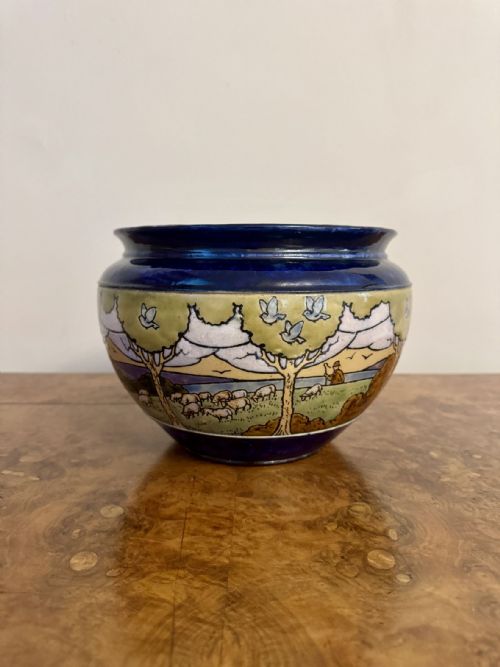
A stoneware planter pot is a heavy vessel designed for holding plants, frequently encountered on this page as Victorian jardinières, cachepots, and garden urns. The selections span the nineteenth century through the early twentieth century, taking the form of troughs, bonsai planters, and confit jars. English potteries feature prominently alongside French, German, and Japanese works.
Makers such as Royal Doulton and Doulton Lambeth dominate the English offerings, often produced during the Victorian and Arts and Crafts periods. Buyers also encounter French salt-glazed window troughs, German salt-glazed vessels, and Japanese stoneware by Makuzu Kozan II. These pieces served practical roles in orangeries, patios, and parlours.
Materials and construction
Potters utilised durable stoneware, salt-glazed stoneware, and terracotta, applying glazes, enamel, and jasperware finishes to the surfaces. Salt glazing created distinctive textured finishes on nineteenth-century vessels through the introduction of salt during the kiln firing process. Terracotta and ceramic bodies provided the porous structure needed for garden planters and confit jars.
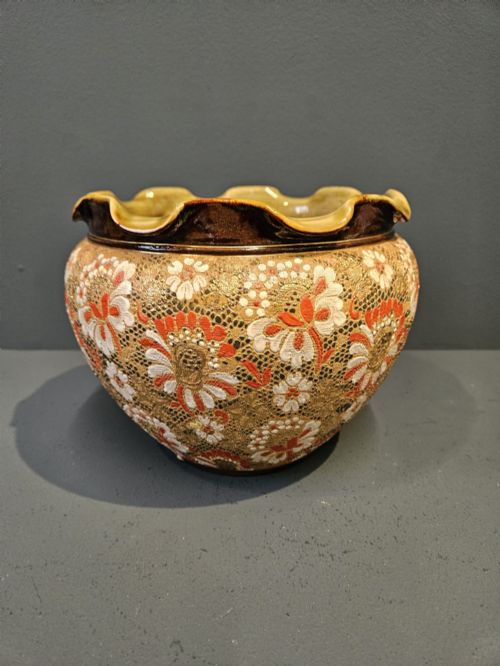
Techniques varied from slip-cast or hand-thrown bodies to elaborate moulded decoration such as the textured faux bois surfaces seen on strawberry planters. Specialised studios employed skilled artists like Ethel Beard for hand-painted or incised decoration on Doulton Burslem and Lambeth pieces.
Listings feature periods from the nineteenth century alongside Victorian, Arts and Crafts, and Meiji styles.
Quality and execution
Quality rests upon the crispness of the moulded or incised relief work, the evenness of the glaze application, and the reputation of the studio or artist. Pieces featuring detailed Japanese modeling or signed artist work from Doulton workshops represent the higher tier of production.
Standard utility vessels display simpler salt glazes and heavier utilitarian construction suited for estate gardens and orangery floors. The presence of matching stands or specific model numbers further distinguishes cabinet-grade jardinières from standard garden troughs.
Guichard Carriès·Doulton Lambeth·Royal Doulton·William Adams and Sons·Makuzu Kozan II·Doulton Burslem·Ethel Beard·Enoch Wood and Sons
The Stoneware Planter Pot Glossary
- Jardiniere
- An ornamental pot or stand for holding flowers or plants, typically designed for indoor display.
- Cache pot
- A decorative flowerpot that lacks drainage holes and serves to conceal a plain growing pot inside.
- Salt-glazed stoneware
- Pottery fired at high temperatures where salt is thrown into the kiln to produce a characteristic pitted, orange-peel texture.
- Jasperware
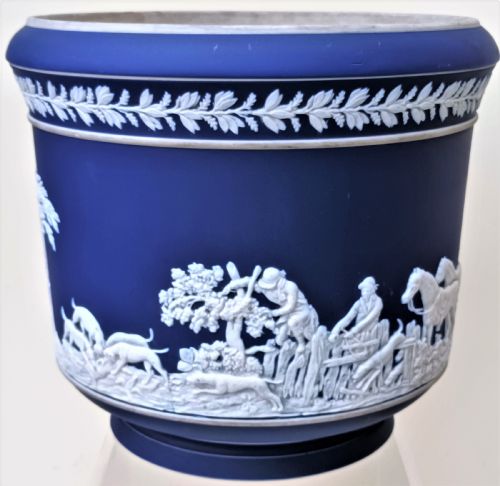
- A fine-grained, unglazed stoneware developed by Josiah Wedgwood, known for its contrasting raised white reliefs against a coloured background.
- Slaterware
- A textured ceramic finish pioneered by Royal Doulton that simulated the appearance of woven lace or rough plant surfaces.
Stoneware Planter Pot: Frequently Asked Questions
What is the difference between a jardiniere and a cache pot?
A jardiniere is generally a larger decorative vessel meant to hold plants directly or contain smaller pots within an interior space.
A cache pot specifically translates to hide pot, functioning as an outer container designed primarily to conceal a utilitarian flowerpot.
How do I care for antique stoneware outdoors?
Dense stoneware and salt-glazed vessels handle outdoor environments well due to their non-porous nature and high-temperature firing.
Freezing temperatures can still threaten saturated antique ceramics, so it remains prudent to bring delicate glazed pieces indoors during harsh winters.
Were these pots meant for indoor or outdoor use?
Makers produced these vessels for both settings, with sturdy salt-glazed urns and troughs destined for gardens, patios, and orangeries.
Finely glazed jasperware and artist-signed jardinières were created for interior parlours, drawing rooms, and conservatory display.
What period do most of these planters come from?
The majority of these pieces originate from the nineteenth century, spanning the Victorian era and the height of the Arts and Crafts movement.
Several examples extend into the early decades of the twentieth century, reflecting shifting tastes towards Japanese aesthetics and European art pottery.