





Stone Statue on Plinth
A stone statue on plinth brings classical presence to a garden or hall, offering sculptural weight and dignified elevation.
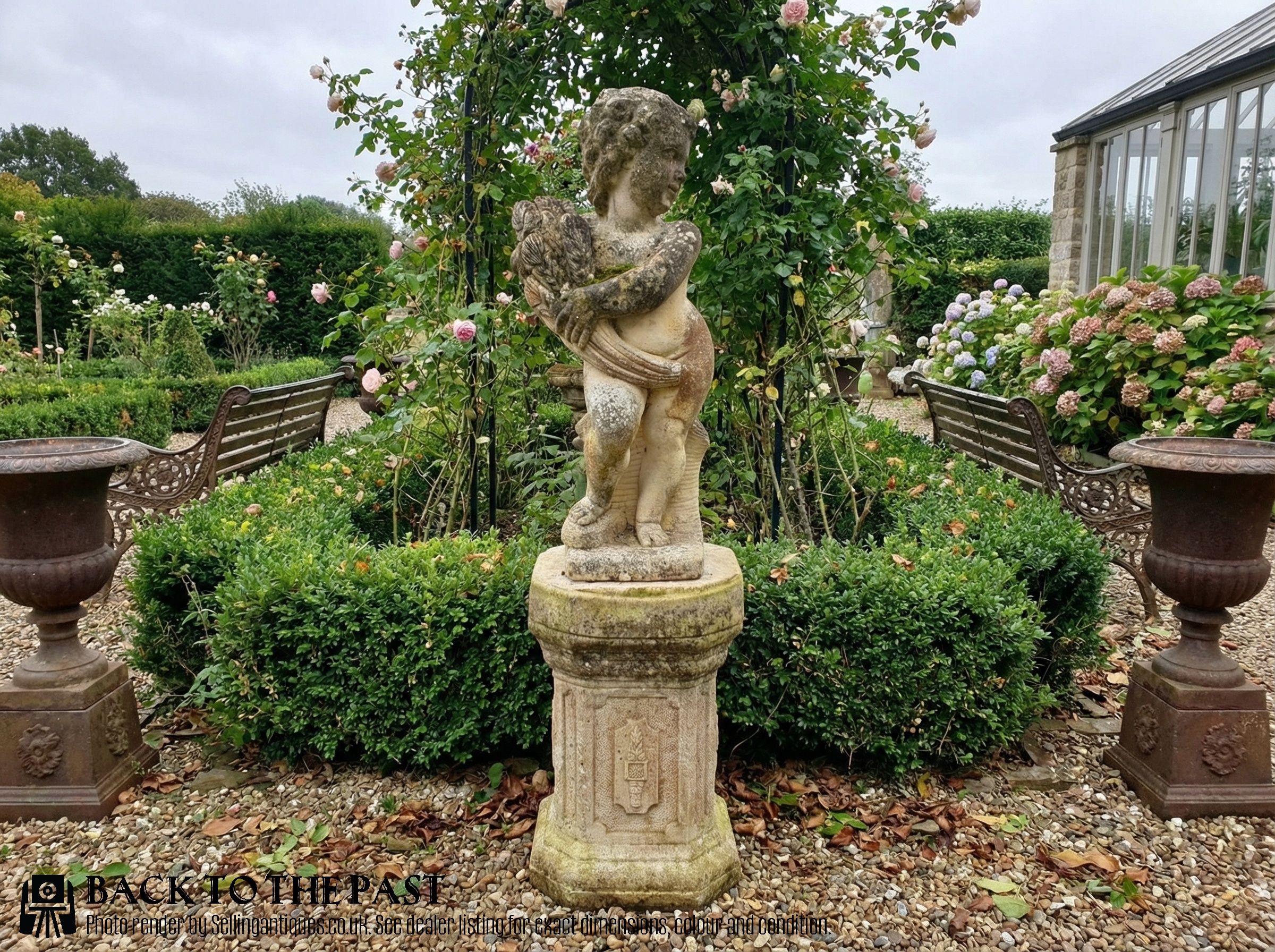
Stone Statue on Plinth
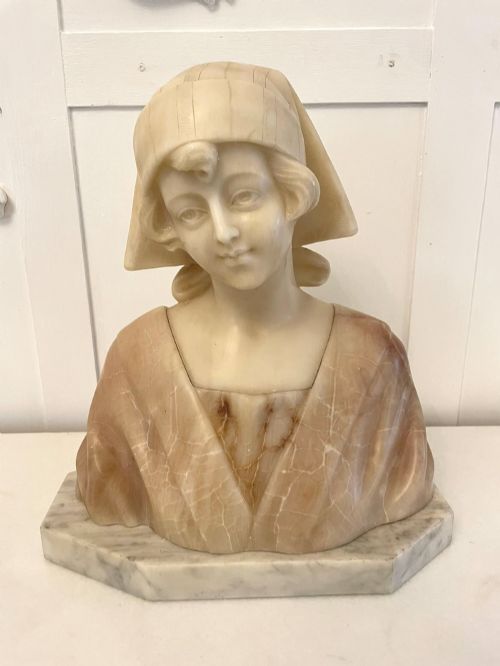
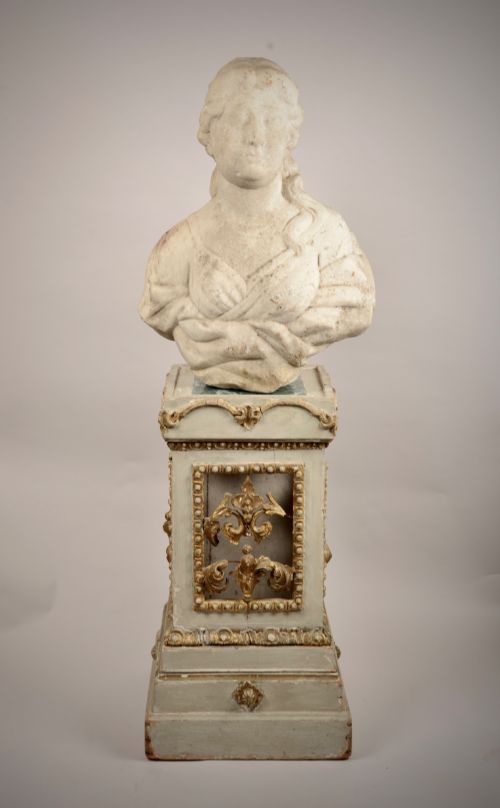
A stone statue on plinth combines a carved or cast figure with a matching pedestal base, drawing from classical, neoclassical, and garden traditions. These pieces range from substantial garden statuary dating to the mid-twentieth century to earlier architectural busts and figures mounted on columns.
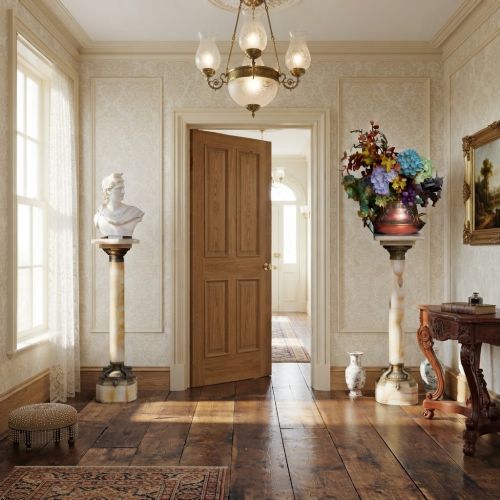
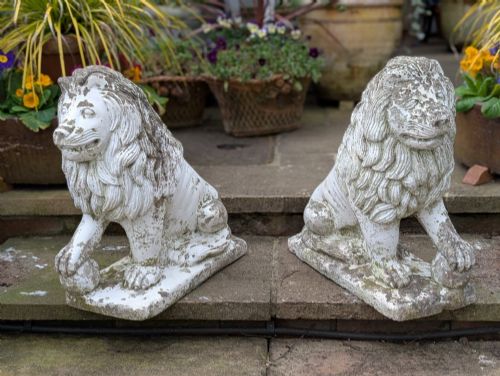
The versions most commonly met here span the nineteenth and twentieth centuries, appearing as garden ornaments such as lions, allegorical figures, and Greco-Roman busts raised on stone pedestals. Interior examples also feature marble and onyx columns paired with detailed sculptural work.
Origins vary across European and Asian traditions, encompassing Italian marble carving, French chateau influences, and Chinese stone figures. Each piece unites the vertical emphasis of a pedestal with the distinct character of the mounted sculpture.
Materials and construction
Materials span natural stones such as marble, alabaster, onyx, soapstone, and sandstone alongside cast and reconstituted stone variants. Carved pieces rely on traditional chiselling techniques applied to dense mineral blocks, while garden ornaments often utilise moulded or cast stone compositions.
Stone Statue on Plinth Retail Price Guide 2026
Typical asking prices for stone statue on plinth among the pieces listed under this phrase on Sellingantiques today, from the lower quarter to the upper quarter. They describe what is for sale here now, not the wider market.
Listings feature stone statues and plinths spanning from the seventeenth century to the mid-twentieth century, utilising marble, alabaster, and cast stone.
Standards of execution
Quality rests in the precision of the carving, particularly in the rendering of facial expressions, drapery folds, and anatomical proportions. Finer examples display crisp detail carved directly from high-grade marble or alabaster, whereas simpler garden pieces rely on the weathered texture of cast stone.
The architectural relationship between the statue and its plinth dictates the overall visual harmony. Superior pieces demonstrate a proportional balance where the pedestal complements the mass and style of the sculpture rather than acting as a mere support.
Bright And Sons·Fritz Kochendorfer
The Stone Statue on Plinth Glossary
- Plinth
- A heavy base or lower block that supports a statue, column, or bust. It elevates the sculpture to improve visibility and presence.
- Pedestal
- An upright architectural support or column designed to hold a bust, vase, or statue. These structures often feature decorative mouldings and capitals.
- Reconstituted stone
- A manufactured material made from crushed stone aggregate mixed with a binder to resemble natural carved rock. It is frequently utilised for durable garden statuary.
- Ormolu
- Gilded bronze mounts applied to furniture, marble columns, or pedestals for decorative accent. The technique involves coating metal with finely ground gold amalgam.
- Torchere
- A tall stand or pedestal originally intended to hold a candle or torch. In later periods, the form evolved into an ornamental column for display.
Stone Statue on Plinth: Frequently Asked Questions
How do I place a heavy stone statue outdoors?
Position the plinth on a firm, level foundation such as stone paving or compacted gravel to prevent shifting under the considerable weight. Ensure the base distributes the load evenly to avoid cracking the stone over time.
Allow the materials to weather naturally in a garden setting, positioning the piece where it receives adequate drainage. Heavy figures rarely require additional fixing unless placed in areas prone to high winds.
Can marble statues be kept inside?
Marble and alabaster busts or figures serve as traditional interior focal points when placed on matching columns or pedestals in halls and reception rooms. Their polished surfaces reflect light and introduce classical architectural lines to domestic spaces.
Protect interior marble from direct moisture and clean only with a soft, dry cloth to preserve the surface polish. Avoid harsh chemical cleaners that can etch the mineral structure.
What is the difference between cast stone and carved marble?
Carved marble is shaped directly from a solid block of natural stone by a sculptor, resulting in unique details and crystalline mineral textures. Each chisel mark reflects individual hand execution.
Cast stone is formed by pouring an aggregate mixture into a mould, allowing for consistent reproduction of garden ornaments and statues. This method produces durable pieces with uniform composition suited for exterior display.
How do I identify the period of a stone pedestal?
Examine the material composition, tooling marks, and stylistic motifs such as neoclassical fluting or baroque proportions. Nineteenth-century examples often exhibit hand-finished details and aged patination.
Twentieth-century garden pieces typically utilise cast or reconstituted stone with more standardised moulding techniques. Comparing the weathering patterns with the stated era helps confirm the age of the piece.