





Outdoor Stone Statue Plinth
An outdoor stone statue plinth elevates your garden ornament, bringing height and classical balance to terraces and lawns.
Outdoor Stone Statue Plinth
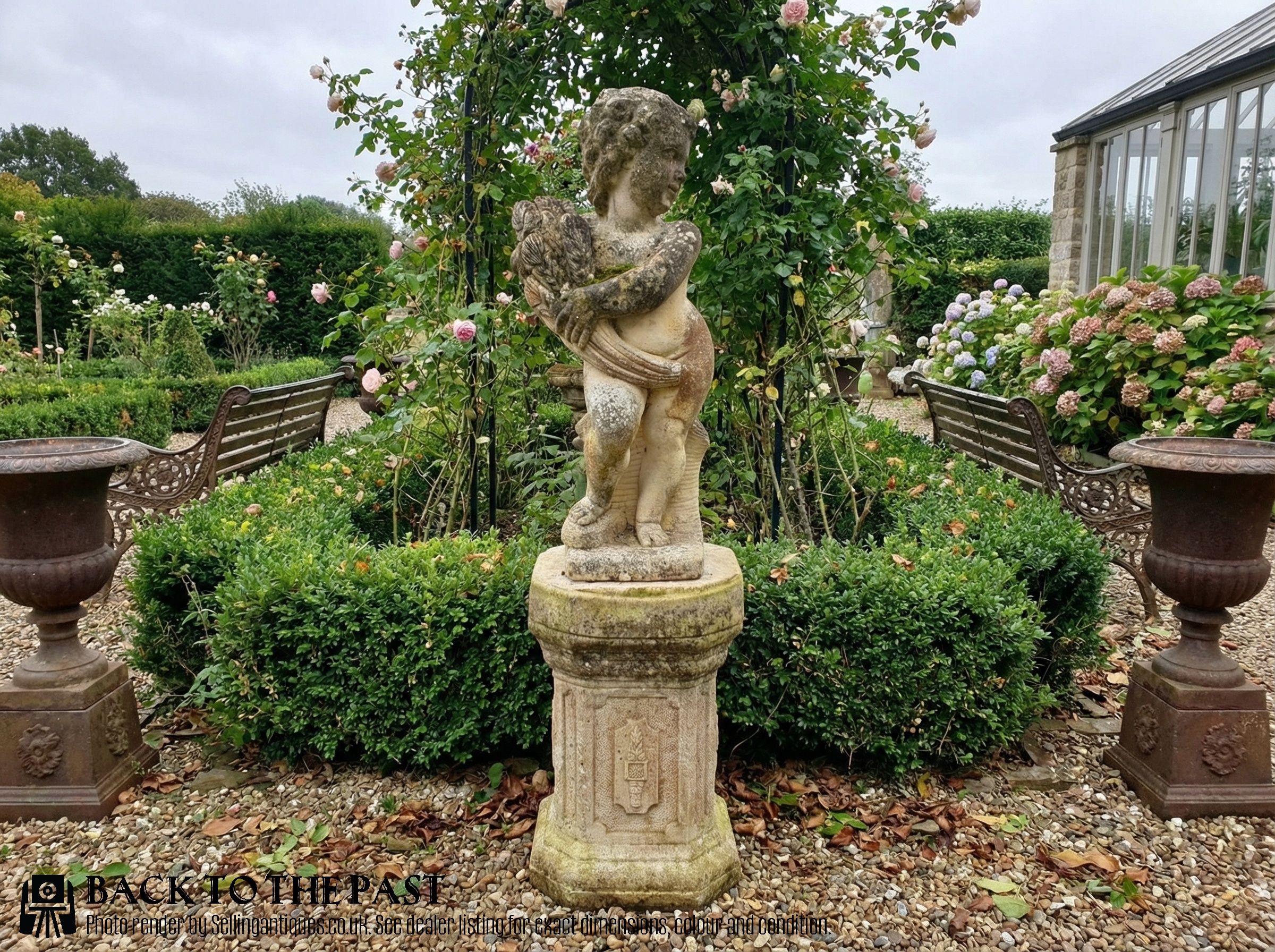
An outdoor stone statue plinth serves as a sturdy architectural base designed to elevate garden statuary, busts, and urns above ground level. When you search for an outdoor stone statue plinth, you encounter sturdy pedestals that create focal points in landscape design.
The selections available here span from the nineteenth century through to mid-twentieth-century iterations, encompassing Neoclassical revival forms. You will most frequently meet pieces dating from nineteen fifty alongside nineteenth-century French examples.
These supports often accompany specific architectural ornaments, including pairs of Medici lions, classical busts of Athena, and figures representing Grecian ladies. They function both as standalone pedestals and as integrated mounting blocks for heavier garden statuary.
How they were made
The pieces on this page utilise durable mineral materials engineered for external environments, principally cast stone, reconstituted stone, and composite stone. Traditional stoneware also appears among nineteenth-century examples, offering a dense ceramic body capable of withstanding weathering.
Many surfaces retain traces of paint, applied either for initial decoration or subsequent weatherproofing of the stone composite. The manufacturing methods rely on moulding techniques that allow for crisp classical relief work, architectural fluting, and panelled sides.
Outdoor Stone Statue Plinth Retail Price Guide 2026
Typical asking prices for outdoor stone statue plinth among the pieces listed under this phrase on Sellingantiques today, from the lower quarter to the upper quarter. They describe what is for sale here now, not the wider market.
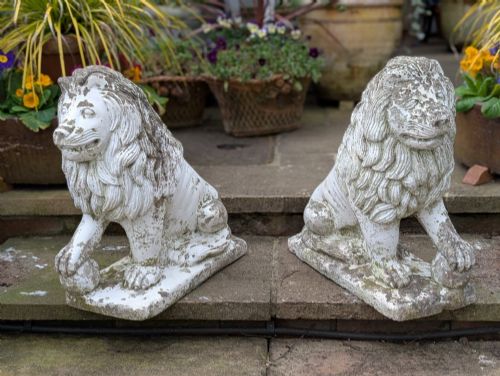
Several plinths come paired with stone lions, ensuring your garden entrance is guarded by unwavering nineteenth-century felines.
What varies in quality
The distinction between ordinary and superior examples lies in the crispness of the moulding and the proportion of the architectural details, such as cornices and plinth bases. Finer pieces display sharper definition in their neoclassical revival motifs, whereas simpler utilitarian versions remain plain.
Material density and aggregate selection also dictate the character of the piece over time, with heavier composite stone weathering into softer patinas than inferior mixes. The weight and wall thickness of the hollow cast structures determine their stability when supporting heavy garden statues.
The Outdoor Stone Statue Plinth Glossary
- Plinth
- The heavy base supporting a statue or pedestal. It provides structural stability and visual ground for elevated ornaments.
- Pedestal
- An upright architectural support often comprising a base, a shaft, and a cap. These structures lift garden statuary into direct sightlines.
- Neoclassical
- A revival style drawing inspiration from classical antiquity. It dominates the decorative vocabulary of these garden supports.
- Stoneware
- A robust ceramic material fired at high temperatures. It resists frost and moisture absorption in outdoor settings.
Outdoor Stone Statue Plinth: Frequently Asked Questions
What is an outdoor stone statue plinth used for?
These architectural bases elevate garden statues, urns, and busts to improve visibility and presence in a landscape.
They also protect delicate stone surfaces from damp ground and direct soil contact.
How do I choose the right size?
Consider the weight and footprint of the statue you intend to place on top of the structure.
Ensure the base dimensions provide a stable, balanced foundation that matches the scale of your garden.
Can these plinths stay outside in winter?
The mineral materials such as cast stone and stoneware are specifically produced for exterior conditions.
Their dense composition withstands typical seasonal weather changes in outdoor garden settings.