





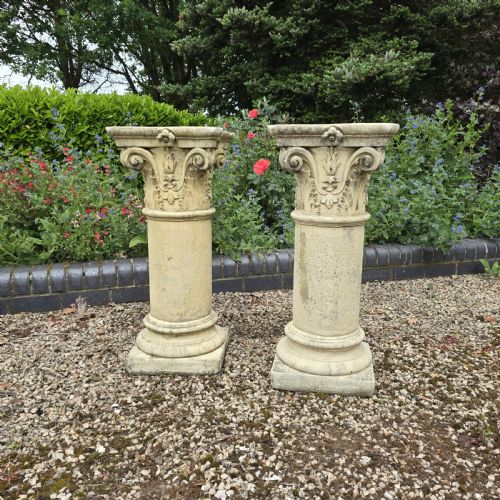
Stone Classical Garden Urns
Stone classical garden urns are substantial focal points for grounds and terraces, bringing architectural dignity and timeless form to outdoor spaces.
Stone Classical Garden Urns
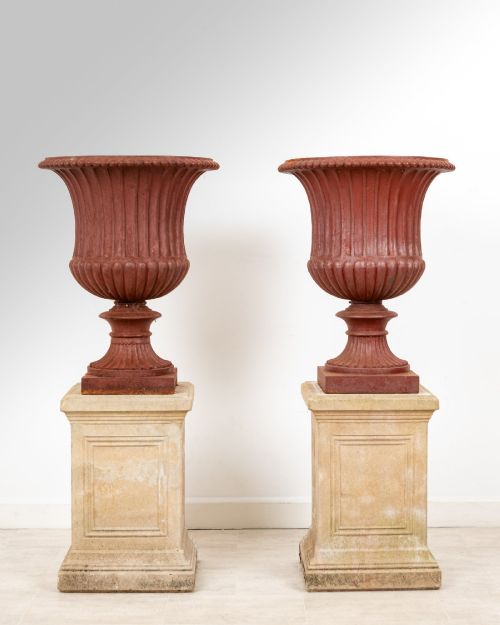
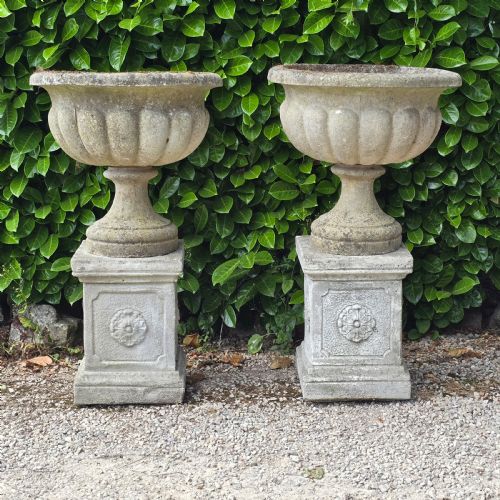
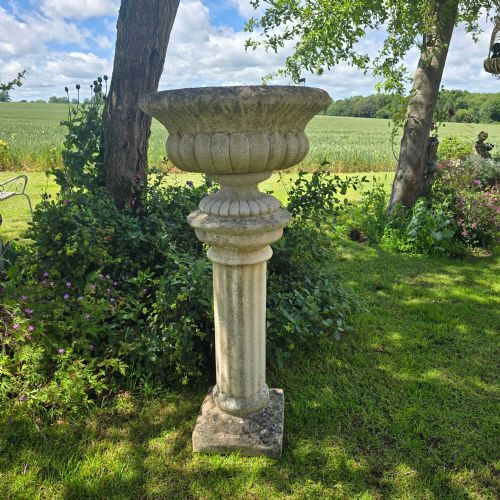
Stone classical garden urns encompass monumental vessels designed for outdoor display, drawing upon ancient Greek and Roman vocabulary to anchor garden vistas and terrace corners. These pieces frequently manifest as campana shapes or tazza forms, sitting atop dedicated plinths and pedestals to elevate their presence.
The selections available range from 16th century Italian Renaissance marble masterpieces down to 20th century reconstituted stone iterations. Buyers will encounter both single statement pieces and matched pairs intended to frame doorways or pathways.
Makers and masons of various eras utilised durable media to withstand the elements while maintaining crisp neoclassical and classical revival ornament. The overarching aesthetic remains grounded in antiquity, whether interpreted through Victorian mass production or earlier hand-carved traditions.
How they were made
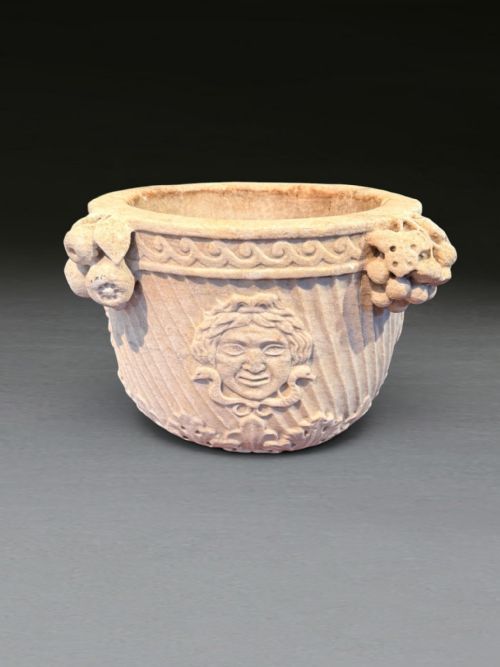
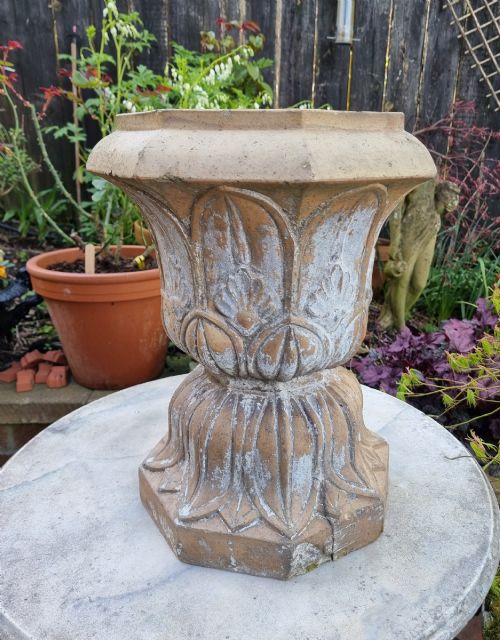
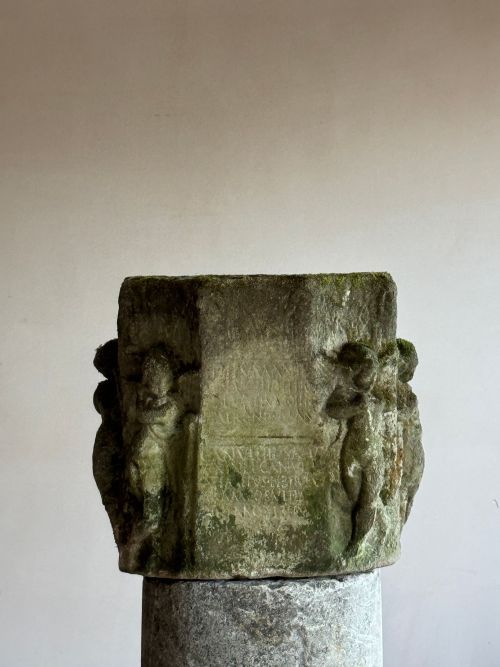
Traditional examples rely on direct manual carving from natural media such as marble, limestone, soft stone, and terracotta. Skilled masons shaped these materials using chisels and gouges, detailing elements like acanthus leaves and classical motifs by hand.
Later periods introduced cast stone and reconstituted stone, where crushed aggregates and binders were set into moulds to replicate carved stone surfaces efficiently. Cast iron and plaster also appear in certain iterations, offering alternative weights and patination properties for garden placement.
Materials documented across the inventory include carved marble, cast iron, terracotta, limestone, and reconstituted stone.
What varies in quality
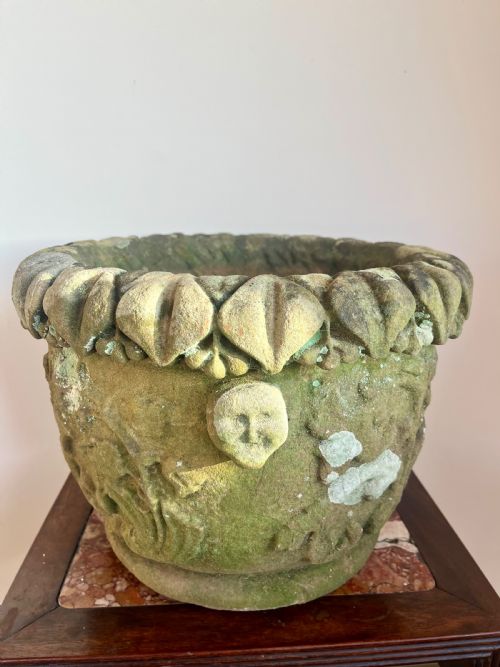
The depth and crispness of hand-carved detailing set the finest examples apart from standard moulded productions. Relief work on handles, gadrooning, and foliage displays the individual hand of the carver rather than the repetitive uniformity of a mould.
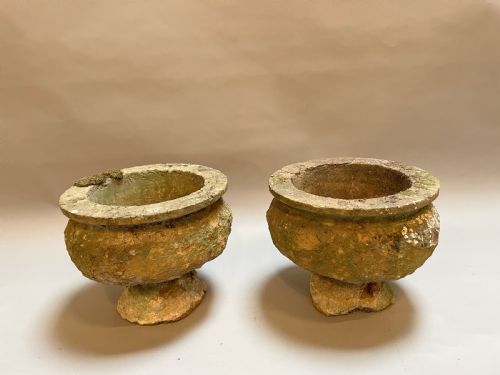
Natural weathering and the development of organic patination contribute significantly to visual success. High quality stone accepts lichens and mosses evenly over decades, whereas inferior or modern artificial mixes may degrade or stain unevenly.
Andrew Handyside
The Stone Classical Garden Urns Glossary
- Campana urn
- A bell-shaped vessel with a flared rim and a tapering body, originating in classical antiquity. This silhouette is frequently paired with pedestals in garden settings.
- Tazza
- A shallow cup or bowl-shaped vessel mounted on a stem and foot. These pieces are often carved from marble and displayed in pairs.
- Reconstituted stone
- A manufactured material made from crushed stone and cement binders moulded into architectural forms. It serves as a durable alternative to quarried block.
- Plinth
- A heavy base block that elevates an urn above ground level. These supports complete the classical proportion of the display.
- Neoclassical
- A style reviving the architectural and decorative forms of ancient Greece and Rome. It dominates the ornamentation found on these garden vessels.
Stone Classical Garden Urns: Frequently Asked Questions
How do I secure an urn outdoors?
Heavy stone and cast iron urns often rely entirely on their substantial weight to remain stable on terraces and lawns. For taller assemblies or exposed locations, stainless steel dowels or appropriate exterior adhesives can fix the vessel securely to its stone plinth.
Positioning the base on a level, well-drained surface prevents shifting during winter freeze-thaw cycles. Adequate drainage holes within the bowl also protect the stone from internal water expansion.
Can these urns stay outside in winter?
Natural stone and well-cast iron handle typical winter conditions effectively, provided water is not allowed to pool and freeze inside the cavity. Raising the base slightly off the ground prevents moisture from drawing up through the stone.
Terracotta and certain softer stones benefit from being moved under shelter or covered during severe frosts to prevent cracking. Checking that drainage channels remain clear is essential before the cold weather sets in.
How do I clean a weathered stone urn?
Gentle washing with warm water and a soft bristle brush removes accumulated dirt without stripping the organic lichens and patination that accumulated over decades. High-pressure washers should be avoided as they scour the surface and erode soft stone details.
Harsh chemical cleaners can discolour marble and limestone permanently. Allow the stone to dry naturally after cleaning to preserve its structural integrity.
Are these urns heavy to move?
Carved marble, limestone, and cast iron pieces possess immense weight that requires mechanical lifting equipment and professional handling. Attempting to shift large garden urns without proper machinery risks injury and damage to the antique surface.
Plinths and pedestals should be separated from the upper bowl before any repositioning is attempted. Planning the exact final location beforehand minimises unnecessary transit across lawns and paving.