

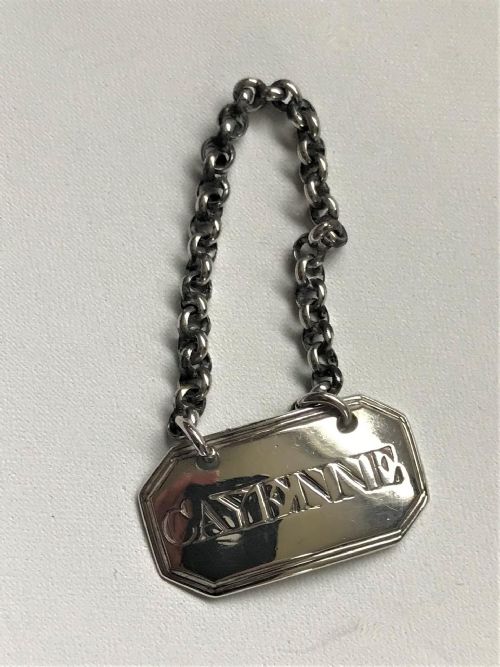


Sterling Silver Tag
When you handle a sterling silver tag, you hold a miniature piece of drinking history designed to sit upon the neck of a decanter.
Sterling Silver Tag
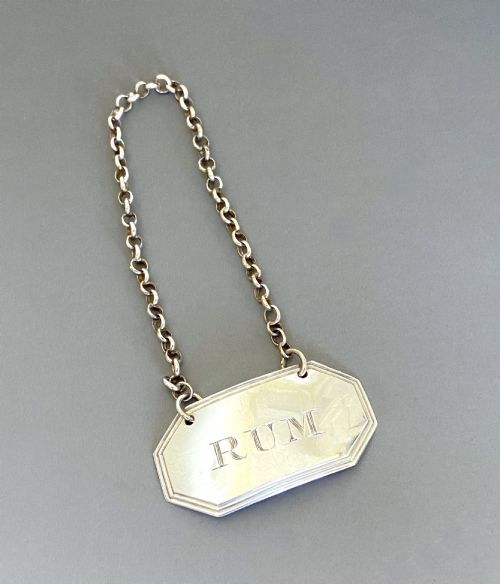
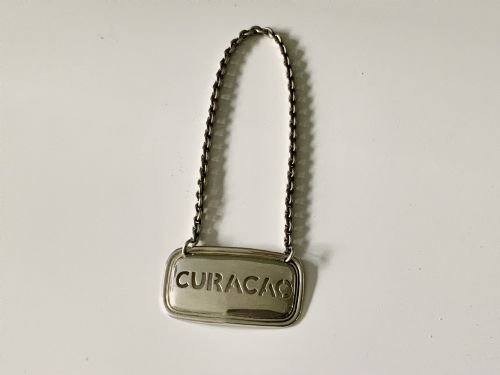
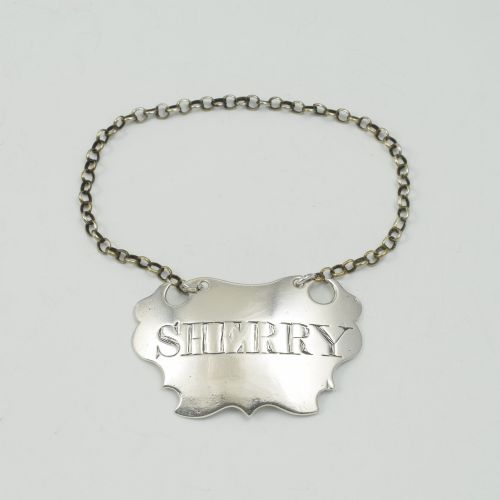
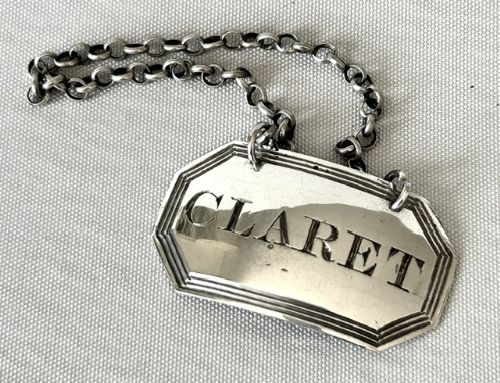
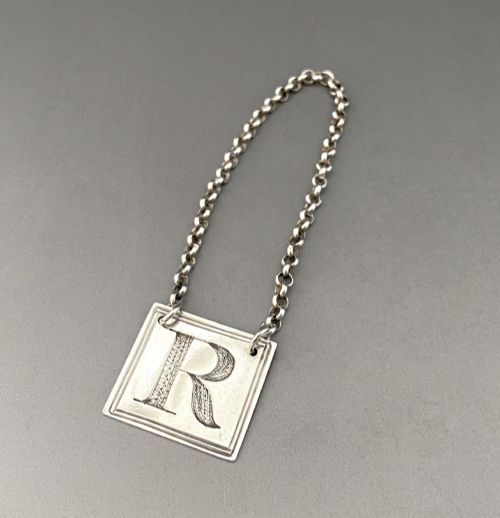
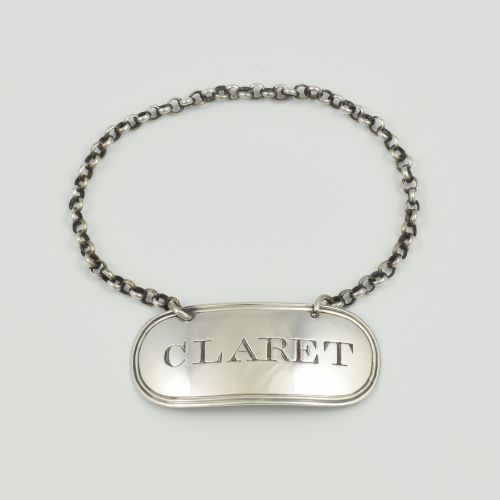
A sterling silver tag is primarily a decanter label or bottle ticket used to identify the contents of wine and spirits vessels on the dining table or sideboard. On this page, you will most frequently meet Georgian and Victorian examples fashioned into escutcheons, vine leaves, or simple scrolls.
Makers produced these tags in various forms, naming specific spirits such as port, sherry, madeira, claret, rum, and brandy, or occasionally rarer titles like cayenne and moselle. They hang from chains around the necks of glass decanters, combining utility with decorative elegance.
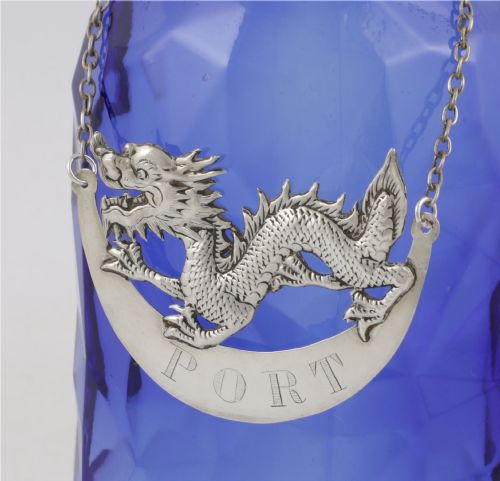
The selections span periods from the eighteenth century through the Regency, Victorian, and Edwardian eras, with occasional Chinese export pieces appearing alongside traditional British work. Buyers seek them to complete antique decanter sets or to collect specific silversmiths' marks.
Silver and enamel construction
Silversmiths constructed these tags predominantly from solid sterling silver, utilising sheet metal cut, pierced, or cast into various ornamental shapes. Many pieces feature chased or engraved detailing to delineate grapes, vines, or borders.
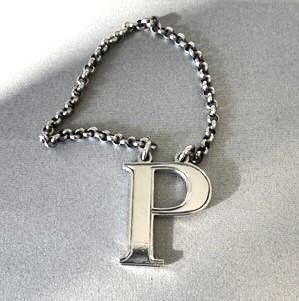
Some later twentieth-century pieces incorporate coloured enamel highlights alongside the polished metal to add vibrancy to the design. Chains for suspension are typically formed from matching sterling silver links attached through a suspension loop.
Some tiny Georgian specimens were specifically titled 'Cayenne' for fiery table spices rather than wine.
Design depth and maker distinction
Quality in a sterling silver tag rests upon the crispness of the casting and the depth of the hand-engraving on the face. Pieces executed by noted makers display superior weight, sharper lettering, and well-preserved hallmarking.
Simpler stamped sheet silver pieces sit at the lower end of the range, whereas fully cast figural examples or those by renowned silversmiths command greater interest from collectors.
Elizabeth Morley·Digby Scott Benjamin Smith·John Reily·Thomas Wallis II·William Sharp·Peter and Anne Bateman·Mappin and Webb
The Sterling Silver Tag Glossary
- Escutcheon
- A shield-shaped plate used for naming the contents of a bottle or decanter. These often feature decorative borders and central engraved lettering.
- Bottle Ticket
- An alternative historical term for a decanter label that hangs from a chain around the neck of a glass vessel. They served the same identifying purpose as larger labels.
- Hallmark
- An official stamp applied by an assay office to indicate the purity of the silver, the maker, and the year of production. British examples often bear city marks indicating London, Birmingham, or Edinburgh.
- Chased
- A technique where the silversmith depresses the metal with a punch and hammer from the front to raise ornamental designs in relief. This gives depth to vine leaves and borders.
- Pierced
- Work where the silver sheet is cut through to create openwork patterns such as latticework or foliate scrolls. This lightens the overall visual weight of the piece.
Sterling Silver Tag: Frequently Asked Questions
How do I hang a silver tag?
These pieces suspend from fine matching silver chains that wrap around the neck of a glass decanter. Ensure the chain rests comfortably below the lip or stopper flange.
Take care when removing or replacing the stopper so that the chain does not catch or scratch the glass surface.
Can I polish my silver tag?
Use a soft microfibre cloth and a mild proprietary silver polish to maintain the shine without removing the underlying engraving. Avoid aggressive scrubbing that might wear away crisp lettering or hallmarks on the reverse.
Enamelled pieces require extra care to prevent harsh chemicals from damaging the coloured sections.
How do I date an unmarked label?
Examine the style of the lettering, the shape of the plate, and any wear patterns to estimate the period of production. Georgian pieces often favour bright-cut engraving and escutcheon forms, while Victorian examples introduce heavier casting.
Consulting standard reference books on silversmith marks helps narrow down the decade when hallmarks are absent or rubbed.
What is the difference between a label and a ticket?
In historical usage, both terms describe the same small silver plaque hung from a decanter, though 'ticket' was frequently used in the eighteenth century. Collectors use the words interchangeably today.
Both serve the dual purpose of identifying the beverage within and decorating the tableside glassware.