


Solid Silver Decanter Label
These solid silver decanter label examples mark individual bottles of wine and spirits with Georgian, Victorian, and later British silverwork.
Solid Silver Decanter Label
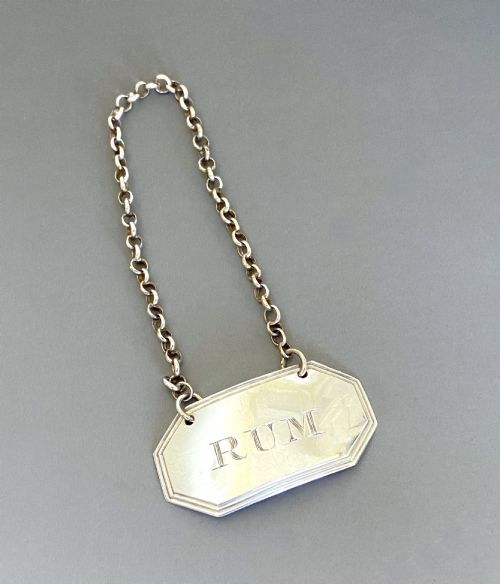
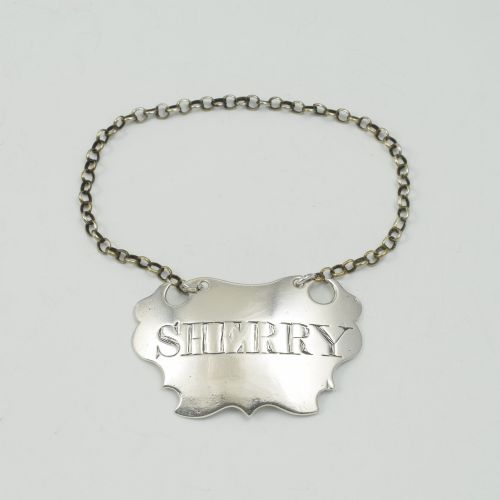
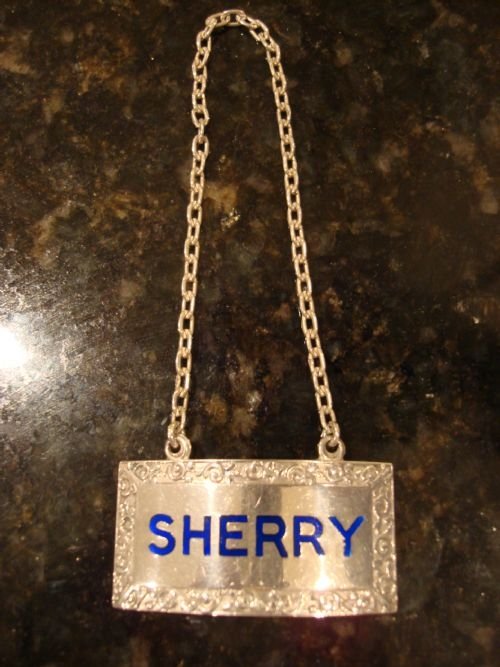
A solid silver decanter label identifies the contents of a wine or spirit bottle, hanging from the neck by a small chain or linked ring. When you search for a solid silver decanter label, you encounter small pierced or engraved plaques bearing names like sherry, port, brandy, or rum.
The pieces appearing here span the Georgian and Victorian eras through to the mid-twentieth century, alongside examples from the nineteen-sixties. These markers range from simple escutcheon shapes to naturalistic vine leaf outlines.
Most entries name specific drinks such as hock, whisky, gin, or champagne, showing how households kept track of their cellar contents on dining tables. The forms bridge functional utility and ornamental metalwork.
Silver and manufacture
Silversmiths utilised sterling silver and solid silver, shaping the metal through casting, piercing, and hand engraving. Many pieces display detailed motifs such as Bacchus themes, shell and scroll work, or naturalistic vine leaves.
Makers struck their pieces with English hallmarked stamps indicating towns like London, Birmingham, and Sheffield alongside date letters. These marks provide evidence of the assay office and year of production.
Listings show solid silver decanter labels spanning the Georgian and Victorian periods through to nineteen-eighty-eight, rendered in sterling silver and enamel.
Quality variations
The distinction between ordinary and superior pieces rests on the crispness of the cast decoration and the depth of the hand engraving. Pierced vine motifs and figural Bacchus designs require high skill from the silversmith to maintain sharp relief.
The presence of named makers and clear town hallmarks elevates certain examples above unmarked or generic pieces. The weight of the silver and the preservation of the original suspension chain also distinguish finer items.
Elizabeth Morley·John Reily·William Sharp·Hilliard and Thomason·Taylor and Perry·Harry Atkin·John Emes·Mappin and Webb
The Solid Silver Decanter Label Glossary
- Escutcheon
- A shield-shaped plaque used frequently for early decanter labels. This form provides a central field for the engraved name of the wine.
- Hallmark
- A series of official marks stamped onto silver items to guarantee the metal standard. These symbols indicate the assay office, the maker, and the year of manufacture.
- Vine leaf
- A naturalistic moulded shape styled after grape foliage. This motif appears widely on nineteenth-century spirit labels alongside clusters of fruit.
- Noggin
- A small mug or vessel for holding liquor, often paired with miniature decanter labels. The term also describes smaller spirit bottles.
- Bacchus
- The classical deity of wine, whose face and ivy wreaths decorate ornate silver labels. This motif connects the spirit decanter directly to classical themes.
Solid Silver Decanter Label: Frequently Asked Questions
What is a decanter label?
A decanter label is a small piece of silver hung around the neck of a bottle or decanter to name the beverage inside. They were essential dining table accessories for identifying ports, sherries, and brandies.
These objects combine practical utility with decorative silver craftsmanship, often featuring specific grape, shell, or mask motifs that match the style of the decanter itself.
How do I know the date?
You determine the date by examining the hallmarks stamped into the reverse or edge of the silver plaque. These official marks include date letters and assay office symbols that correspond to specific years of production.
Style also helps indicate the period, as Georgian pieces often favour shield escutcheons while Victorian examples lean towards naturalistic vine leaves and heavier cast ornamentation.
How were they hung on bottles?
Decanter labels hang by means of a small silver link chain or a rigid metal collar fitted around the neck of the bottle. The chain allows the plaque to rest against the glass just below the stopper.
Many surviving pieces retain their original chains, which is a key detail for collectors looking at nineteenth-century table silver.
What drinks are most common?
Sherry, port, brandy, and whisky appear most frequently on these silver labels, reflecting the popular contents of nineteenth-century dining sideboards. You also encounter less common spirits like hock, gin, rum, and Madeira.
Labels naming specific wines show how carefully curated historical dining services were organised during the Georgian and Victorian periods.