
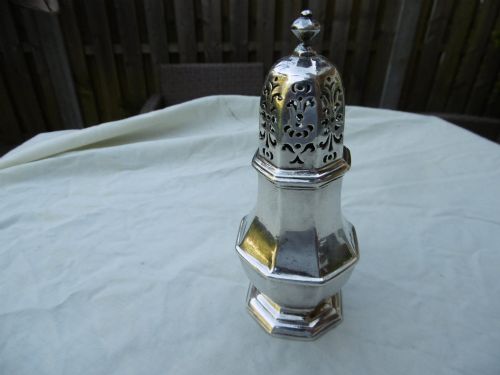
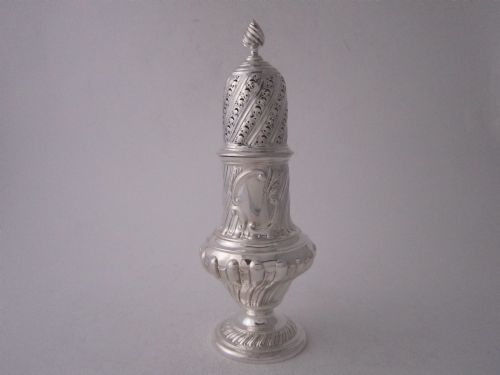
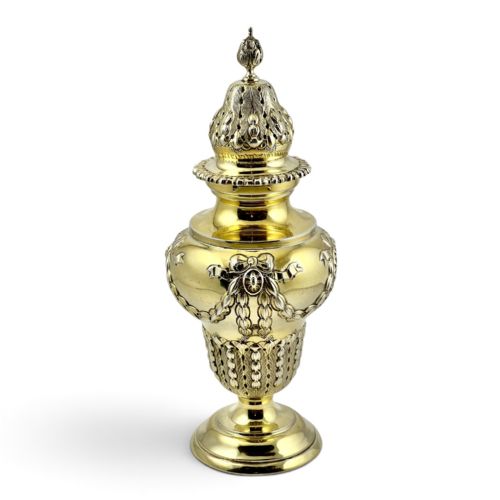
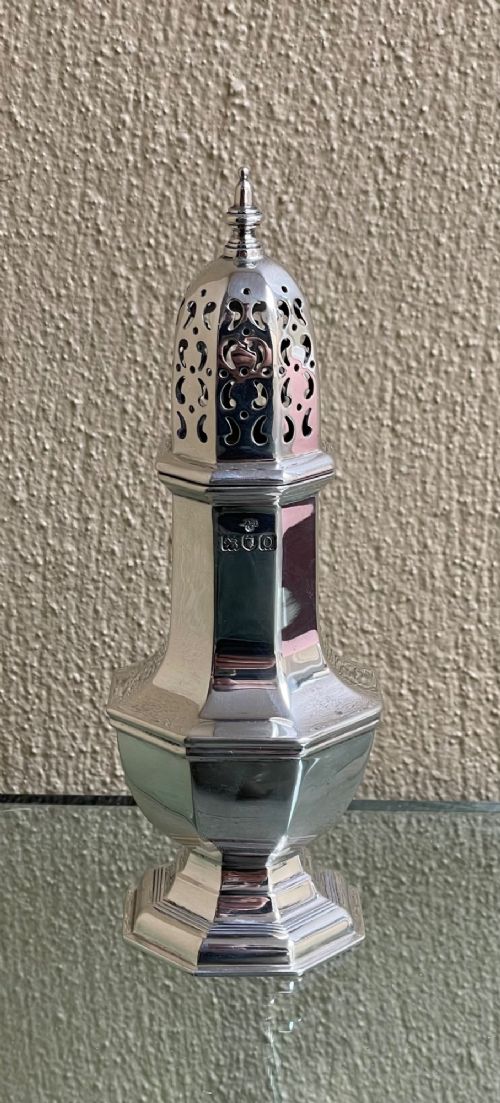
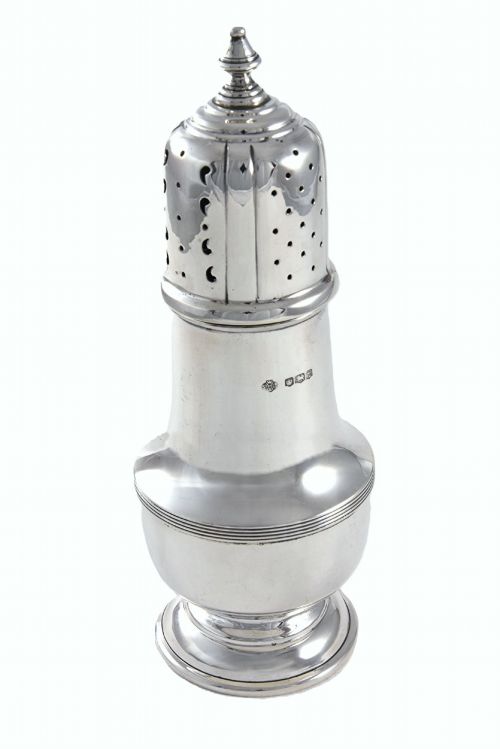
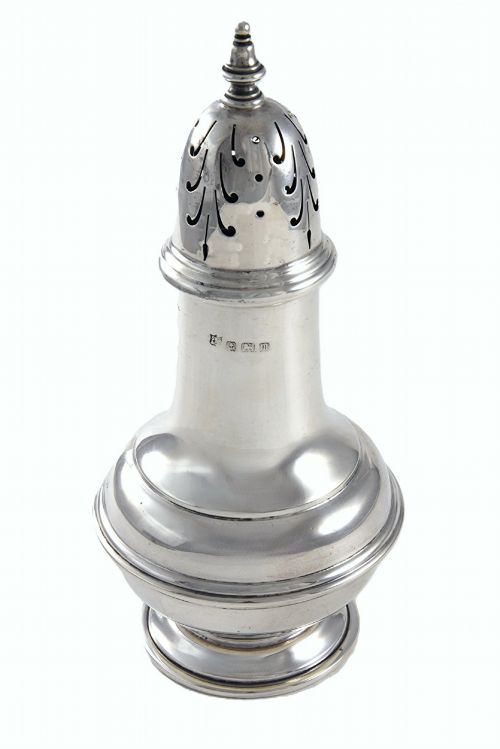
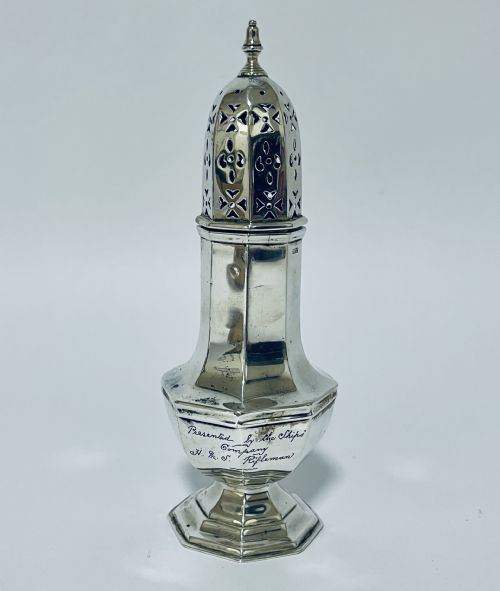
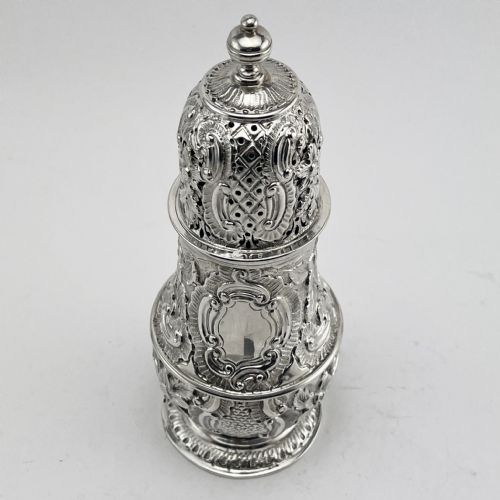


Sterling Silver Sugar Caster
These sterling silver sugar caster pieces bring period dining elegance to the table with pierced tops designed for dispensing fine sugar.
Forms and periods
A sterling silver sugar caster is a table vessel created to dust sugar onto food, appearing across several centuries of British silver design. Buyers seeking these items encounter forms ranging from inverted pear shapes to cornucopia silhouettes.
The pieces on this page span the 18th century, the 19th century, and specific years such as 1890, alongside styles like George II and Victorian. Makers utilised sterling silver across all these periods to shape functional tableware.
Materials and construction
Items are formed from solid sterling silver, occasionally combined with glass or horn elements. Silversmiths shaped the metal into vertical bodies, often tapering towards a pierced removable top.
Pierced work on the lids involves drilling or cutting intricate patterns to allow sugar to shake through evenly. Bases and finials are assembled to balance the height of the caster on the dining surface.
Listings feature sterling silver sugar casters spanning the 18th century through the Victorian and Edwardian periods.
Distinctions in craftsmanship
Substance separates lighter vessels from heavier examples, with substantial weight indicating thick-gauge metal. Construction quality shows in the snugness of the lid fitting and the crispness of the pierced patterns.
Provenance and silversmith attribution elevate specific pieces, particularly those bearing marks from recognised makers or provincial assay offices. The clarity of hallmarks stamped into the sterling silver impacts the historical record of each piece.
Horace Woodward & CO LTD·Charles Alchorne·Nathan & Hayes·William Comyns·Thomas Bamford
The Sterling Silver Sugar Caster Glossary
- Sterling silver
- A standard alloy consisting of silver and other metals, predominantly copper, meeting specific purity requirements. This material forms the primary substance of every caster listed.
- Caster
- A container with a perforated lid used for sprinkling condiments such as sugar onto food. These vessels stand upright on footed bases.
- Sifter
- An alternative term used interchangeably with caster for vessels that distribute powdered sugar through pierced holes. The terminology often appears in historical listings alongside shaker.
- Hallmark
- A series of official marks stamped on items to indicate standard of purity, place of assay, and date of manufacture. These symbols verify the origin of British silver.
- Finial
- A decorative knob or ornament fixed to the top of the caster lid. It provides a grip for removing the pierced cover during refilling.
Frequently Asked Questions
What is a sterling silver sugar caster?
A sterling silver sugar caster is a table shaker featuring a pierced lid for dispensing sugar onto food and desserts. These vessels stand upright on a footed base and remove at the top for refilling.
Historical examples exist in various heights and profiles, including inverted pear shapes and cornucopia designs. Silversmiths produced them across the 18th, 19th, and 20th centuries in British workshops.
How do I date a silver sugar caster?
Dating relies upon the hallmarks stamped directly into the sterling silver surface by official assay offices. These marks include date letters, maker marks, and symbols indicating the city of testing.
Stylistic indicators such as Victorian ornamentation or George II proportions also help determine the period of origin. Comparing the form against recorded silversmith records narrows the timeframe of manufacture.
How were sugar casters used historically?
Dining traditions required these vessels on the table for dusting sugar onto desserts, pastries, and specific dishes. Diners or servants lifted the caster by the body to shake fine sugar through the pierced lid.
They served a functional role in formal dining before granulated sugar became packaged for individual use. Their presence on the table reflected the status of the household.
How do I care for sterling silver?
Maintaining sterling silver requires gentle cleaning with specialised silver polish and soft cloths to remove tarnish. Avoid harsh abrasive materials that scratch the polished surface of the metal.
Store the vessels in dry environments away from direct sulfur sources to minimise oxidation. Regular handling and use naturally keep high-friction areas bright.