

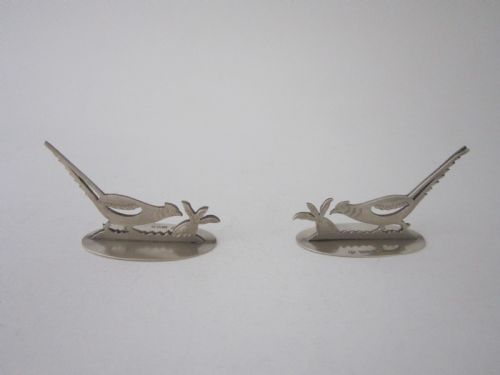


Sterling Silver Place Card Holders
Sterling silver place card holders organise a formal table, bringing miniature sculpture and bright metalwork to every seat.
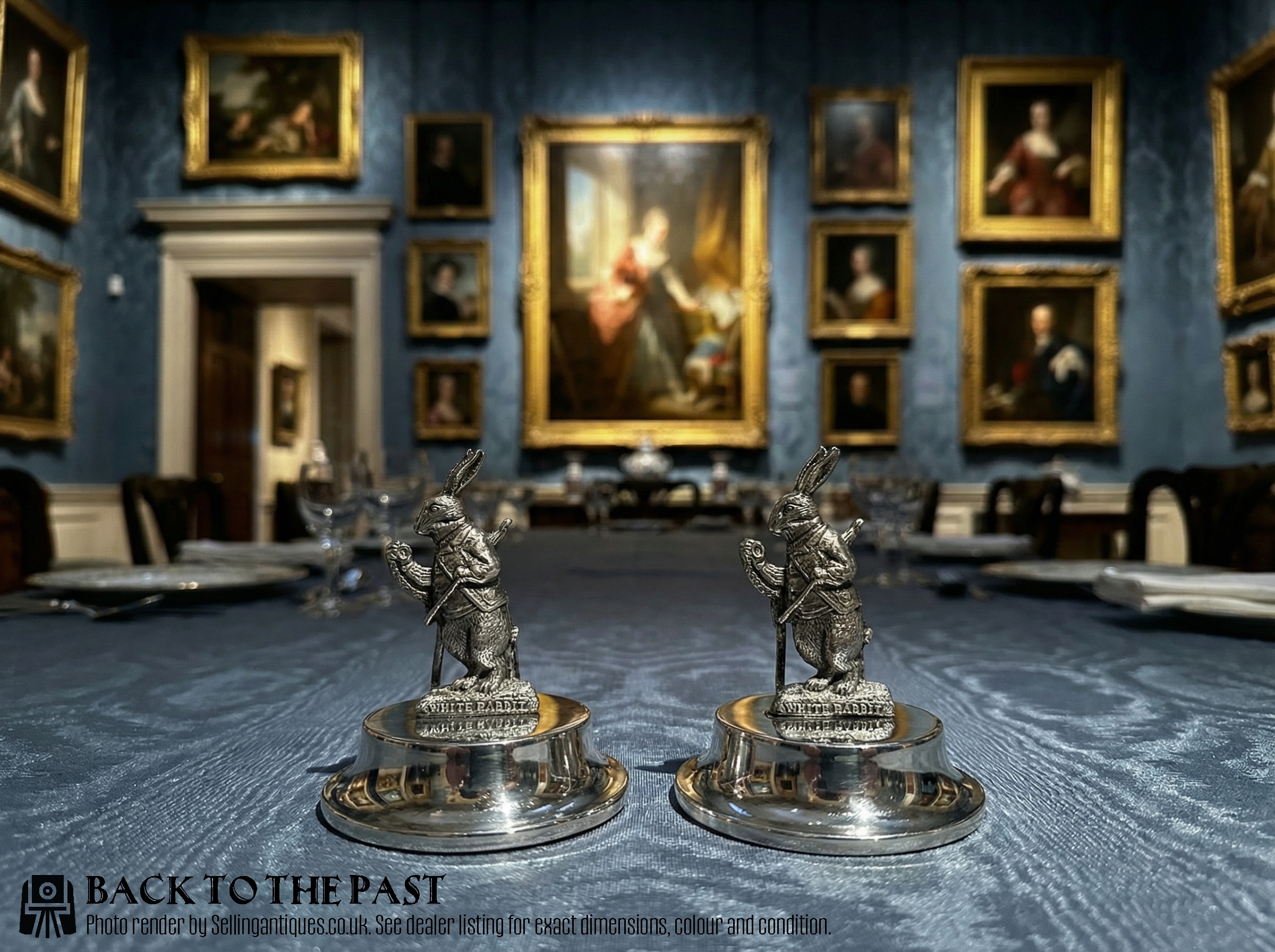
Sterling Silver Place Card Holders
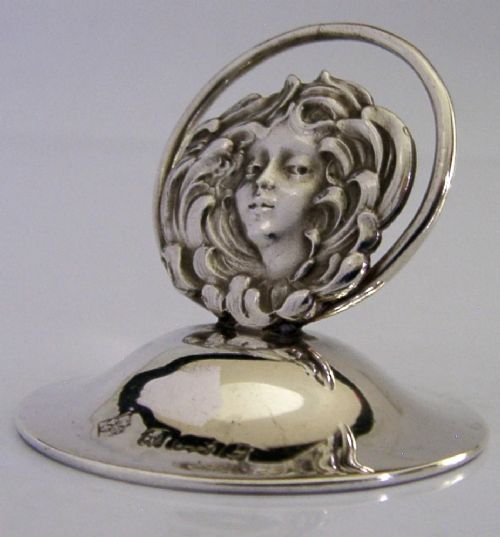
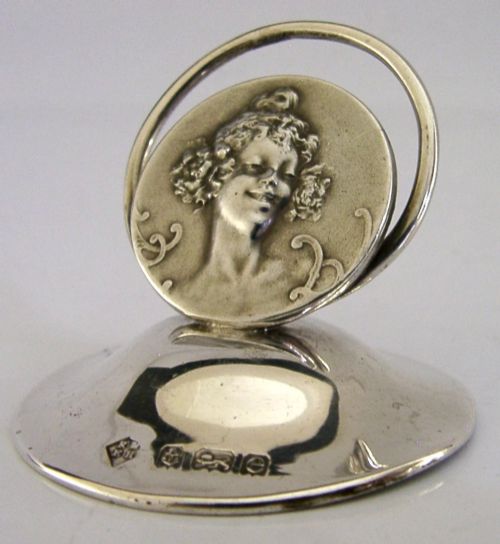
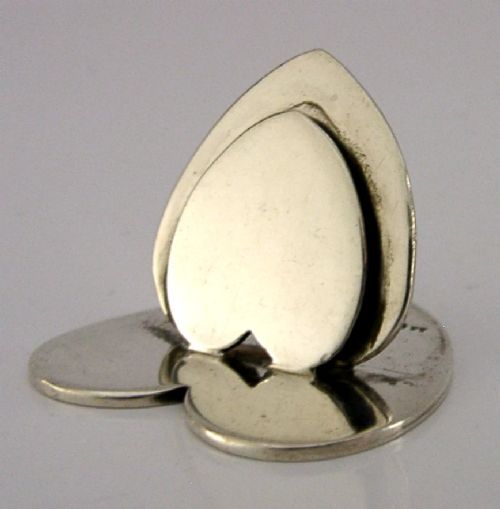
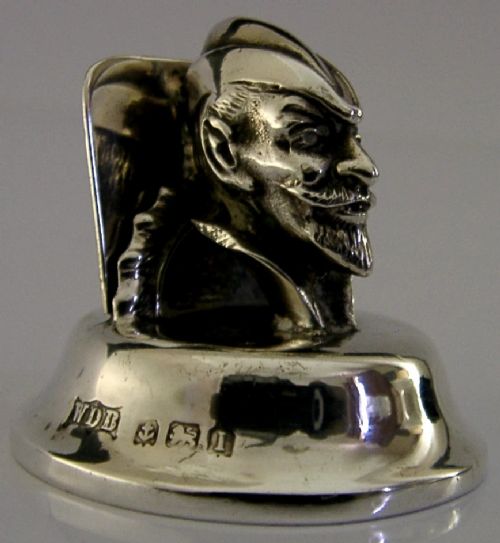
Sterling silver place card holders are small tabletop accessories designed to grip name cards or menus during formal meals. They appear most frequently as Edwardian pieces, though examples span from the Victorian period through to the mid-twentieth century. The selection ranges from simple geometric forms to figural designs representing animals, birds, and literary characters.
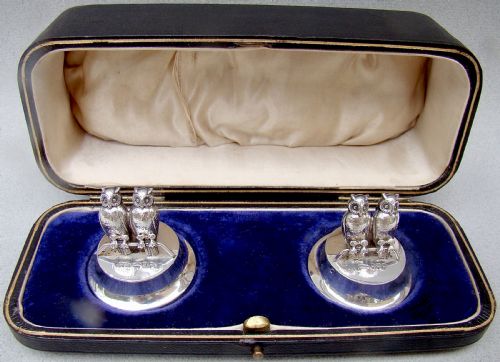
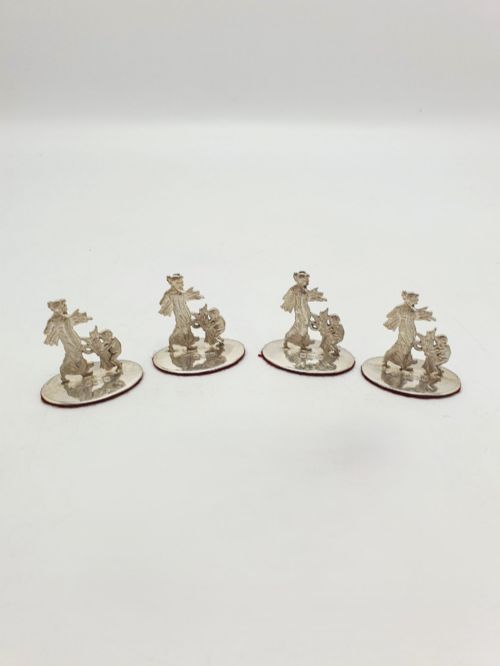
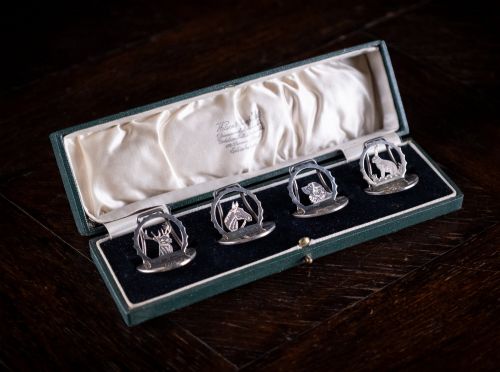
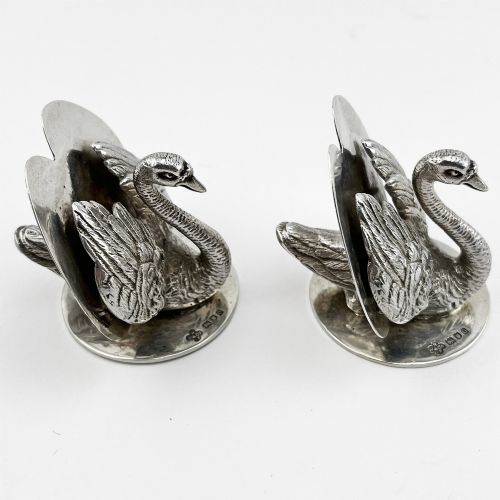
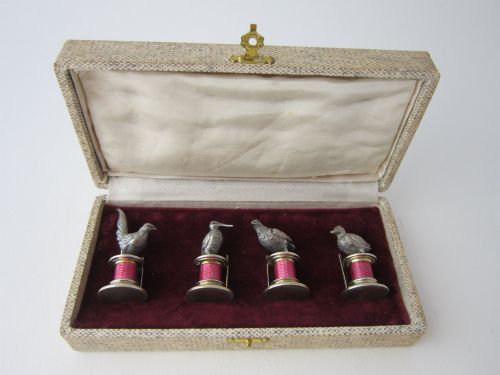
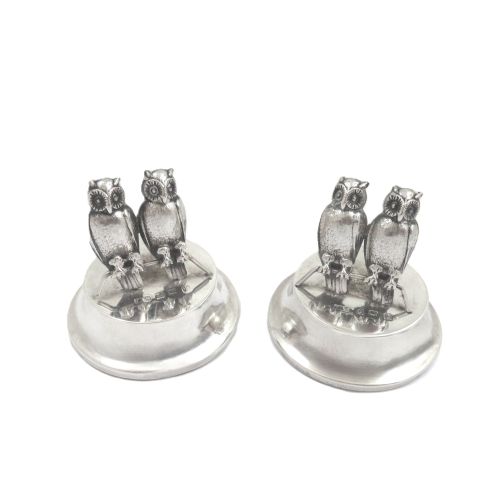
Makers produced these items both individually and in matched sets of four, eight, or twelve, often supplied in fitted presentation boxes lined with velvet or silk. Many pieces double as menu card holders, combining two functions into a single heavy silver base. Collectors encounter subjects such as owls, foxes, swans, and game birds alongside nautical themes and figural scenes.
The form relies on a weighted base or a sturdy easel back to support the card without tipping over. While many carry English hallmarks from assay offices in London, Birmingham, and Chester, others remain unmarked save for basic silver stamps. Their survival often depends on whether their original fitted cases protected them from knocks and polish wear.
Materials and construction methods
Silversmiths constructed sterling silver place card holders primarily through casting, stamping, and hand-chasing. Figural subjects like owls or foxes started as cast components, which craftsmen then detailed by hand with chisels and gravers to define feathers or fur. Simpler clips utilised folded sheet silver soldered to weighted bases filled with lead or resin to ensure stability.
Enamelling added colour to specific designs, particularly through guilloche enamel techniques where patterns were engine-turned into the silver before translucent coloured layers were applied. Other pieces incorporated secondary materials such as glass, leather, and fabric linings within presentation boxes. Hallmarks stamped directly into the metal recorded the silver standard, assay office, and date letter.
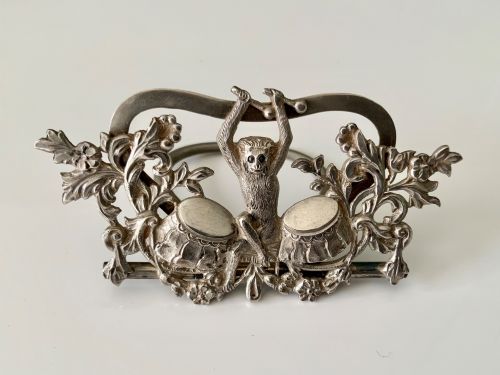
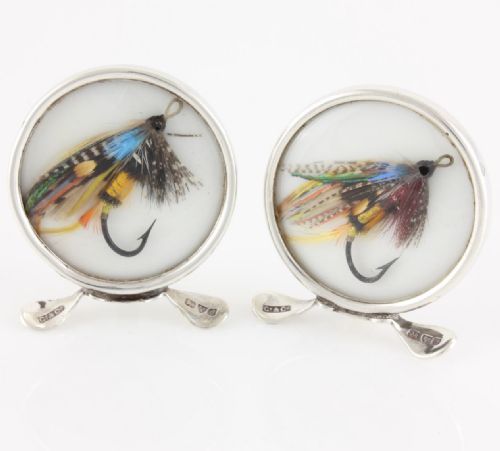
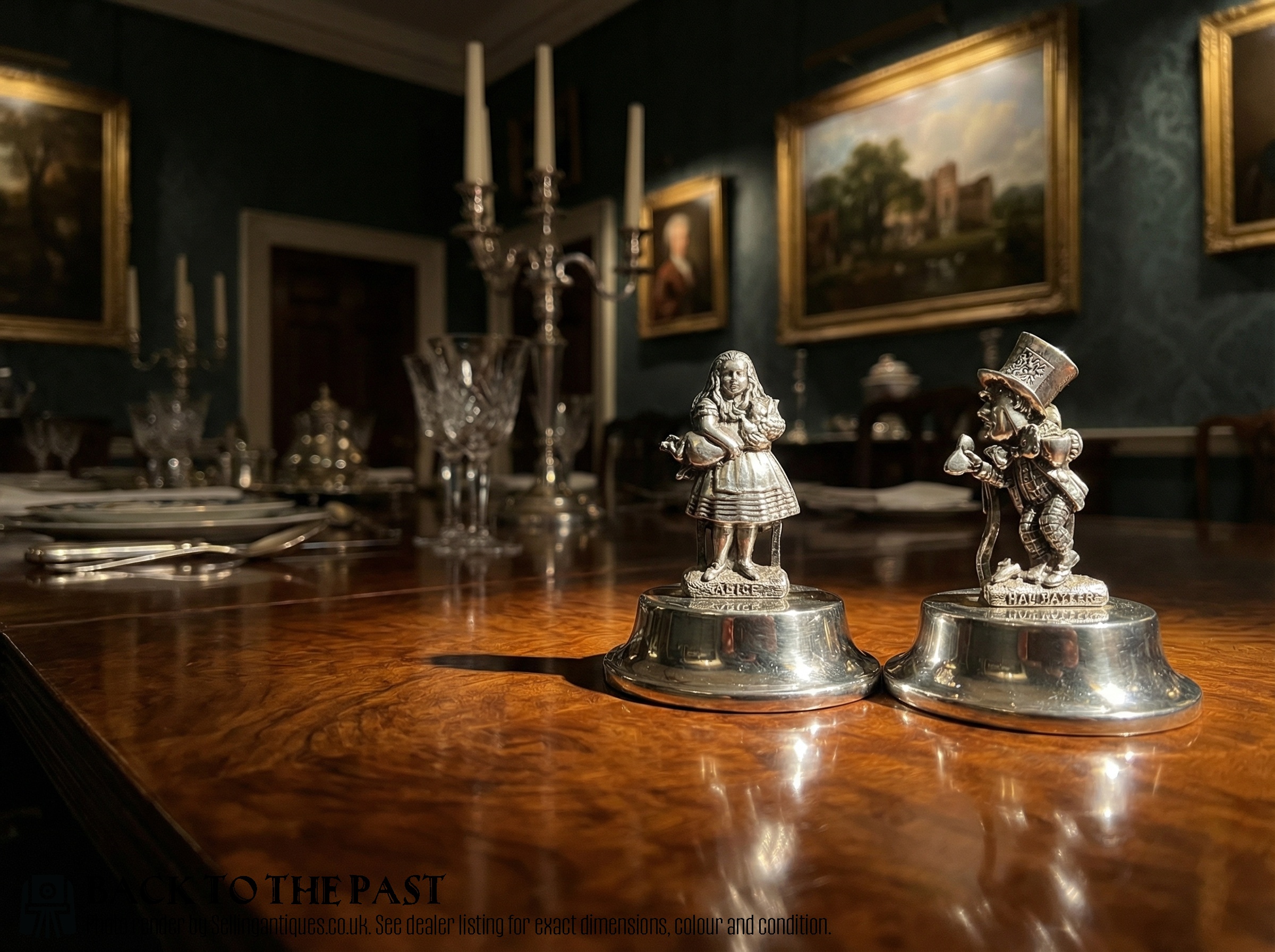
Monkeys playing drums and Alice in Wonderland characters rub shoulders with stern owls and game birds in the Edwardian menagerie.
Distinctions in execution and design
The presence of a complete matching set rather than a matched-up grouping elevates an assembly. Cases lined with original velvet or silk that retain their structural integrity add another layer of desirability for collectors focusing on boxed sets.
Levi & Salaman·A. Wilcox·Grey & Co·Sampson Mordan·Asprey·Liberty
The Sterling Silver Place Card Holders Glossary
- Assay office
- An official body that tested precious metals and stamped items with a mark guaranteeing the silver purity. British offices used specific symbols such as a leopard head for London or an anchor for Birmingham.
- Guilloche enamel
- A decorative technique involving precise mechanical engraving beneath translucent enamel layers. This method produced repeating geometric patterns that caught the light.
- Figural
- A description for items moulded in the likeness of humans, animals, or characters. These stand apart from abstract or purely geometric tableware accessories.
- Hallmark
- A series of official marks stamped onto precious metal items. These indicate the maker, the silver standard, the assay office, and the year of manufacture.
Sterling Silver Place Card Holders: Frequently Asked Questions
How were place card holders used?
Hosts placed these small silver clips beside each guest's cutlery or wine glasses to display handwritten name cards. They ensured guests found their allocated seats quickly during large formal dinners.
Many designs also held printed menus, serving a dual purpose at banquets and celebratory meals.
Are these pieces safe to clean?
Sterling silver requires gentle cleaning with a soft cloth and proprietary silver polish to remove tarnish. Avoid abrasive pastes that wear away the fine hand-chased details on figural pieces.
Pieces with enamel or velvet linings need extra care to prevent moisture from damaging the delicate surfaces.
How do I date an antique holder?
English silver relies on the stamped date letter within the hallmark to identify the exact year of assay. Comparing the letter shape against official tables reveals the production period.
Stylistic cues such as Art Nouveau curves or Art Deco geometry also point to the correct decade.
Can I use them for modern cards?
Modern place cards fit easily into the traditional spring clips and slotted bases of antique silver holders. The gap width accommodates standard card stock without damaging the metal.
They function just as effectively on modern dining tables as they did in Edwardian dining rooms.