
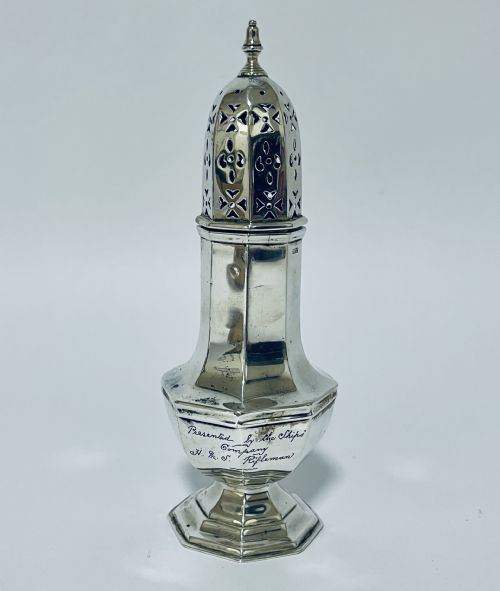


Sterling Silver Pepper Caster
A sterling silver pepper caster brings the weight of Georgian, Victorian and later dining tables directly to your hand.
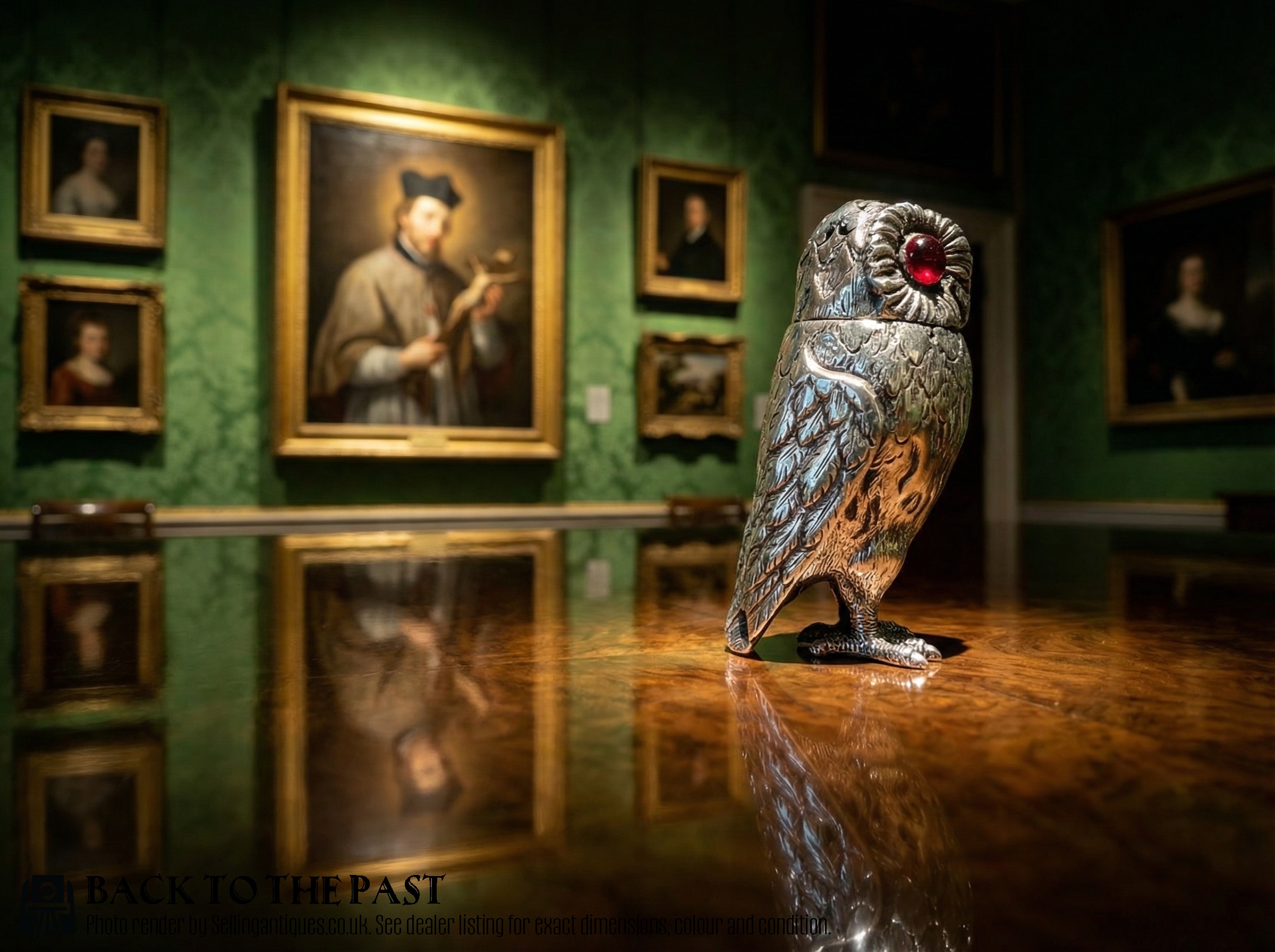
Sterling Silver Pepper Caster
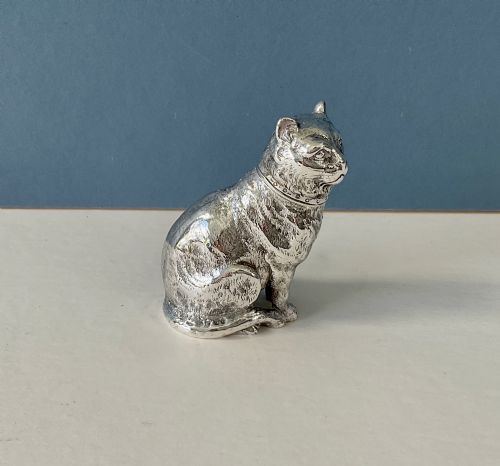
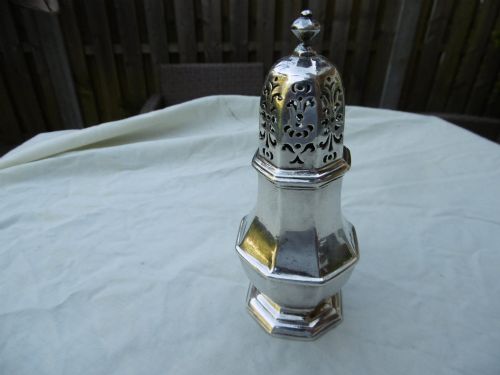
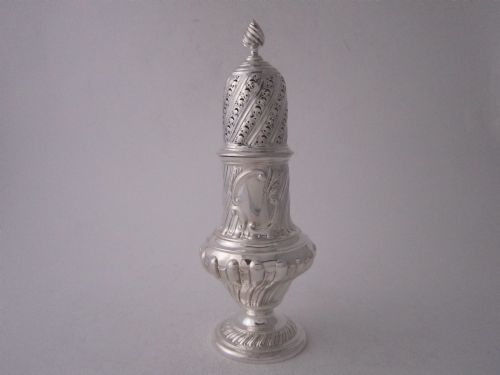
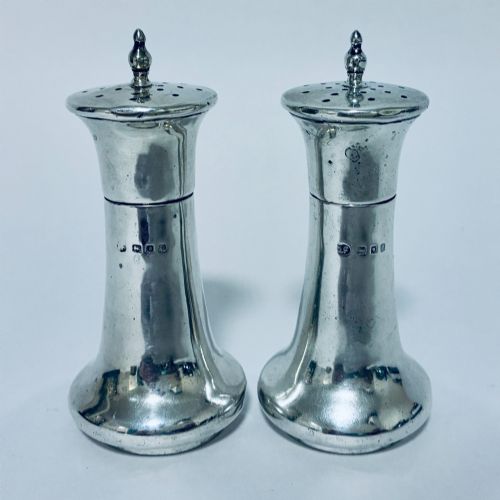
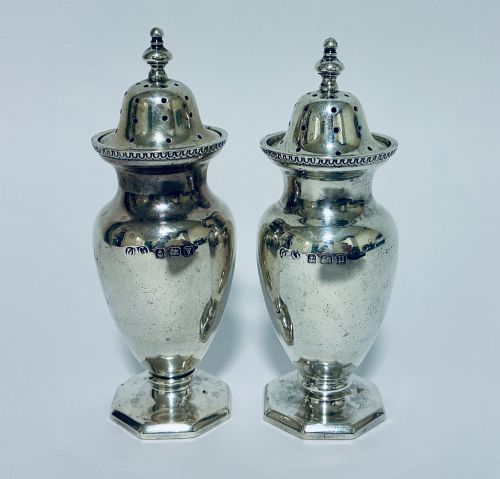
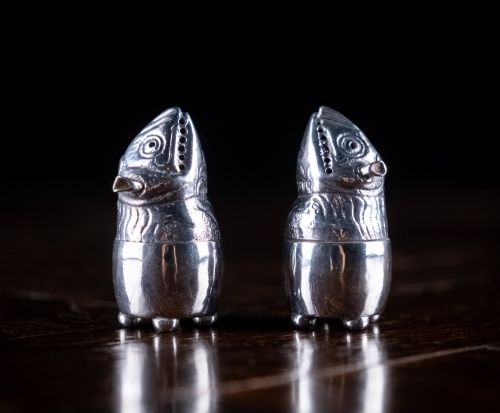
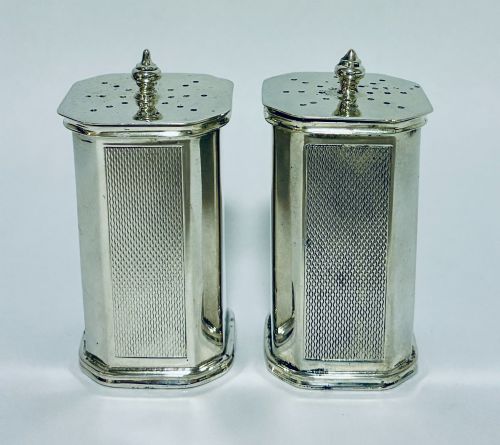
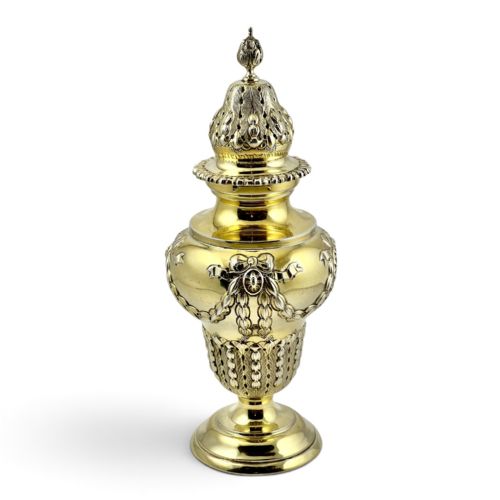
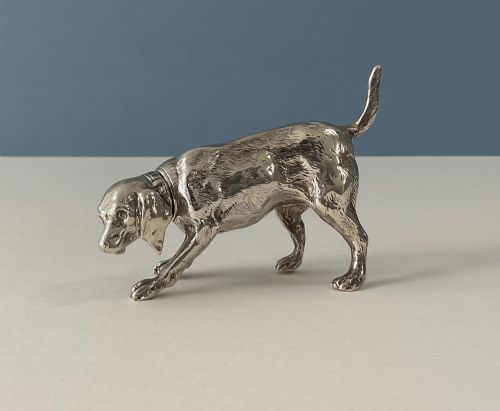
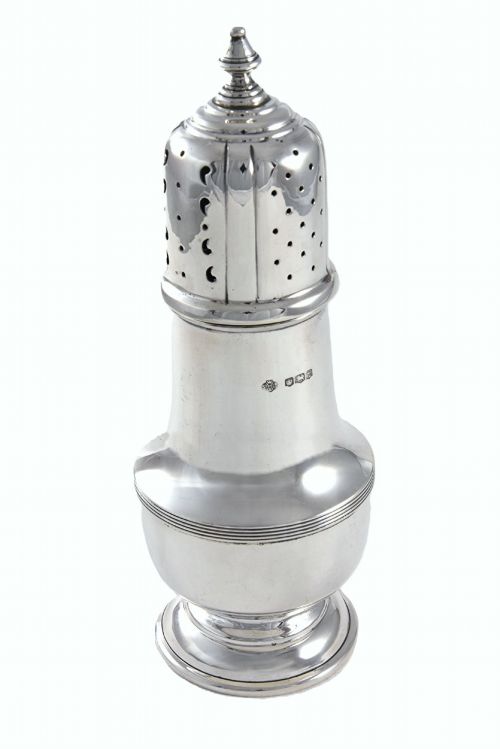
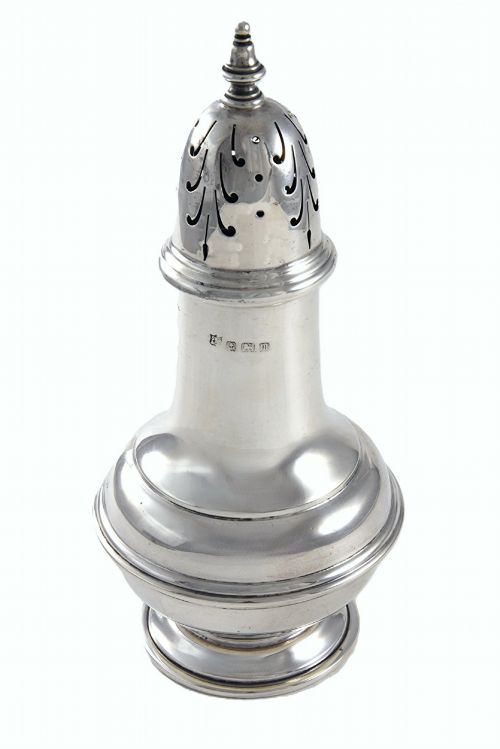
A sterling silver pepper caster is a small tabletop vessel designed to dispense ground pepper through a pierced lid, appearing across periods from the eighteenth century to the mid-twentieth century. These pieces emerge in various forms, ranging from tall tapering sugar shakers and muffineers to novelty shapes such as cats, dogs, owls, chicks and grotesques.
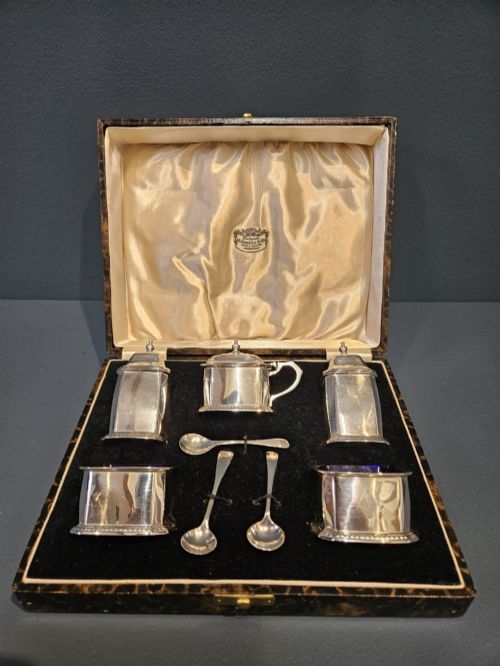
Buyers will encounter single castors, matched pairs and larger cruet sets that group the caster alongside salt tubs, mustard pots and oil bottles. The designs span classical Georgian octagonal profiles, Edwardian refinement, Art Deco geometry and Victorian novelty creations.
Origins stretch across the eighteenth, nineteenth and twentieth centuries, encompassing Georgian craftsmanship, Victorian novelty work and later twentieth-century production. The surviving examples reflect changing dining habits through forms that serve functional condiment roles or display whimsical animal subjects.
How They Were Made
Silversmiths constructed these casters primarily using sterling silver, solid silver and occasional silver gilt, shaping the bodies through raising, spinning or casting. Pierced lids required careful hand-sawing or punching to create the delicate holes necessary for sprinkling spice evenly.
Makers integrated glass, cut glass, velvet and satin linings into related cruet frames and holders where bottles or multiple condiments sat together. Hallmarks stamped into the metal recorded the assay office, date letter and maker's mark.
Listings feature sterling silver pepper castors spanning the Georgian, Victorian, Edwardian, Art Deco and mid-twentieth-century periods.
What Varies in Quality
The clarity of the hallmarks and the integrity of the screw-fit or push-fit lid mechanism distinguish finer examples. Maker attribution to notable workshops or top Huguenot makers elevates the standing of a piece within its period.
Frederick Brasted·Charles Thomas Fox·Stephen Adams·James Goodwin·Simon Pantin·The Barker Brothers·James Dixon And Sons Ltd·Thomas Ross·Thomas Johnson·Wilmot Manufacturing Co
The Sterling Silver Pepper Caster Glossary
- Muffineer
- A larger type of caster traditionally used for sprinkling sugar or salt over muffins. It shares the tall silhouette typical of eighteenth-century sugar shakers.
- Cruet Set
- A matched set of bottles, castors and pots held in a stand for condiments at the dining table. These often include containers for oil, vinegar, salt and pepper.
- Pounce Pot
- A small container with a perforated lid used to sprinkle resin powder onto rough paper to create a smooth writing surface. They resemble early pepper castors in form.
- Silver Gilt
- Silver that has been coated with a thin layer of gold on the surface. This technique provided a rich interior or decorative contrast on Edwardian and earlier pieces.
Sterling Silver Pepper Caster: Frequently Asked Questions
What is a pepper caster?
A pepper caster is a small tabletop vessel featuring a pierced lid designed for dispensing ground pepper. They range from simple cylindrical shakers to elaborate animal figures.
These pieces sat on dining tables across the Georgian, Victorian and Edwardian periods as both functional tableware and decorative objects.
How were they used?
They were filled with ground pepper and shaken over food at the dining table. Many formed part of larger cruet sets alongside salt cellars and mustard pots.
In earlier centuries, similar vessels distributed sugar or pounce for writing, but specific pepper pots focused on seasoning meals.
How do I date a silver caster?
Dating relies primarily on the hallmarks stamped into the silver, which record the assay office, standard and year letter. Stylistic clues such as Georgian octagonal geometry or Victorian novelty animal shapes also indicate the period.
Comparing the profile and manufacturing technique against known examples helps narrow down the era of production.
Are novelty pepper castors old?
Many novelty pepper castors date from the Victorian and Edwardian eras, when silversmiths produced whimsical animal forms like owls, cats and dogs. These pieces reflect a taste for playful dining accessories during the late nineteenth and early twentieth centuries.
Later makers also produced animal-themed sets in the mid-twentieth century.
What is a cruet set?
A cruet set is a collection of condiment containers mounted in a frame or stand for the dining table. They typically held bottles for oil and vinegar alongside castors for pepper and sugar.
These sets varied from simple domestic tableware to monumental silver arrangements.