



Sterling Silver Jewellery
Sterling silver jewellery spans decades of design, encompassing intricate watch chains, enamel boxes, and gemstone pendants that reflect changing tastes from the Victorian era to the mid-century.
Sterling Silver Jewellery
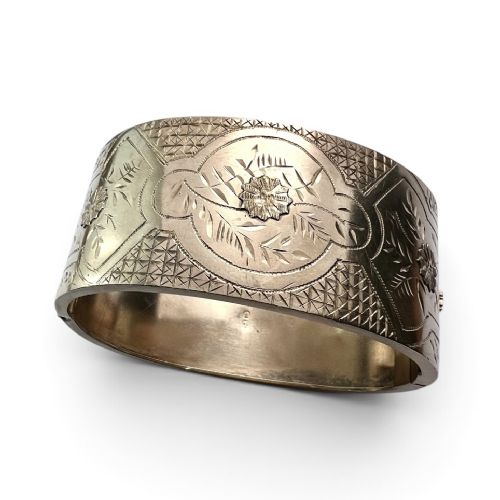
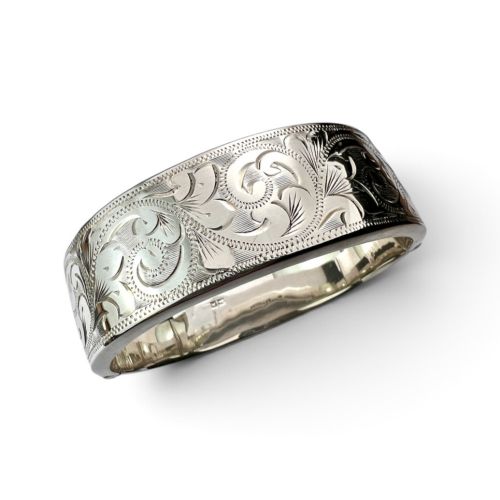
Sterling silver jewellery encompasses wearable ornaments and decorative containers, featuring items like pocket watch chains, hinged bangles, brooches, rings, and trinket boxes. Pieces originate from various periods including the Victorian era, Edwardian period, Art Deco years, and mid-century modern design movements.
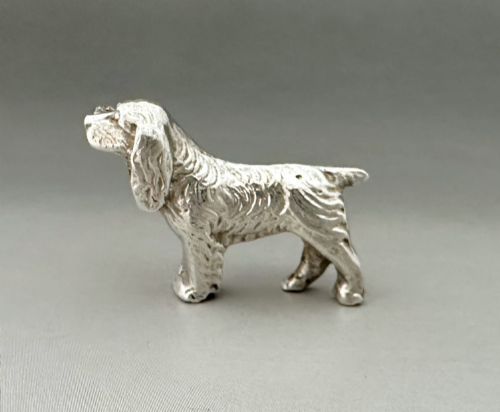
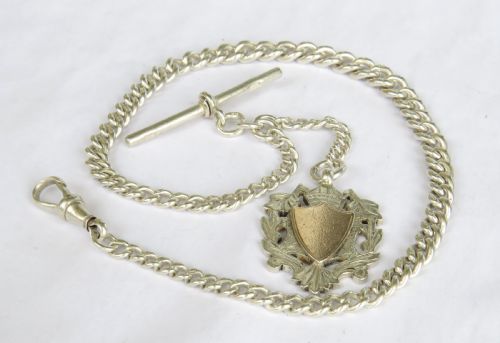
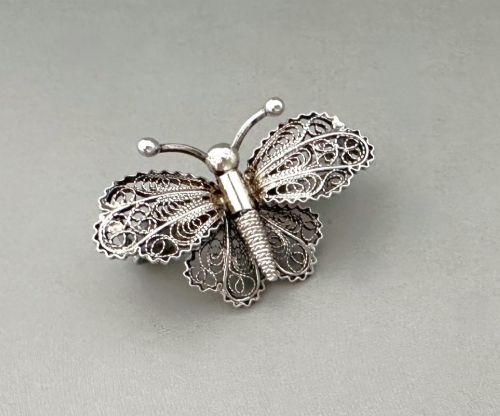
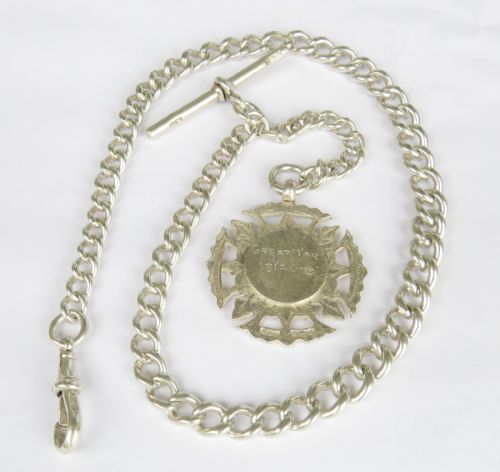
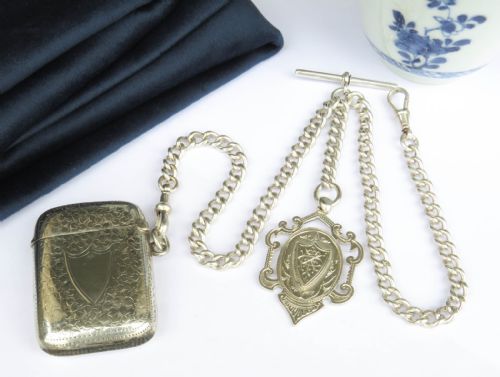
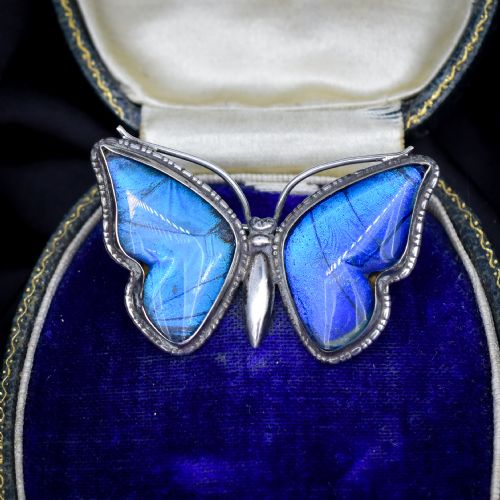
The selection on this page ranges from functional watch chains with dog clips and t-bars to gemstone-set rings and enamelled butterfly brooches. Many items serve a dual purpose or derive from gentleman's pocket watch accessories adapted into wearable neck chains.
How they were made
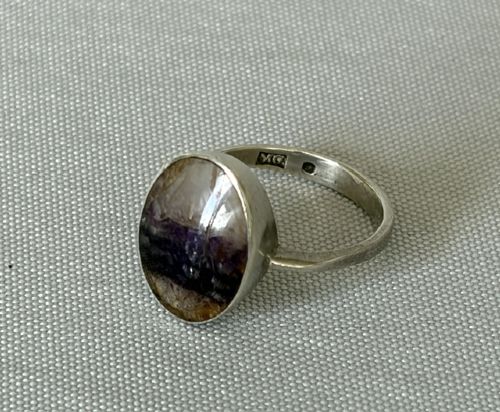
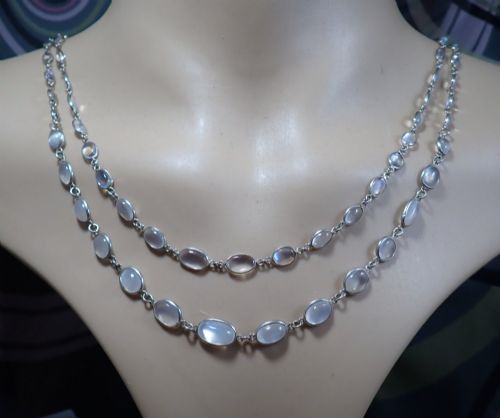
Metalsmiths utilised sterling silver alongside materials such as vitreous enamel, marcasite, moonstone, jade, and blue john fluorite. Techniques involve repoussé decoration, filigree wirework, and stone-setting into solid silver frames.
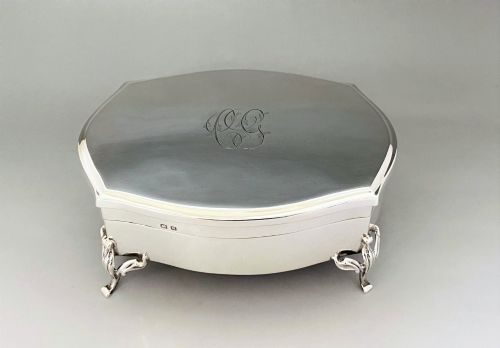
Box construction often incorporates hinged lids, internal silk or velvet linings, and pierced or engraved exterior panels. Chains feature uniform curb links or trombone links joined by secure clasps.
What varies in quality
Quality differences appear in the weight of the metal and the crispness of chased or repoussé detailing on boxes and brooches. Heavier gauge silver and complex link construction indicate higher production standards.
The skill involved in applying vitreous enamel or setting natural stones like moonstone, jade, and hardstones distinguishes standard items from superior examples. Maker attribution also influences the standing of a piece.
A H Darby & Son·Ollivant & Botsford·Goldsmiths and Silversmiths Company·Mappin & Webb·William Comyns·H Matthews·Elkington & Co.
The Sterling Silver Jewellery Glossary
- Sterling silver
- An alloy consisting of ninety-two point five percent silver and seven point five percent other metals, typically copper. This standard ensures durability while maintaining a bright metallic lustre.
- Albert chain
- A pocket watch chain designed to attach to a waistcoat buttonhole, featuring a T-bar at one end and swivel clips. Many survive adapted for wear as necklaces.
- Marcasite
- Small, faceted iron pyrites stones polished and set closely together into silver mounts to create a glittering, diamond-like effect popular in Art Deco jewellery.
- Repoussé
- A metalworking technique where the artisan hammers the reverse side of a silver sheet to form a raised, decorative relief design on the front.
- Vitreous enamel
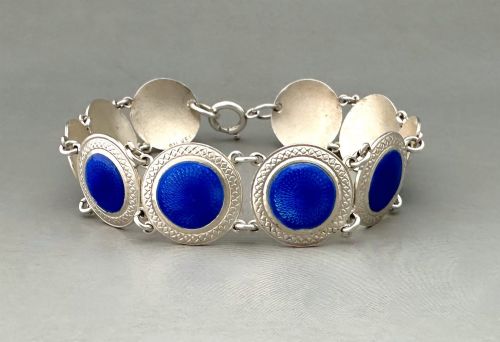
- A coloured glass powder fused to the surface of metal through high-temperature firing, producing a durable and glossy decorative finish.
Sterling Silver Jewellery: Frequently Asked Questions
How do I wear a pocket watch chain as a necklace?
Many historical pocket watch chains feature uniform curb or trombone links that sit comfortably around the neck when detached from their watches. The integrated dog clips and T-bars can be fastened together or left dangling as decorative elements.
Adjusting the length depends on the specific link count, and some pieces accommodate pendants attached directly to the central bar.
What is the difference between a trinket box and a ring box?
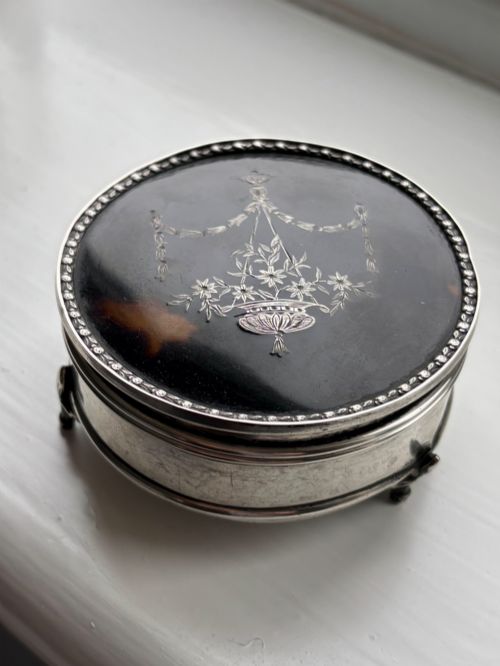
Trinket boxes generally feature open internal compartments lined with silk or velvet designed to store various small ornaments, cufflinks, or brooches. Ring boxes contain specialised internal slots or cushioned rolls specifically shaped to hold rings upright.
Both forms utilise solid sterling silver construction, sometimes enhanced with faux tortoiseshell, enamel lids, or repoussé motifs on the exterior.
How do I identify Art Deco pieces?
Art Deco items typically display geometric patterns, symmetrical lines, and stylised motifs influenced by the 1920s and 1930s design movements. Materials often include marcasite, onyx, and coloured enamel paired with clean silver settings.
Brooches, bracelets, and earrings from this era favor streamlined shapes and contrasting dark stones against bright polished metal.
How should I care for silver jewellery with enamel?
Vitreous enamel requires gentle handling to prevent chipping or scratching the fused glass surface during cleaning. Avoid harsh chemical dips and abrasive cloths that might damage both the enamel and the surrounding silver.
Store pieces separately in soft pouches to protect delicate stones like moonstone, jade, and blue john fluorite from impact against harder metals.