
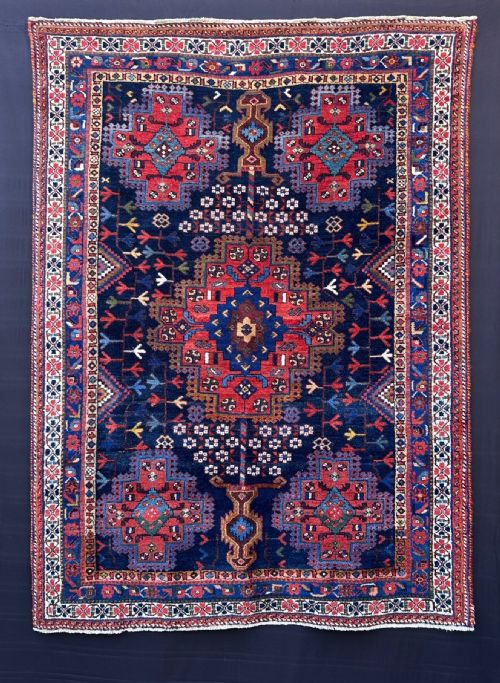
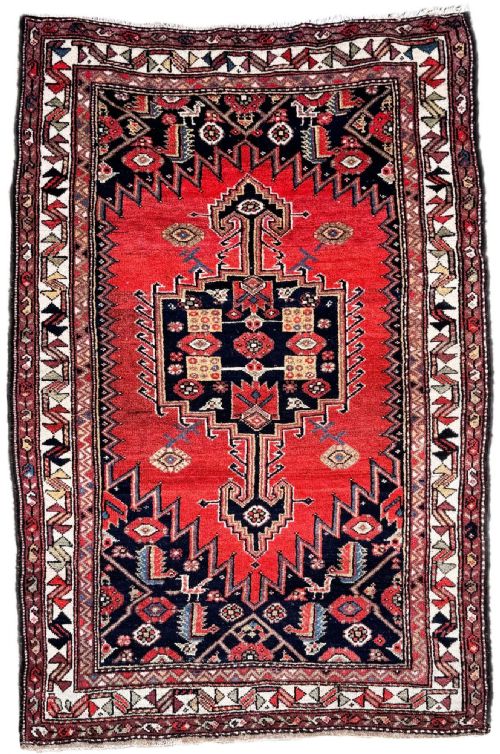
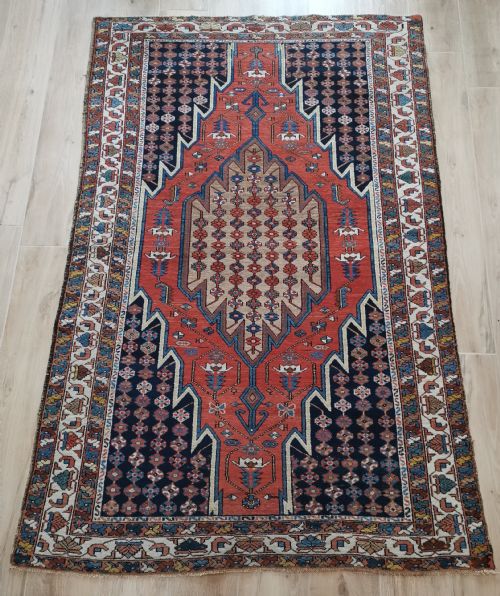
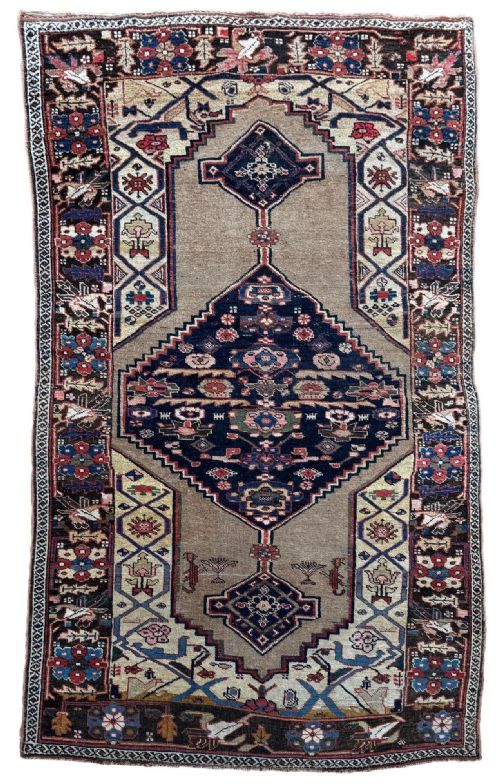

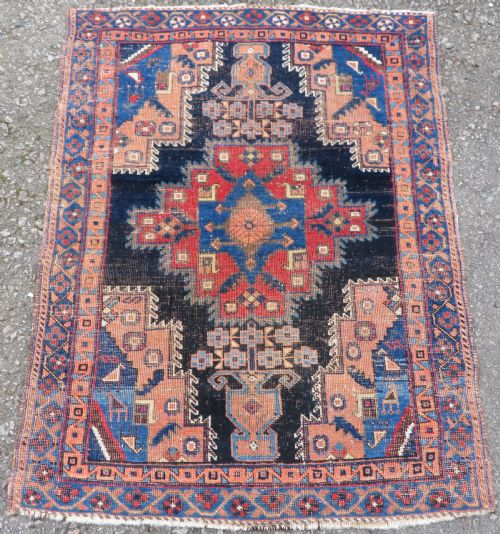


Stepped Medallion Persian Rug
These stepped medallion persian rug examples bring dense tribal geometry and rich wool pile into a room.
Stepped Medallion Persian Rug
A stepped medallion persian rug represents a tradition of village and tribal weaving across Persia, taking forms such as area rugs, runners, and bag faces. These floor coverings date from the late nineteenth century into the early twentieth century, spanning periods from eighteen seventy to nineteen twenty.
The styles found on this page encompass Persian Tribal, Persian Bakshaish, Heriz, and Kurdish Tribal designs. Buyers frequently encounter regional works originating from centres such as Bidjar, Senneh, Heriz, and the Kerman province.
The primary formats include standard area dimensions alongside longer runner rugs designed for hallways and corridors. Each piece demonstrates the distinct decorative vocabulary of its specific weaving group or district.
How they were made
These floor coverings are constructed primarily from wool pile set onto cotton foundations, utilising hand-knotting techniques traditional to Persian weavers. The durable materials provide the structural integrity required for centuries of domestic use.
Dyes derived from natural sources yield the deep reds, blues, and earth tones characteristic of late nineteenth and early twentieth-century village production. Weavers executed geometric medallions and field patterns by memory or through generational convention.
Regional styles represented include Bakshaish, Heriz, Senneh, and various Kurdish and southern tribal traditions.
What varies in quality
The refinement of the drawing and the complexity of the medallion geometry separate finer village weavings from simpler commercial output. Greater knot density allows for sharper definition in the central motifs and intricate border systems.
The condition of the wool pile and the integrity of the original selvedges dictate the durability and visual impact of the textile. Early examples retain rich saturation in their colour palette despite extensive age.
The Stepped Medallion Persian Rug Glossary
- Pile
- The upright yarn loop surface of a carpet that forms the soft exterior. Wool is the traditional material used for this upper layer.
- Selvedge
- The reinforced side edges of a rug that prevent the warps from unravelling. Secure finishing here indicates careful original construction.
- Kelleh
- A large format rectangular Persian carpet traditionally proportioned longer than it is wide. These pieces serve major floor spaces.
- Warp
- The stationary longitudinal threads stretched across the loom upon which the knots are tied. Cotton forms the basis for these structural elements in the listed pieces.
Stepped Medallion Persian Rug: Frequently Asked Questions
Where were these rugs made?
The pieces originate from various regions across Persia, including village workshops in Heriz, Bidjar, and Senneh, alongside tribal groups in the south.
Specific provenances extend to Kurdish districts and the Kerman province, reflecting distinct local weaving traditions.
How do I care for antique wool rugs?
Vacuum gently using suction attachment without a rotating brush roll to protect the aged wool pile and structural foundation.
Keep the textile out of direct sunlight to prevent fading of natural dye colours over extended periods of time.
What is a bag face?
A bag face is the decorative woven front panel originally cut from a nomadic storage sack or saddlebag.
These smaller textiles function effectively as compact decorative wall hangings or collector display pieces.
How do I distinguish regional styles?
Heriz and Bidjar pieces tend to display robust, monumental geometry with heavy cotton foundations, whereas Senneh examples often feature finer, more delicate boteh or medallion layouts.
Tribal works from southern groups incorporate expressive animal and human motifs alongside saturated indigo and madder red tones.