




Steel Percussion Gun
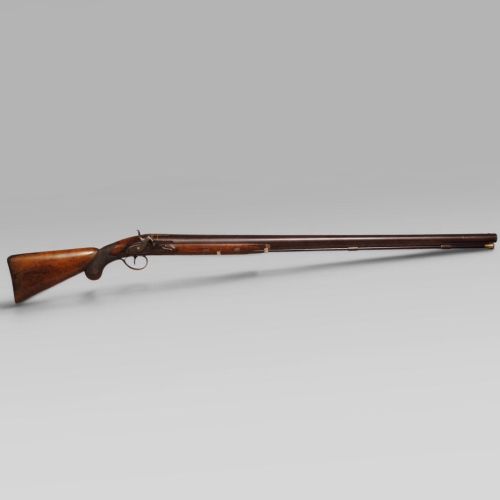
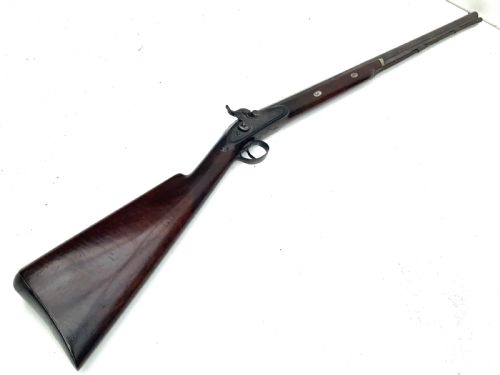
A steel percussion gun is a nineteenth century firearm relying on percussion cap ignition, prized by collectors for its mechanical ingenuity and martial history.
Steel Percussion Gun
A steel percussion gun represents the nineteenth century shift from flintlock mechanisms to the more reliable percussion cap system, spanning military and sporting applications. When exploring a steel percussion gun, buyers encounter items ranging from pocket pistols and belt pistols to heavy fowlers, rifles, and revolvers.
The pieces on this page originate predominantly from the nineteenth century, including Victorian, Regency, and Georgian periods, with specific dates clustering around 1800, 1850, and 1860. Object types vary from antique firearms to broader militaria, encompassing English, American, and continental European origins.
Revolvers, blunderbusses, and carbines form a significant portion of the selection, often featuring specific regional associations such as London makers or Liège workshops. Collectors frequently find pieces linked to military service, including American Civil War period sidearms and standard issue martial revolvers.
Materials and construction methods
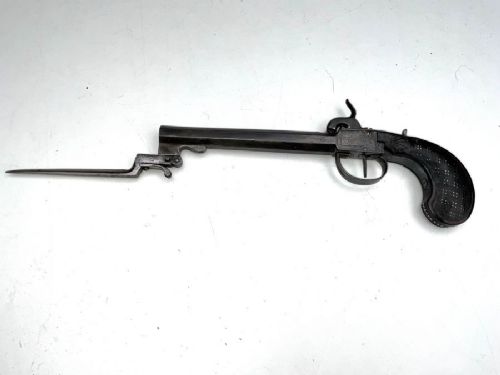
Construction relies heavily on steel and iron for barrels, frames, and lock mechanisms, combined with wooden stocks most commonly turned from walnut or other dense timbers. Many examples incorporate brass trigger guards, mounts, or butt caps, while select models feature silver accents or integrated bayonets.
Makers utilised precision metalworking techniques to forge barrels and fit percussion lock assemblies, ensuring tight tolerances for black powder containment. Wooden stocks were shaped by hand to fit the metal components securely, balancing the weight of the steel barrel for effective handling.
Steel Percussion Gun Retail Price Guide 2026
Typical asking prices for steel percussion gun among the pieces listed under this phrase on Sellingantiques today, from the lower quarter to the upper quarter. They describe what is for sale here now, not the wider market.
Assessing quality and craftsmanship
Quality in a steel percussion gun is evident in the crispness of the engraving on the lockplate and hammer, the fluidity of the mechanical action, and the integrity of the wood to metal fit. Finer examples display signed locks by established makers, matching serial numbers, and well preserved surface finishes on both the steel and walnut.
The standard of execution ranges from utilitarian military issue pieces designed for rugged service to deluxe sporting arms with high grade wood and detailed finishing. The retention of original components, such as captive ramrods, bayonets, or matching cylinder numbers, directly impacts the overall standing of an individual piece.
John Manton & Son·Deane, Adams & Deane·Auguste Francotte
The Steel Percussion Gun Glossary
- Percussion cap
- A small metal cup containing a detonating compound placed on the nipple of a firearm to ignite the black powder charge. This invention superseded the flintlock and offered vastly improved reliability in wet weather.
- Blunderbuss
- A muzzle loading firearm with a flared barrel designed to scatter shot at close range. It saw extensive use by coachmen and military personnel during the eighteenth and nineteenth centuries.
- Pepper pot pistol
- A multi barrel firearm with a rotating cluster of barrels that revolves around a central axis when the trigger is pulled. This design predated the widespread success of the solid frame revolver.
- Carbine
- A shorter and lighter version of a rifle designed for use by cavalry or mounted troops. Its reduced length made it much easier to handle from horseback.
- Socket bayonet
- A blade that fits over the muzzle of a firearm and locks into place via a stud and slot arrangement. It allowed troops to convert their firearm into a thrusting weapon without obstructing the bore.
Steel Percussion Gun: Frequently Asked Questions
How do I identify a percussion gun?
A percussion gun uses a hammer that falls onto a small percussion cap placed on a nipple, rather than using a flint and steel mechanism.
You can easily distinguish it by the absence of a frizzen and pan, looking instead for the distinct nipple projecting near the breech.
What is the difference between a pistol and a fowler?
Pistols are compact handguns designed for one-handed use, whereas fowlers are long-barrelled sporting guns intended for hunting birds and small game.
Fowlers feature much longer wooden stocks designed to be braced against the shoulder for accurate distance shooting.
Were these guns used in wars?
Many nineteenth-century percussion arms saw active military service, particularly during conflicts like the American Civil War.
Standard issue martial revolvers and carbines were carried by troops on both sides, while officers often purchased private weapons.
How should I care for an antique steel gun?
Antique firearms require a stable environment with low humidity to prevent rust from forming on the steel and iron components.
Applying a light coat of specialist gun oil or museum wax helps protect the metal surfaces and preserves the wooden stock.