



Stationery Letter Organiser
A stationery letter organiser keeps correspondence orderly on a desk, bringing period craft and practical utility together.
Stationery Letter Organiser
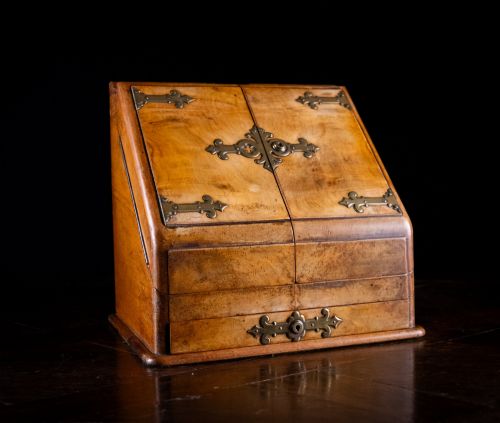
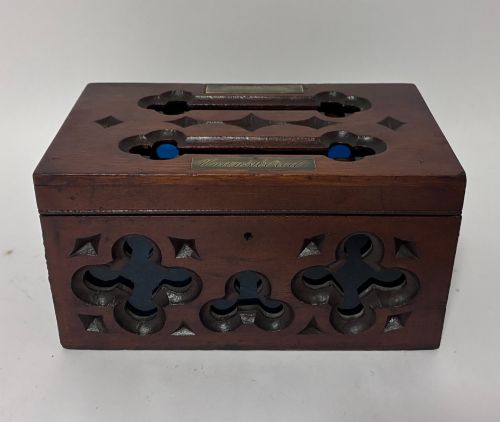
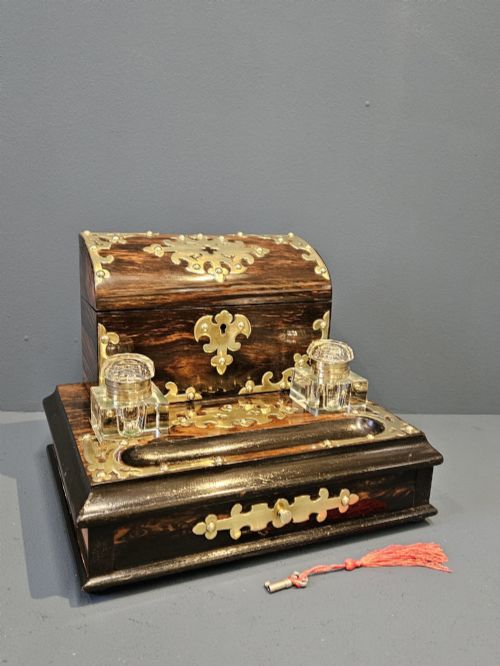
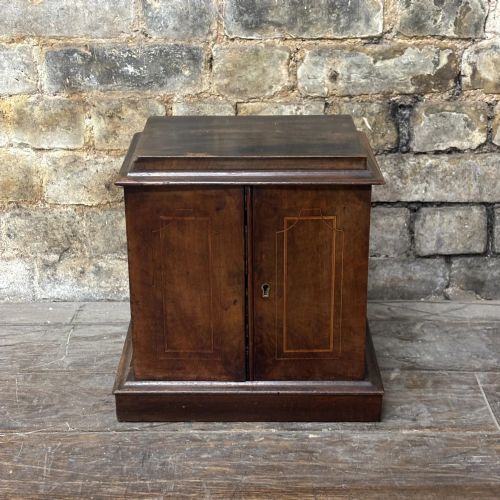
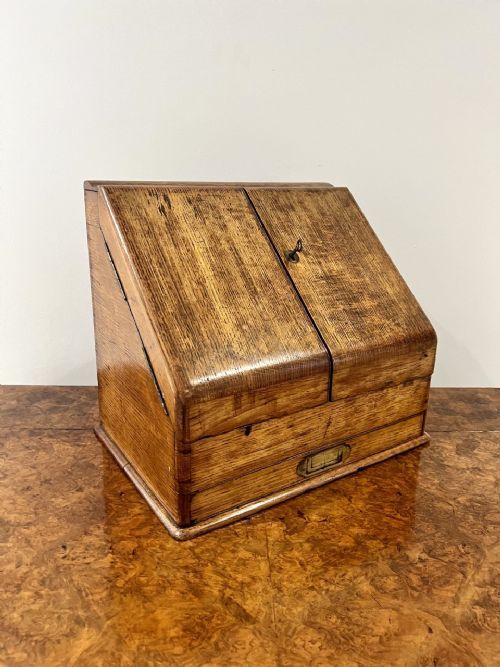
A stationery letter organiser refers to desktop accessories designed to sort correspondence, envelopes and paper. When searching this phrase, a buyer encounters forms ranging from simple upright letter racks to fall-front stationery boxes and cabinets.
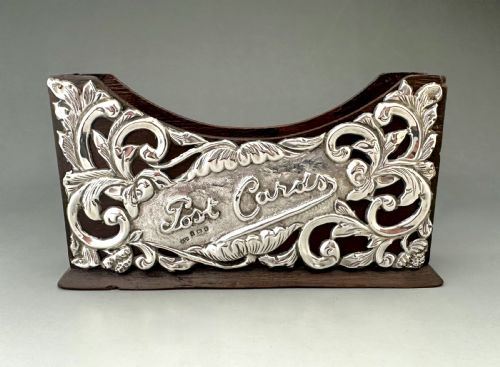
The pieces appearing here stem primarily from the Victorian and Edwardian eras, alongside select examples from the eighteenth century. Oak, mahogany and walnut form the backbone of these selections, often enriched with brass mounts or silver detailing.
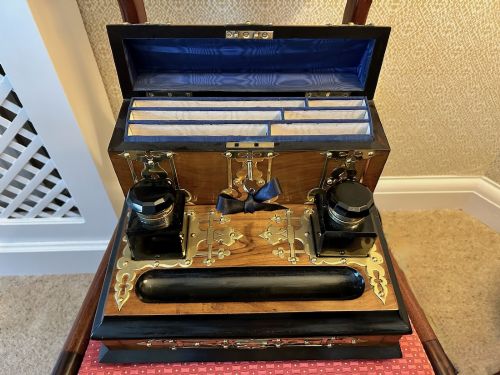
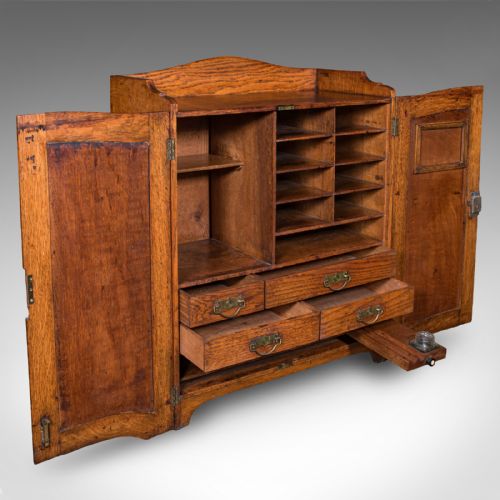
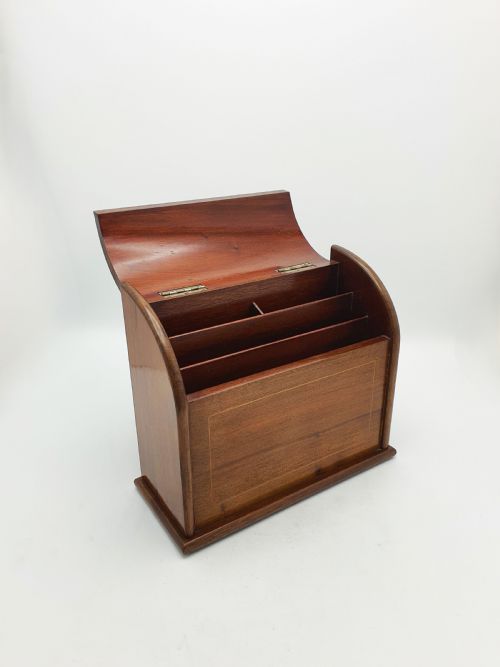
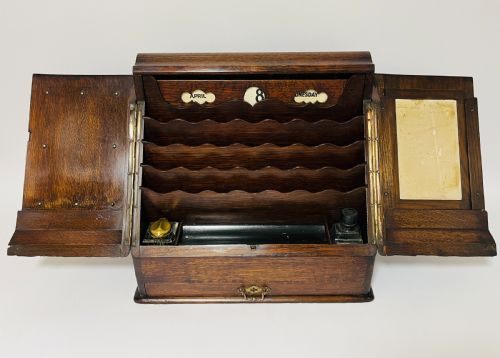
Cabinets and slant-front boxes dominate the available choices, frequently incorporating internal compartments for stamps, inkwells or pens. Buyers select these items to introduce period character to a modern workspace while retaining functional storage.
Materials and Construction
Cabinetmakers utilised hardwoods such as oak, walnut, mahogany and rosewood to build sturdy carcases capable of supporting heavy paper loads. Finer examples integrated exotic timbers like coromandel and satinwood, alongside decorative Japanese lacquer and Tunbridge ware mosaic work.
Metalwork played a structural and decorative role, with cast brass hinges, mounts, lock escutcheons and silver fronts securing the timber frames. Interior divisions relied on simple pegged joinery and dovetailed drawers to maintain stability under daily office use.
Listings feature oak, mahogany, walnut and rosewood alongside exotic materials like coromandel and lacquer across the Victorian, Edwardian and Georgian periods.
Markers of Quality
Superior quality rests in the selection of figured timber veneers and the precision of the joinery, such as tight dovetails on internal drawers. Makers who invested time in hand-engraved brass mounts or fitted silver details produced pieces that stand apart from mass-produced utilitarian boxes.
The sophistication of the internal mechanism dictates the grade of the piece, visible in fall-front cabinets where opening the lid simultaneously raises internal letter trays. Original locks, functioning keys and intact glass inkwells further elevate the standing of an organiser.
Edmund Nye
The Stationery Letter Organiser Glossary
- Correspondence box
- A desktop container specifically sized for holding folded letters and notepaper. These often feature hinged lids and fitted internal partitions.
- Cartonnier
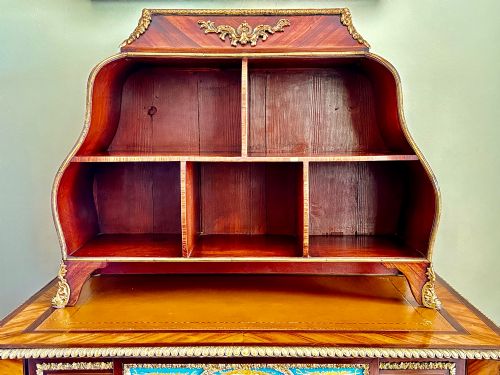
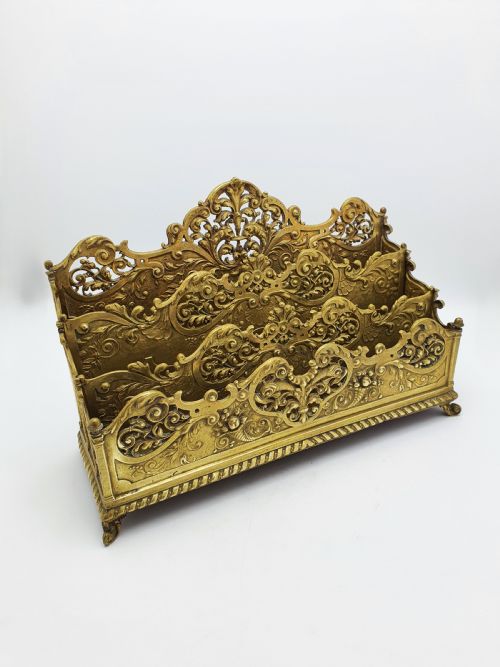
- A desktop cabinet containing multiple tiers of shallow drawers or compartments for sorting papers. Originating in France, these frequently incorporate ornate ormolu mounts.
- Standish
- An inkstand or desk tidy that combines compartments for ink bottles, sanders, pens and letters into a single portable tray. They anchor the writing surface.
- Tunbridge ware
- Woodware decorated with tiny mosaic tesserae forming pictorial or geometric patterns. Edmund Nye stands out among the makers of this detailed craft.
- Ormolu
- Gilded bronze mountings applied to furniture and desk accessories for decorative effect. This technique gained popularity during revival periods.
Stationery Letter Organiser: Frequently Asked Questions
How were stationery cabinets used?
These cabinets sat upon library tables and partner desks to keep incoming and outgoing mail sorted by priority. Users stored envelopes, writing paper and stamps behind lockable fall-front doors or open letter racks.
In period offices and country houses, they managed the heavy daily volume of handwritten correspondence before the typewriter became common. The inclusion of date indicators or telegram folders helped clerks track time-sensitive communications.
How do I date a wooden desk tidy?
Dating relies on timber choices, construction methods and stylistic revival motifs present in the brass or woodwork. Victorian pieces often employ solid oak with Gothic brass strapwork, while Edwardian versions lean towards lighter mahogany and inlaid details.
Secondary indicators include the presence of maker stamps, patent stamps on brass locks, and the evolution of internal stationery slots from simple dividers to adjustable tiered trays.
Can these organisers hold modern letters?
Most nineteenth-century letter slots and compartments comfortably accommodate standard modern envelopes and notepaper sizes. Deeper stationery cabinets offer flexible vertical clearance for larger documents and folders.
Certain compact Victorian racks tailored for small visiting cards may prove tight for modern DL or C5 envelopes, making internal measurements essential for practical daily use.